Auburn opened the 2023 season and the Hugh Freeze era with a mostly-comfortable 59-14 home win over UMass. I think I speak for all of us when I say that it was nice to see Auburn take care of business against an inferior opponent instead of letting them hang around for three quarters and tying all of our stomachs into knots. Obviously the disparity in talent and stature between the two programs makes drawing definitive conclusions about the team’s performance difficult, but let’s take a look at the film anyway and see what we can learn about the new-look Tigers.
OFFENSE
UMass won the opening toss and deferred to the second half. Auburn got a great return from Brian Battie (who I’m told is good at this) and started with decent field position at their own 38. On the opening play of the season, the Tigers demonstrated one of the RPO concepts that I discussed in the preview article I wrote a few weeks ago. Jay Fair, lined up as the Z receiver, comes in motion behind Payton Thorne. The run call is GT counter, where the backside guard will pull and kick out the playside defensive end and the backside tackle will pull and block the playside linebacker, which is paired with a simple swing pass. I’m not entirely sure who Thorne was reading here, but Auburn had the numbers on the perimeter because UMass is in zone coverage and nobody follows the motion man to the left side of the formation, so Thorne pulls the ball and tosses it out to Fair for a solid gain on first down.
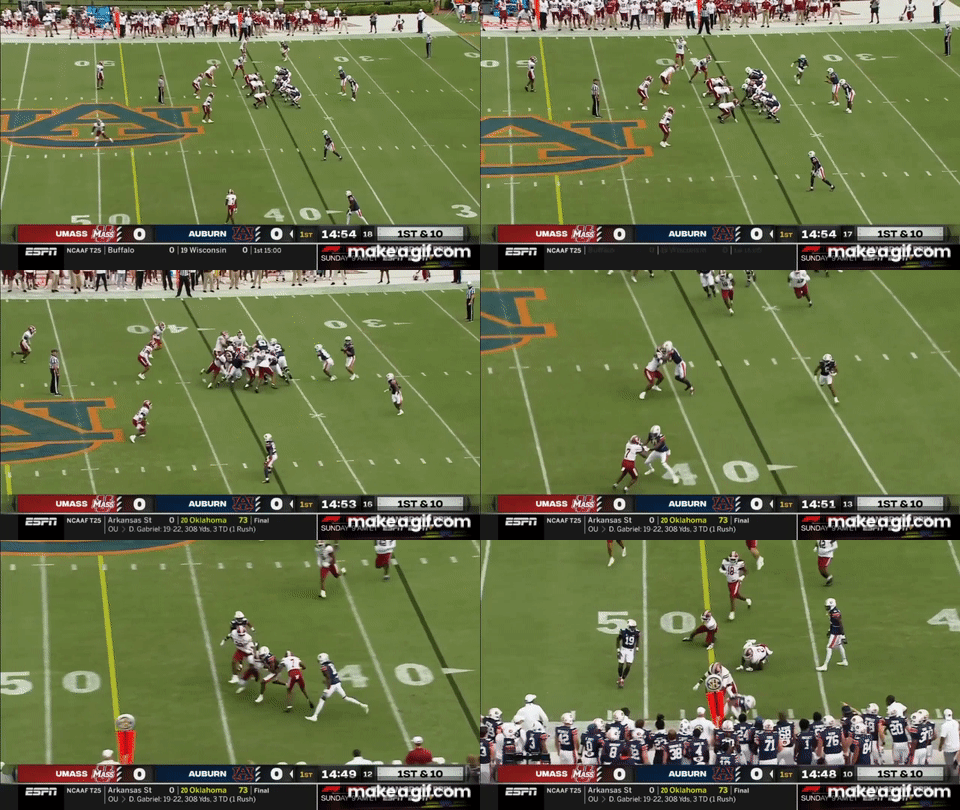
The next play I want to look at from Auburn’s opening possession includes the other key component of the new offense that we discussed in the preview article: the vertical choice series. In this case, Auburn runs slot choice, with the #2 receiver running the choice route, while the #1 receiver runs a curl route. When the defense is in zone coverage, the #1 receiver’s curl is designed to pull the deep zone defender down to open up deep space for the vertical choice runner. However, in this case, UMass is in man coverage; in man coverage, the curl has a similar effect of holding the corner so that the vertical choice receiver has the option to work outside in the vertical space behind the corner. That’s exactly what happens here. UMass actually isn’t lined up correctly because of Auburn’s tempo and if Thorne had gotten the ball out faster, Fair could have walked into the end zone. Nonetheless, Fair makes the correct read and runs a fade, exploiting the fact that he has outside leverage on the defender and following the old Art Briles mantra: “find grass, run fast.” This should have been a touchdown, but Thorne underthrows it and gives the defender time to recover and break up the pass. Auburn actually went back to the well with this exact play on the next possession, which was also incomplete but drew a defensive holding penalty.
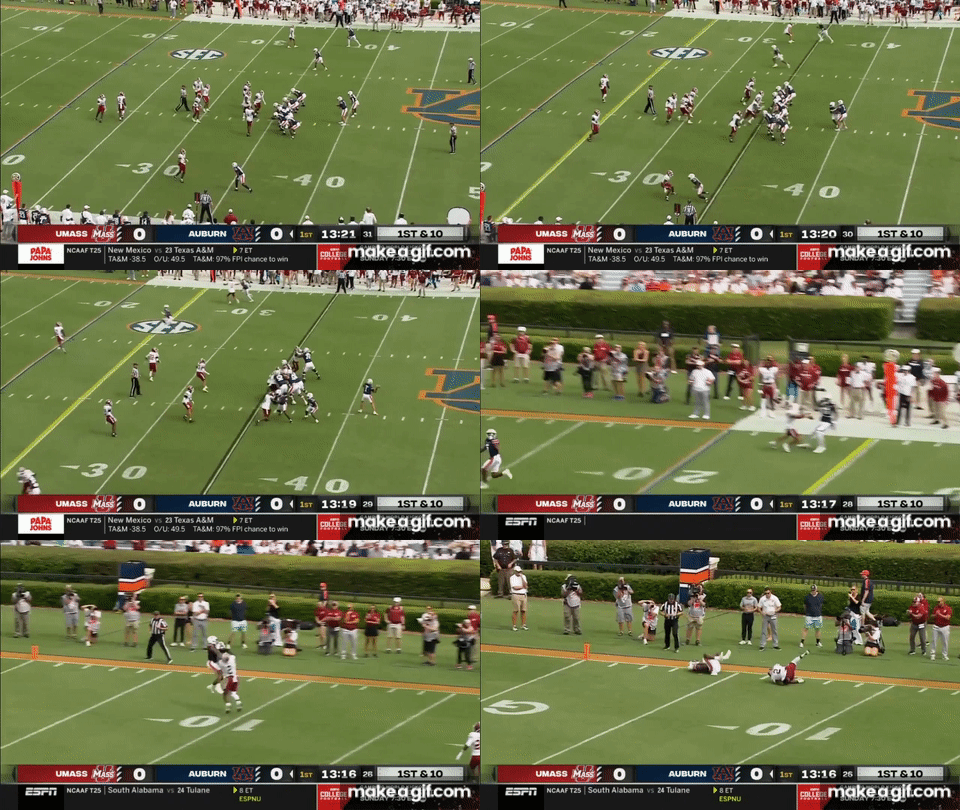
The next play in this series includes another RPO action, but also another subject I didn’t really touch on in my last post (mainly because the QB competition was still ongoing): the QB run game. Of course, when Auburn fans have talked about the QB run game going into this season, they’ve mainly been talking about Robby Ashford, but here Auburn gets Payton Thorne involved in the run game too, just to keep the defense honest. This is basically the simplest RPO there is: the RB motions out of the backfield, and the QB just looks to see if a defender follows him. If nobody follows him, the defense is probably in zone and the offense should have numbers to block the swing route on the perimeter; if a defender follows him, the defense is probably in man and the offense should have the numbers to block the box defenders. The LB follows the motion, so Thorne recognizes the defense is in man and carries up the middle on the draw for a first down.
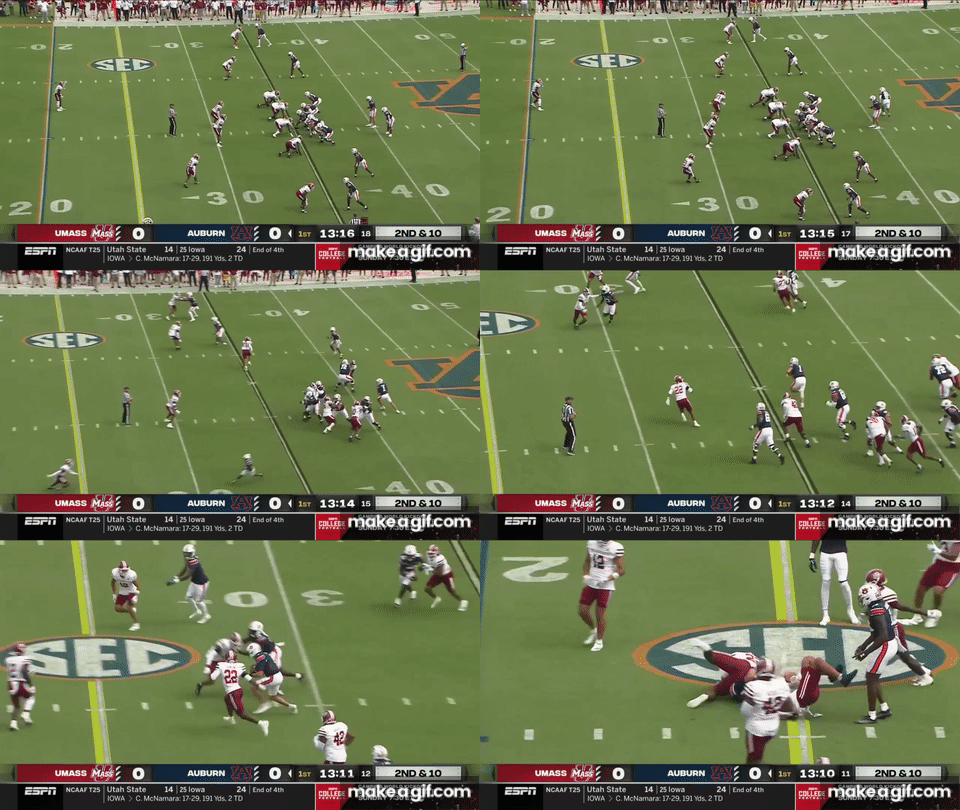
Auburn’s first touchdown isn’t really anything interesting schematically but touchdowns are fun, so let’s watch it anyway. Auburn lines up in the pistol and runs an inside zone read. The edge defender stays home, so Thorne hands the ball to Damari Alston, who does the rest. It’s nice to see Auburn be able to line up and just punch the ball in in the low red zone instead of getting cute or just getting blown off the ball.
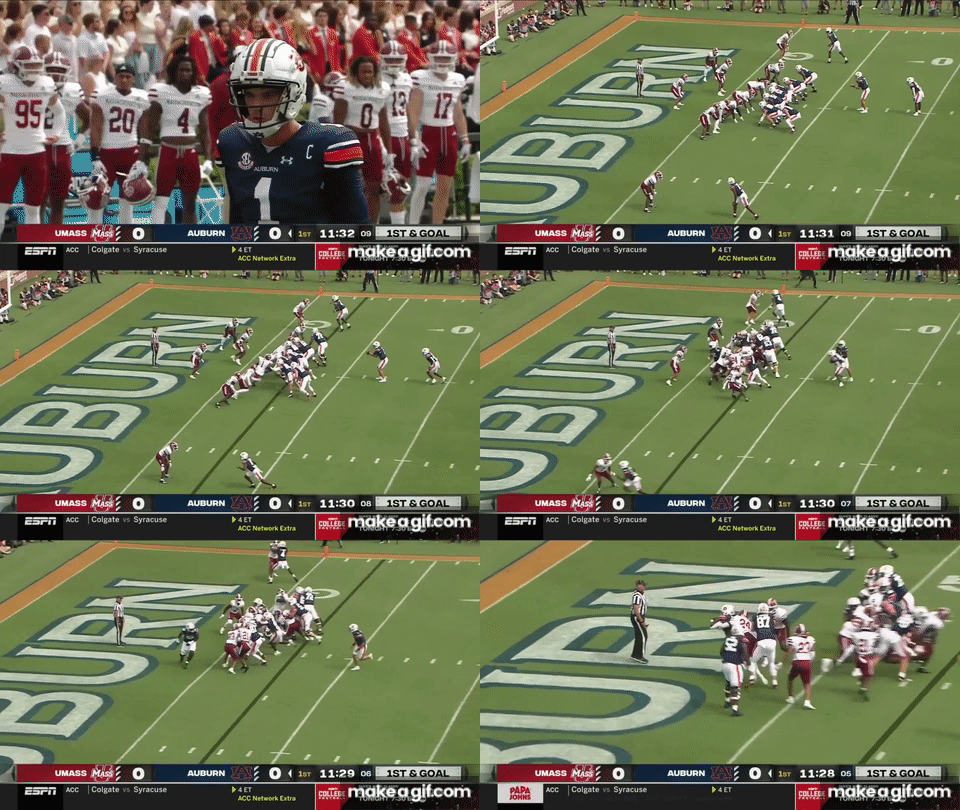
After UMass marched right down the field on Auburn’s defense (more on that later) and another solid return from Brian Battie, the Tigers moved efficiently down the field, reaching the edge of the Minutemen’s red zone in eight plays. On this play, we see the first hint of what was to come for Auburn’s red zone offense with Robby Ashford’s first carry of the game. This is just a basic counter scheme, a staple of Gus Malzahn’s Auburn offenses; it’s blocked the same as the GT counter play I mentioned earlier, but with the H-back replacing the tackle in wrapping to the playside LB. This play adds the RB to the blocking scheme as a lead blocker. Robby shows a quick pass drop (I don’t think there was any pass tagged on the backside), almost like a QB draw, which allows the blocking scheme to set up before he takes off for a big gain. More of this to come.
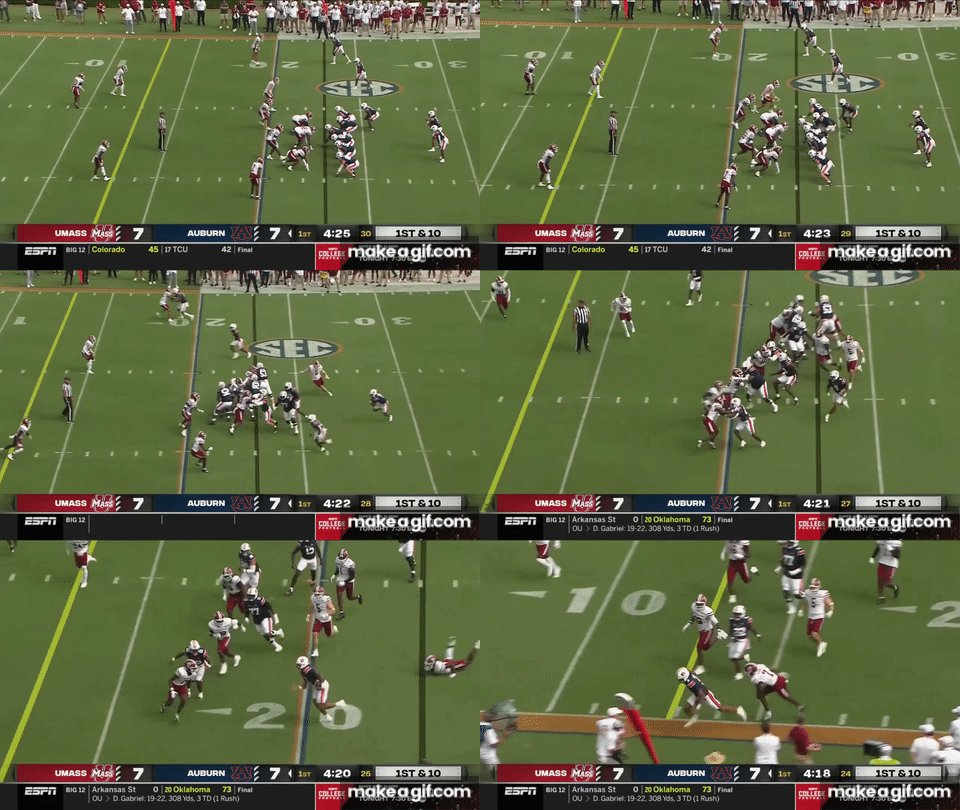
On UMass’ subsequent possession, the Auburn defense forced a three and out, which was followed by a great punt return by Keionte Scott, setting Auburn up with great field position at the UMass 16. After a good gain on first down, Auburn had 2nd and 4 at the 10. Here the Tigers line up in an unbalanced set with two receivers and a tight end to the left. The H-back on the backside of the formation motions over to the strong side as well, giving Auburn a big numbers advantage, which they then used to run a QB sweep with Robby. The Tigers had so many extra blockers, in fact, that the RB doesn’t even have anyone to block, and Robby takes it into the end zone untouched. (Sorry for the gif being not great, blame ESPN not me.)
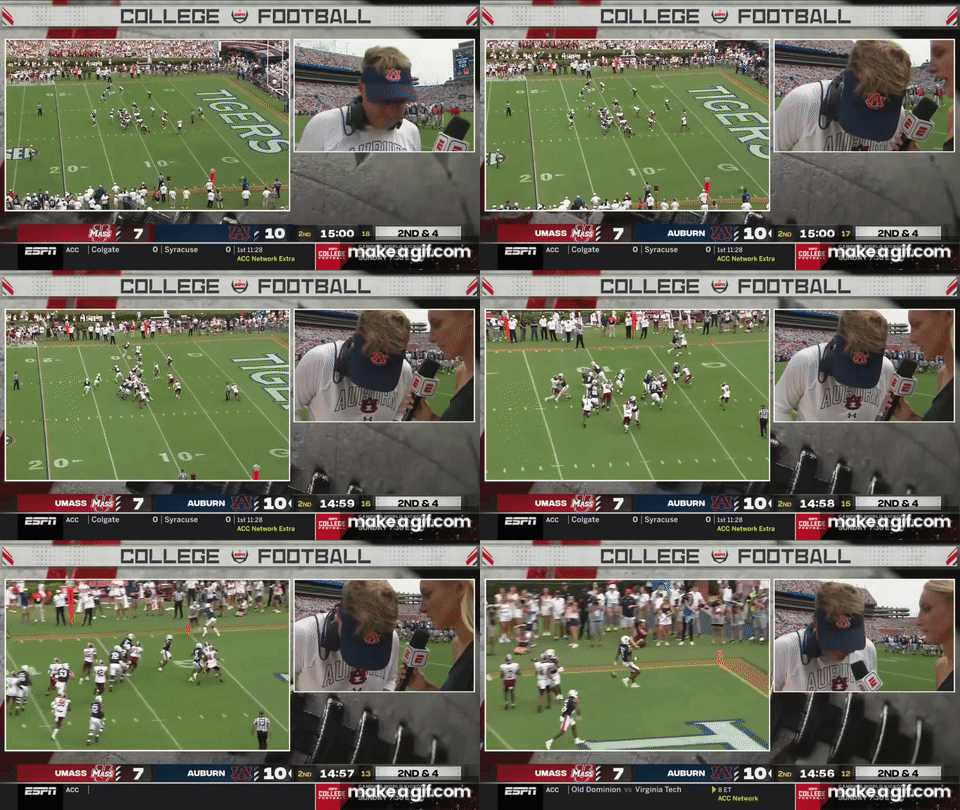
Auburn’s defense forced yet another punt which yielded good starting field position, but the offense was set back by a holding penalty. On the ensuing 1st and 20, Auburn goes to the air, running some type of crossing concept from a trips set (TV camera angles suck for analyzing the passing game but I don’t have an all 22 of this game so it’ll have to suffice). There’s really nothing there for Thorne, but he does a good job of eluding the rush, escaping from the pocket, and keeping his eyes downfield. He delivers a good ball throwing across his body and hits Shane Hooks along the sideline for a first down.

Two plays later, the Tigers faced a 2nd and 8 at the UMass 47. Here they went back to the vertical choice series, but this time it was single choice. Shane Hooks seems like the prototypical X receiver for this type of offense, a big guy with great range and enough speed to take the top off of a defense. This time, he isn’t able to get over the top of the corner in man coverage, but he does a good job of throttling down and using his body to shield the defender and Thorne delivers a good ball to his back shoulder for a first down.
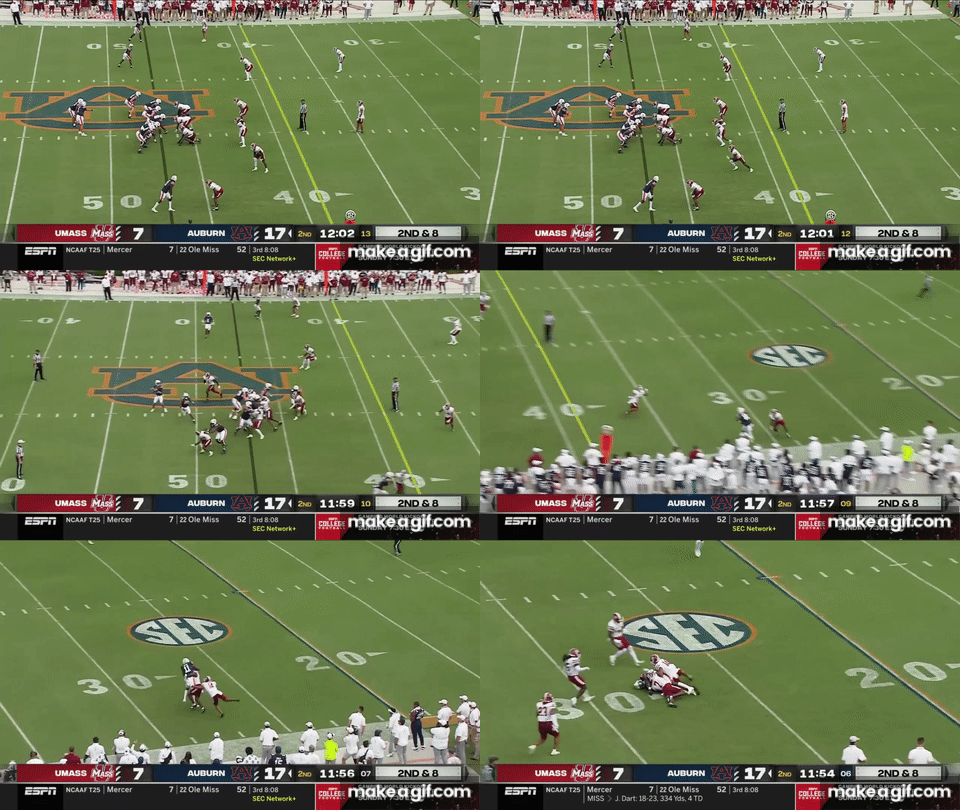
Later in that possession, with Auburn in the low red zone, the Tigers once again turned to Robby Ashford’s legs to get the ball across the goal line. They line up in an unbalanced formation with an extra tackle over on the left side of the line, along with three receivers bunched to the left. This is a zone read play with what basically amounts to a pre-snap RPO. I think the read here was just to count how many defenders they put out on the bunched receivers; if you have numbers, throw the screen, otherwise it’s dead. UMass matches the bunched receivers three for three, so Robby runs the zone read, the edge defender is so far out of position it barely even looks like an option play and he walks in untouched again. It’s also worth noting that Auburn had run this exact same play on the previous play, exploiting UMass’ vulnerability through tempo.

After the Tiger defense got a strip-sack on Minutemen QB Taisun Phommachanh, the offense was set up at the UMass 35. On second down, the Tigers once again go with the slot choice concept, and again because UMass is in man coverage and Ja’Varrius Johnson has outside leverage on the safety, it turns into a slot fade. (It’s possible that this was just a called slot fade concept, I’m not entirely sure since it’s the same result.) Thorne actually delivers a good throw on the fade route for once and Johnson is able to hold on to set the Tigers up with a goal to go situation.
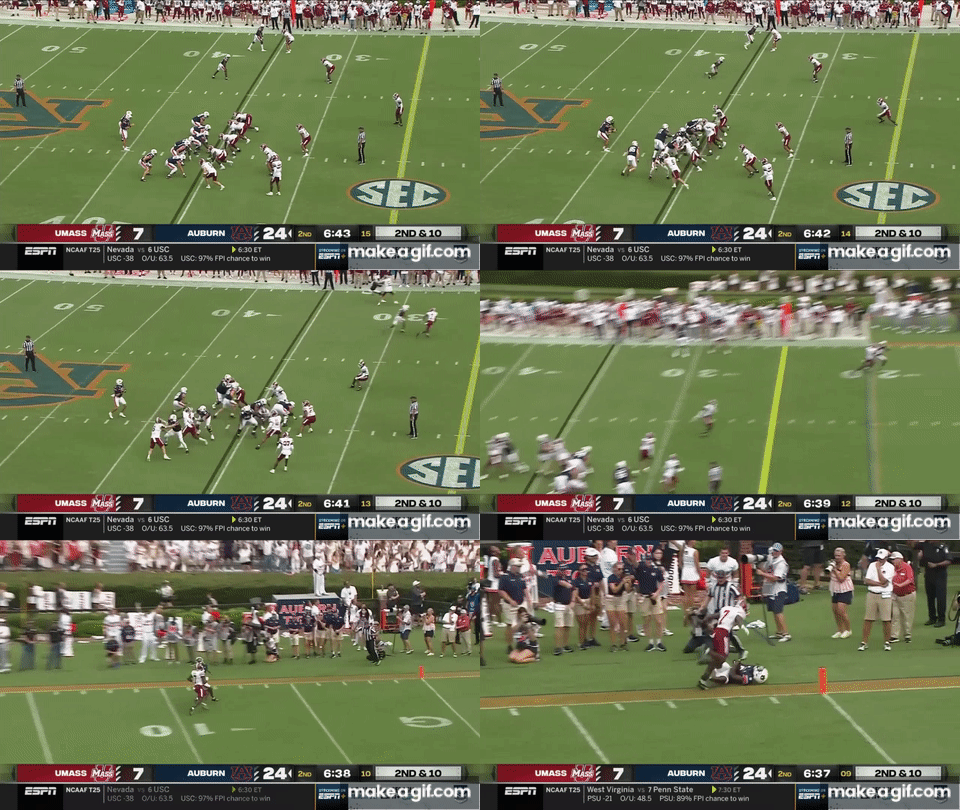
Following a couple of unsuccessful running plays, Auburn found themselves in a 3rd and goal from the 4. Unlike the other situations where Robby was in the game in the low red zone, the Tigers put the ball in the air here, or at least planned to. Working from the pistol, Auburn ran a bootleg off of arc read action using a flood concept, where the goal is, as the name suggests, to flood zone coverage with more receivers than it has defenders; in this case, UMass is in man, so the goal for the receivers is just to beat their man. Nobody is really open, but Robby makes the best of it and is able to sneak inside the pylon for six.
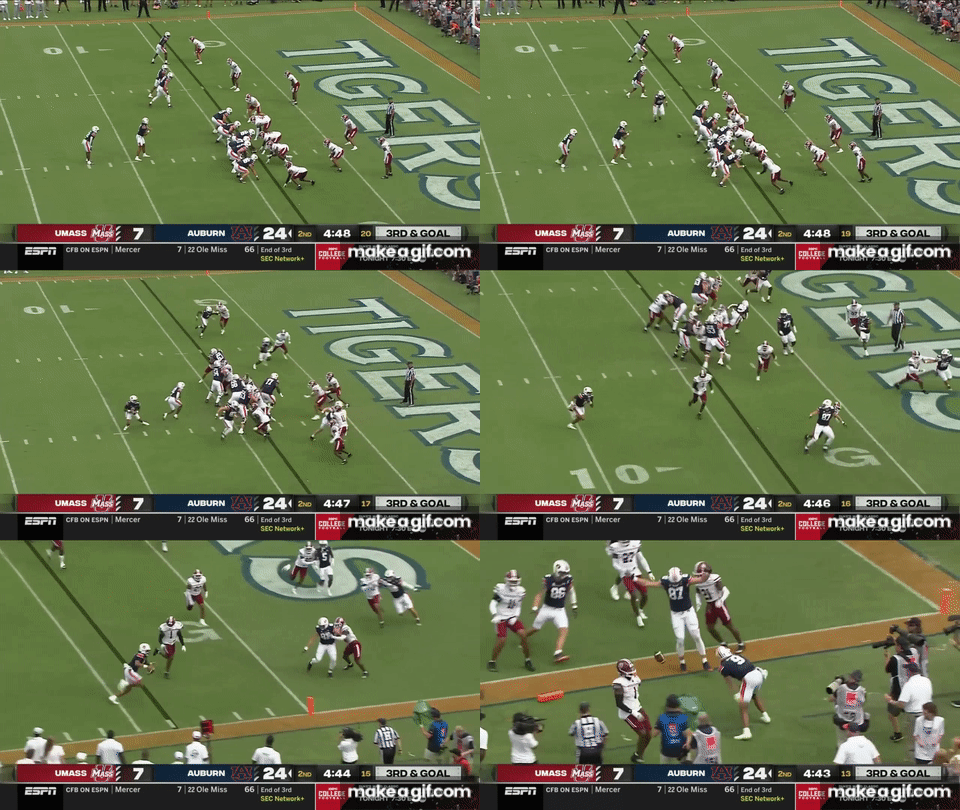
In the second half, UMass threw a pick six on their second play from scrimmage, then committed a penalty on the ensuing kickoff, backing them up against their own goal line. After a three-and-out and a poor punt, Auburn had prime field position at the UMass 30. The Tigers wasted no time taking advantage of their good fortune. The offense is lined up with trips to the left. The call here is a variation on the four verticals concept (in real time I thought this was a vertical choice, but after further review, I don’t think it is). The #2 and #3 receivers, Jay Fair and Jyaire Shorter (I think), take a switch release, which means they cross over one another’s route stems (switching vertical lanes), with Fair on a post route. UMass is in some type of match-quarters coverage, where defensive backs will play quarters by default but with special rules telling them to match particular routes by the receivers near them. The boundary safety decides, for reasons known only to him and God, to close down on Damari Alston checking down underneath, leaving his zone vacant and leaving Jay Fair wide open. A total coverage bust, and Thorne delivers a good ball here and hits Fair in stride for the easiest touchdown toss of his life.

Following an exchange of punts and a UMass turnover on downs, the Tigers took over yet again in UMass territory, and yet again it was a one-play touchdown drive. Jeremiah Cobb got a lot of hype for a freshman fourth-string RB this offseason and this play gives us an idea of why that was the case. The kid has wheels. This is a basic inside zone read. Robby is reading the backside defensive end, while the two tight ends on the backside of the play block the perimeter defenders (known as an arc scheme), lead blocking in the event of a QB keeper. However, the DE stays home, so Robby hands the ball off to Cobb and he does the rest. This wasn’t even a bad run fit by UMass, he just found a small crease and hit it.
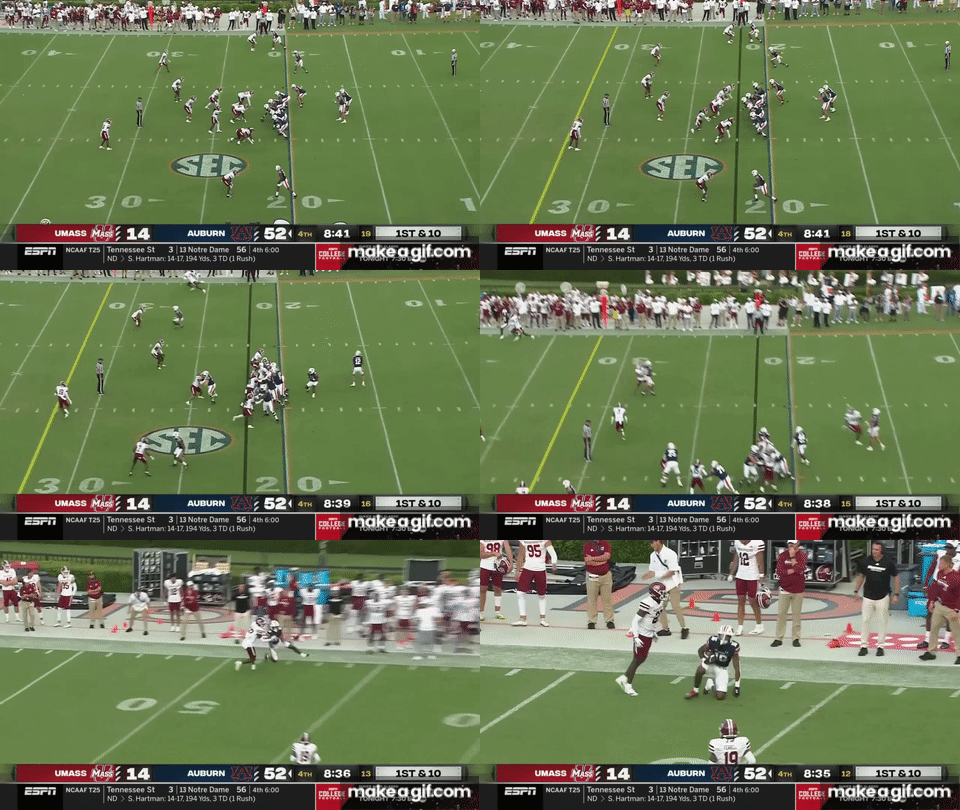
Skipping ahead a bit to the fourth quarter, after UMass found their second touchdown of the day on a one play drive of their own, third-string QB Holden Geriner checks into the game, and he immediately impressed. On 1st and 10 from their own 22, Auburn goes with the third part of the vertical choice series, the outside choice. As we’ve discussed before, this play goes to the two-receiver side of the formation, where the outside receiver will run the choice route and the slot receiver will run a bender to the middle of the field to pull the playside safety away from the choice route. Malcolm Johnson, Jr. isn’t really able to get a lot of separation from the corner in man coverage, but Geriner delivers a perfect ball to his back shoulder, and MJJ uses his body to shield the corner and make the catch for a big gain.
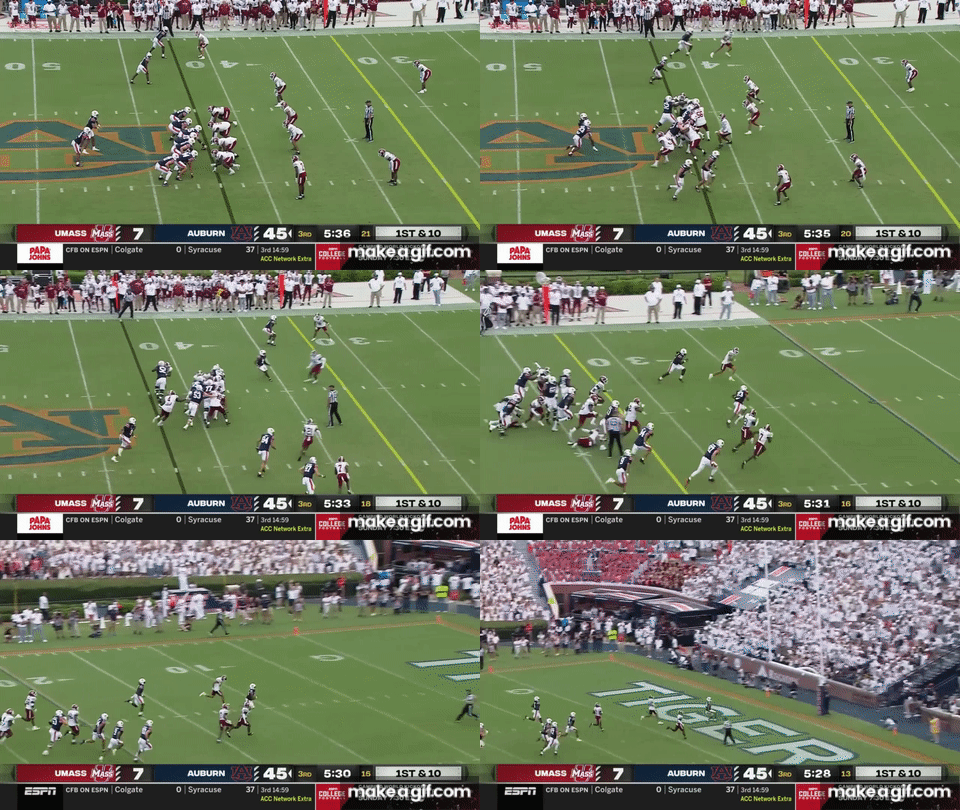
Two plays later, the Tigers cashed in on the ground again for their final touchdown of the game, with Sean Jackson doing the honors this time. Auburn is in a standard 11 personnel set and runs GY counter, one of their most-repped run concepts in this game (unlike Gus, Freeze and Montgomery seem to know that it’s legal to run counter to both the right and left). Jackson follows his blocks through the hole, but then he sees that the LB has overpursued and the strong safety has taken a bad angle, so he cuts it back and finds himself with only the free safety to beat. He whiffs the tackle completely and Jackson is off to the races, becoming the fourth different Tiger to score on the ground in this game.

I don’t want to spend much time looking at garbage time plays, but there’s one more nice Geriner-MJJ connection that’s worth watching. This time, MJJ is lined up as the single receiver, and Auburn runs single choice in his direction. Much like the outside choice they ran on the earlier possession, MJJ can’t beat the corner deep, but again, Geriner delivers a beautiful back shoulder throw for a first down. Interestingly, the backside receivers run a bubble screen here rather than the usual “do nothing” on the backside of vertical choice, but I don’t know if Geriner actually had the option to throw it.

Anyway, that’s enough offense for now, let’s take a quick look at the other side of the ball before we wrap things up.
DEFENSE
On the Tigers’ first defensive rep of the game, we see an indication of some of the problems that were to come for Auburn’s run defense, which surrendered more than 5 YPC in this game. I’m not entirely sure what UMass is running here, as the run blocking looks pretty discombobulated. Auburn gets good penetration at the point of attack, but the defensive linemen overpursue, and Ole Miss transfer Austin Keys does as well, allowing the RB to cut back and comes up just short of a first down.
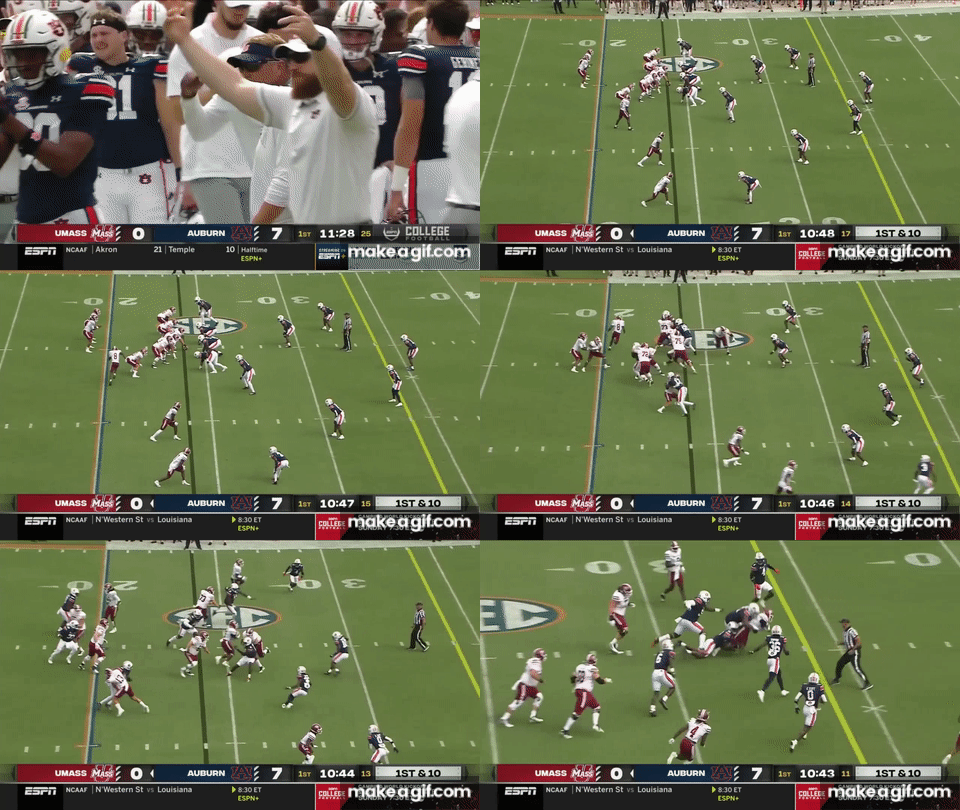
On the next play, Minutemen QB Taisun Phommachanh (who continues the tradition of Clemson transfer QBs with impossible-to-spell names) drops back for his first pass of the game. I can’t tell what concept UMass is running, but Phommachanh sees a lot of open grass in front of him and takes off; Auburn is in man or pattern-matching coverage and leaves the middle of the field wide open. North Texas transfer LB Larry Nixon III, playing the “jack” (overhang) position, has a chance to bring him down, but Phommachanh slips the tackle and gets the first down.

Two plays later, Phommachanh gashes the Tigers on the ground again. UMass lines up in a two-back set and runs the same arc read concept we discussed above. The DE pinches, giving Phommachanh a pull read, and LB Cam Riley, who I assume was supposed to take the QB, gets sucked inside and is an easy target for the arc blocker, allowing Phommachanh to break free for a big gain into Auburn territory.

On the next play, UMass again goes to the arc read concept, this time from a pistol alignment, motioning a receiver to block on the perimeter. This time, however, Phommachanh hands the ball off. The RB bounces the ball to the outside and, stop me if you’ve heard this one before, DJ James overplays it, allowing the RB to bounce to the outside and get down the sideline to set up first and goal. The Minutemen would punch it two plays later on a QB sneak to tie the game (I’m not going to break down a QB sneak because it isn’t really interesting).
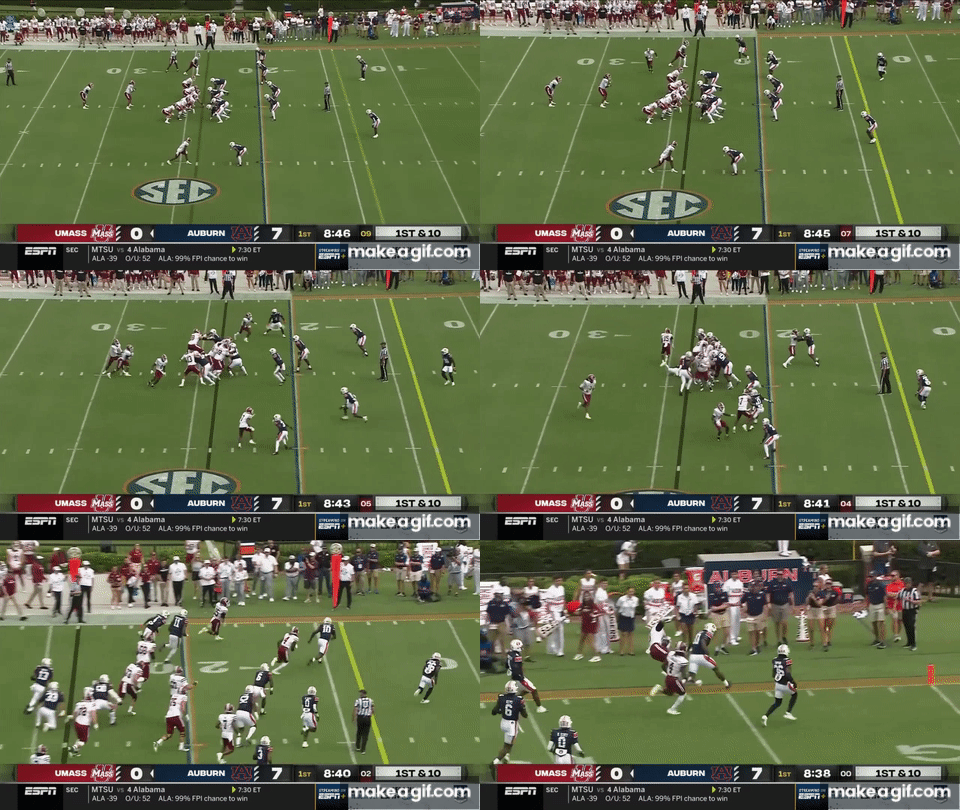
The rest of the first half isn’t really worth going through in a ton of detail. Phommachanh hurt his leg/knee, which limited his mobility and took away the most dangerous part of UMass’ offense up to that point. The first drive illustrates the problems with Auburn’s defense well enough: misfits against the run, poor pursuit angles at the second and third levels. However, I do want to look at a couple of clips that demonstrate Auburn’s solution to the problems that they encountered on the Minutemen’s first drive, which was also my typical solution to defensive struggles in NCAA Football when I was a kid: send the house.
Midway through the second quarter, UMass finally got another drive going, picking up a couple of first downs and getting into Auburn territory. On 1st and 10 on the Tigers’ 46, Phommachannh drops back to pass. I don’t know exactly what this play was, but it looked like some type of curl-flat concept. Nickelback Donovan Kaufman, with his side vacated by the motion man, comes on the blitz off the edge, beating the UMass tackle with pure speed and hitting Phommachanh from his blindside, forcing a fumble which was recovered by Auburn safety Jaylin Simpson.
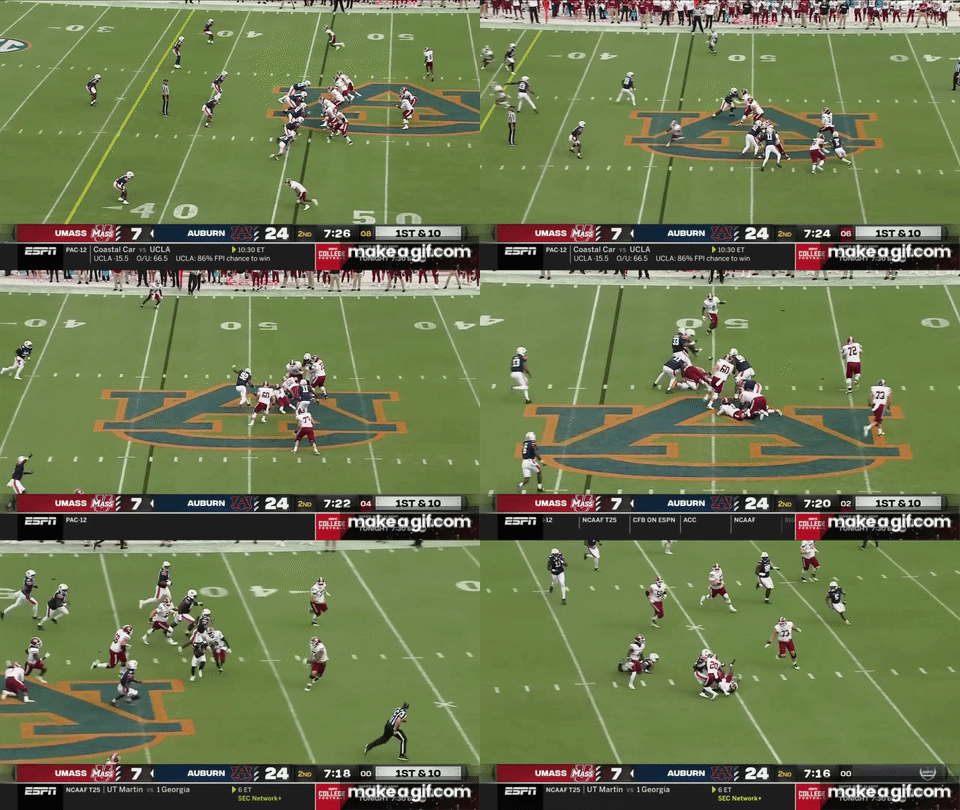
Another good example of the Tigers’ aggression paying off comes on the second play from scrimmage in the second half. UMass had good field position after Auburn kicked the ball out of bounds on the opening kickoff, desperately needing a score to keep any hope of a comeback alive. This is an RPO where UMass combines split zone (an inside zone run where the H-back comes from the backside to kick out the playside end, creating split flow) with a quick out route by the slot receiver. UMass is keying the nickelback, Donovan Kaufman, to decide whether to hand off or throw. Kaufman comes on the blitz here, giving Phommachanh an automatic throw read. However, Kaufman manages to get to Phommachanh, unable to sack him but forcing him to rush the throw enough that it’s behind the receiver, allowing Jaylin Simpson, who had rolled down to cover the slot receiver after Kaufman blitzed, to pick it off, and from there it was taillights.
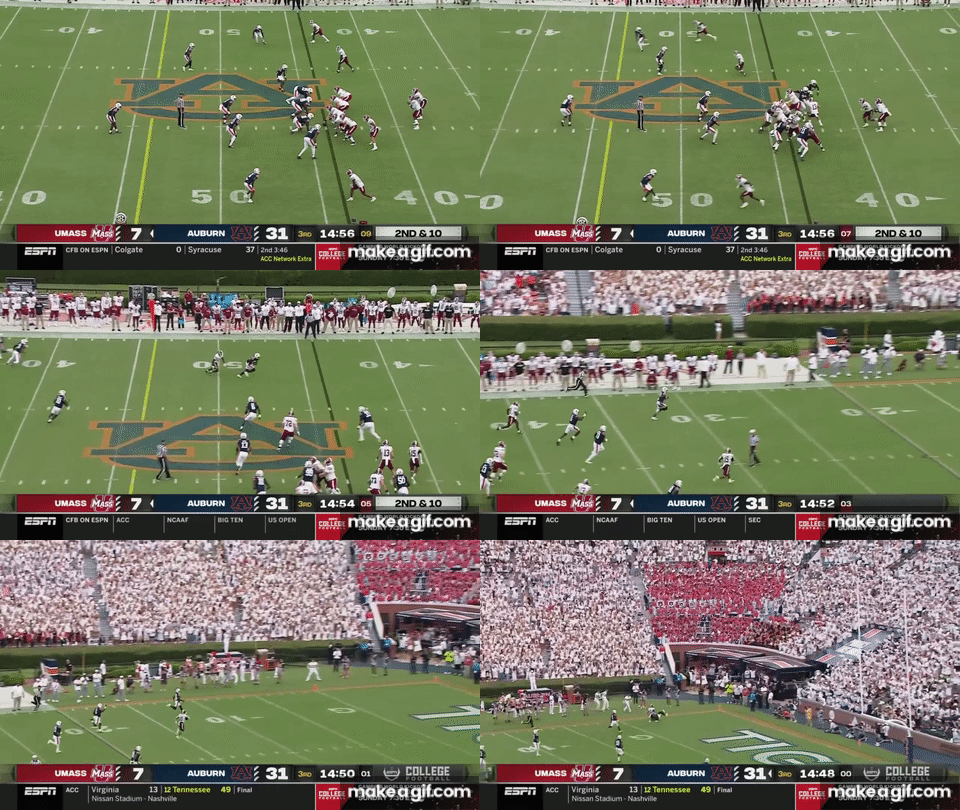
The last defensive play I want to look at is the second UMass touchdown, a one-play drive against a heavily-rotated Auburn defense. This is an RPO with an inside zone run paired with a bubble screen. The H-back goes in motion to the flat to serve as an extra blocker for the bubble screen. Phommachanh sees that he has the numbers on the perimeter, so he throws the screen. Freshman corner Colton Hood overruns the play, so the receiver cuts it back and flies past LB Robert Woodyard, Jr. and Baylor transfer safety Griffin Speaks (who takes a poor pursuit angle) and is off to the races.

Kind of a sour note to end on, but it wasn’t a great performance for the defense overall, at least during the brief window where the game was in the balance.
CONCLUDING THOUGHTS
Obviously, all of this analysis comes with the caveat that this was a season-opening bodybag game against UMass, which was one of the worst teams in the FBS last season. That said, I do think we have some general trends to watch for the rest of this season.
First of all, on the offensive side of the ball, Auburn’s run game was impressive, as was the performance of the Tigers’ offensive line in general, which handled UMass’ pressure-oriented defense well, giving the Tigers’ QBs plenty of time to throw and opening gaps consistently in the run game. We knew that the RB room was a strength of this offense, and this game showcased the depth at that position with Jarquez Hunter unavailable. The Tigers’ QB play was less convincing, with Thorne in particular missing some opportunities and throwing balls that might well have been intercepted by SEC defenders. He’s still learning the ropes of the offense, so I don’t want to rush to judgment, but it wasn’t a sterling debut for the Michigan State transfer. Robby Ashford, on the other hand, did well in his role as the Tigers’ red zone weapon of choice, but Freeze and Montgomery will have to figure out a way from keeping the two-QB system from becoming too predictable.
In terms of scheme, the Tigers’ offense looked much like we anticipated it would. Tempo, primarily 11 personnel with some two-TE and four- and five-WR sets thrown in, RPOs, read option plays, and the occasional vertical choice pass. I would’ve liked to have seen more from the Tigers’ passing game in general, but it sounds like the coaching staff chose to keep things close to the vest and keep running the ball when it was working, which makes sense in a game like this. We’ll see how the gameplan looks against a much better opponent next week.
On the defensive side of the ball, the Tigers’ secondary held up better than expected, although UMass doesn’t have a ton of weapons at WR and Taisun Phommachanh, not known for his arm in the first place, was further limited by injury. Auburn’s front seven, particularly the LB corps, was as much of a work in progress as it was portrayed to be during the offseason. Lots of missed assignments and poor run fits allowed UMass to chew up yards on the ground early in the game, and they may well have continued to do so had Phommachanh been fully healthy. The defensive line struggle to consistently get pressure with four rushers and most of Auburn’s QB pressures and tackles for loss came from plays where Auburn brought five or more rushers, most often from the nickel/”star” position. This worked fine against a QB and receiving corps that couldn’t punish the Tigers’ blitz-happy approach, but that won’t be the case later in the season, and if Auburn doesn’t find a way to pressure the QB and create negative plays with four rushers, it could be a long season for the Tigers’ defense and we could be in for a lot of shootouts.
I’ll have another post up later this week with a preview of Auburn’s next opponent, those noted Atlantic Coast denizens, the Cal Bears.

 Auburn Analysis
Leave a reply to AUkarm Cancel reply