(Quick programming note: no review for the Georgia game because I was out of town for work and no review for the LSU game because I’m going to sound like a broken record; in lieu of this, I’m going to do a much more succinct version that still covers everything.)
Auburn was unable to recreate the magic of 2021 on Saturday in Death Valley and picked up their third straight loss to open SEC play. While I think most of us expected to lose this game, probably by a significant margin, that doesn’t make the offense’s performance any less embarrassing. Even with the luxury of a bye week, Freeze and Montgomery couldn’t manage to find a solution to get Auburn’s offense to execute consistently. I think that’s a pretty clear indication that the problems with Auburn’s offense are pretty much baked in at this point.
To illustrate the core of this problem, let’s take a look at what are supposed to be the foundation of Auburn’s offense: RPOs. Auburn’s RPO volume has been much lower than I expected it to be going into this season, which was surprising until I started watching the film and saw a pretty consistent issue with Auburn’s failed RPOs.
First, though, let’s take a look at how this is supposed to work. On this play, Auburn is running a counter play to the left, with the wide receiver on that side running a glance route. The idea is that if the playside safety comes down to fill a gap against the run, giving the defense an extra man in the box, Thorne will pull the ball and throw the glance route into the space the safety vacated; if he stays home, he’ll just hand the ball off and the offense should have favorable numbers to run the ball. Here, you can see that the safety triggers hard on the run, leaving a wide open space for Thorne to hit the receiver on the glance route.
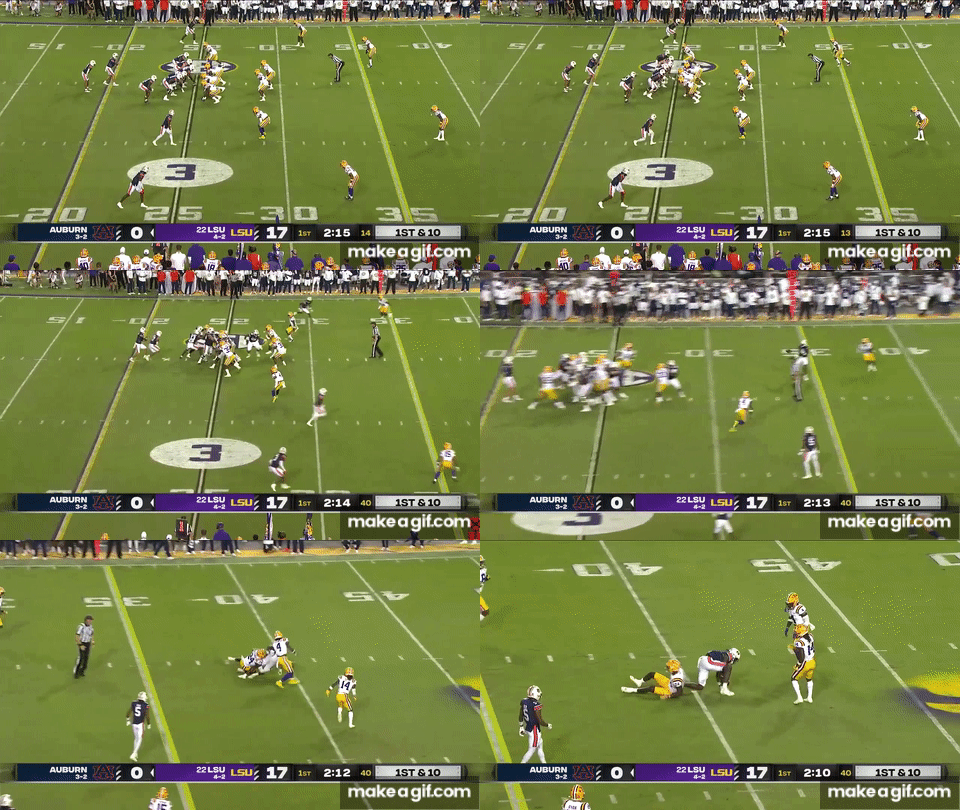
However, while RPOs are great, they do come with a caveat: they really only work against zone coverage. That’s because RPOs rely on putting a defensive player in conflict between pass and run responsibilities. In zone coverage, there will always be players (usually outside linebackers or safeties) who have a dual responsibility for covering a gap in the run game and a zone in the passing game, so the offense can always make them wrong.
Against man coverage, however, all of the defenders are either responsible for covering a particular receiver or filling a gap in the run game. There’s nobody who’s in conflict, so there’s nobody the offense can read. Thus, the defense can cover both phases of the RPO without compromising their coverage scheme or their gap assignments.
Here’s an example where the defense is in man coverage and completely locks down the pass phase, forcing Auburn to run the ball against unfavorable numbers in the box. Auburn is running an inside zone scheme combined with a stick route by the slot receiver. Usually, Thorne would be reading an outside linebacker in zone coverage here, but since LSU is in man, he has no choice but to hand it off, and the run gets stuffed for minimal gain.
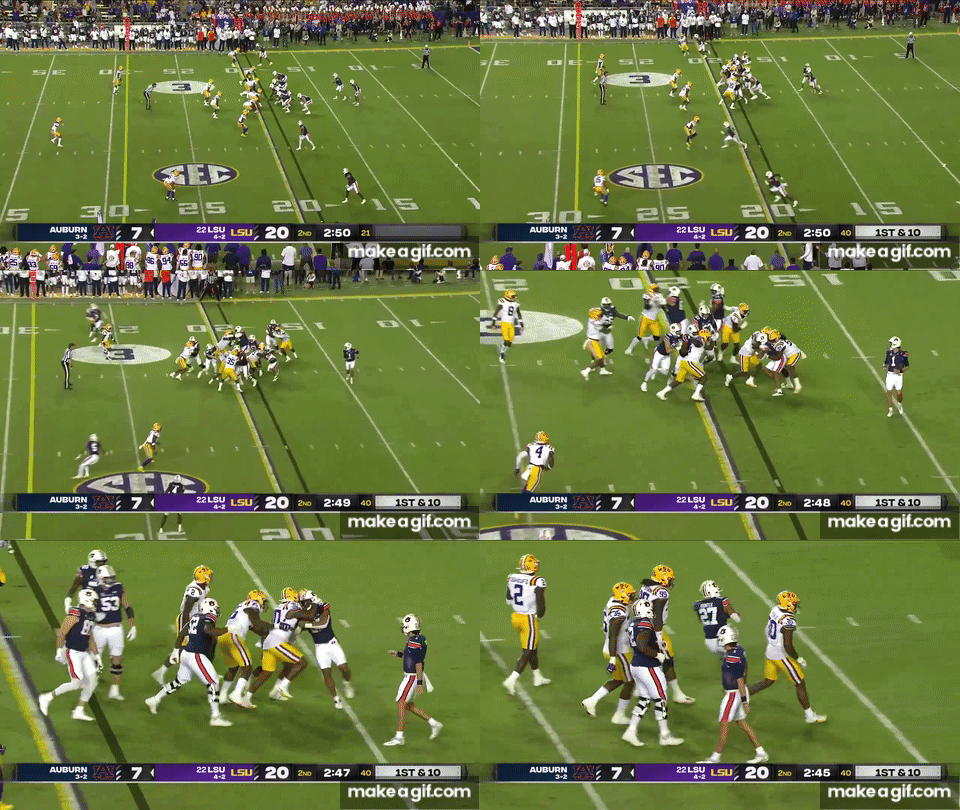
Generally, when there’s man coverage, the QB will hand off, since throwing an RPO against man coverage is asking for trouble unless your receivers can just win one-on-one, which isn’t really the point of an RPO. More on that later. But first, here’s an example of trying to throw against tight coverage. I don’t think LSU is actually in man here, but it’s the same effect. Auburn is running an inside zone read paired with an arrow route by the H-back, creating a form of triple option. Robby correctly reads the DE crashing on the dive and pulls the ball, only to find the H-back locked down and pursuit in his face. He probably does the best thing here and just chucks it away. I want to add that this is also bad play design; as the telestrator so helpfully notes, the DB lined up over the inside receiver on the unbalanced side of the line (who is ineligible to receive a pass) and just chases down the play. Too easy, especially for a talented defensive playmaker like Perkins.
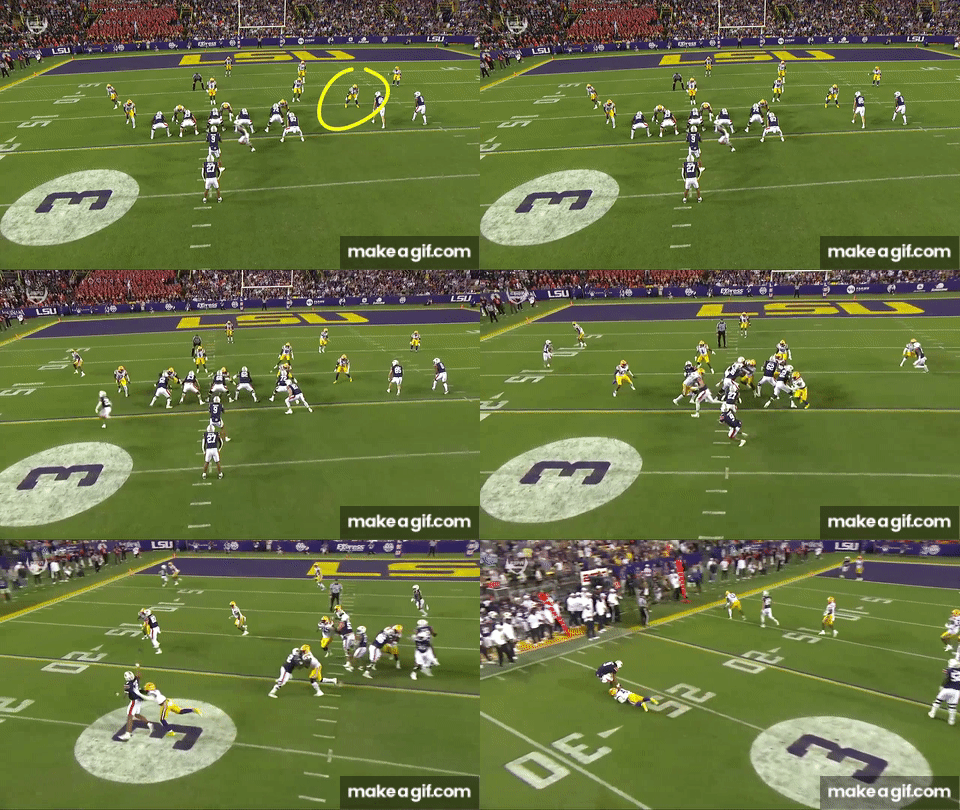
So what do? How does the offense deal with man coverage in the RPO game? A common way is to build a man-beater into the play. This is sometimes referred to as a pre-snap look (PSL), where a receiver on the backside of the play runs some sort of route to take advantage of the leverage of the guy covering him. Usually this is something like running a quick hitch against a soft corner or (in this case) running a fade route against a corner who is pressed up.
Of course, this assumes that the WR can actually win that one-on-one, and as you can see, that’s not the case here. This has been a problem for Auburn all year, and it continued against LSU. Auburn is running a counter play with a stick route paired on the backside. LSU is in man, which Thorne correctly identifies, so he decides to work the PSL. Of course, the receiver isn’t open at all (and Thorne overthrew him so badly the ball probably landed in Lake Pontchartrain anyway).
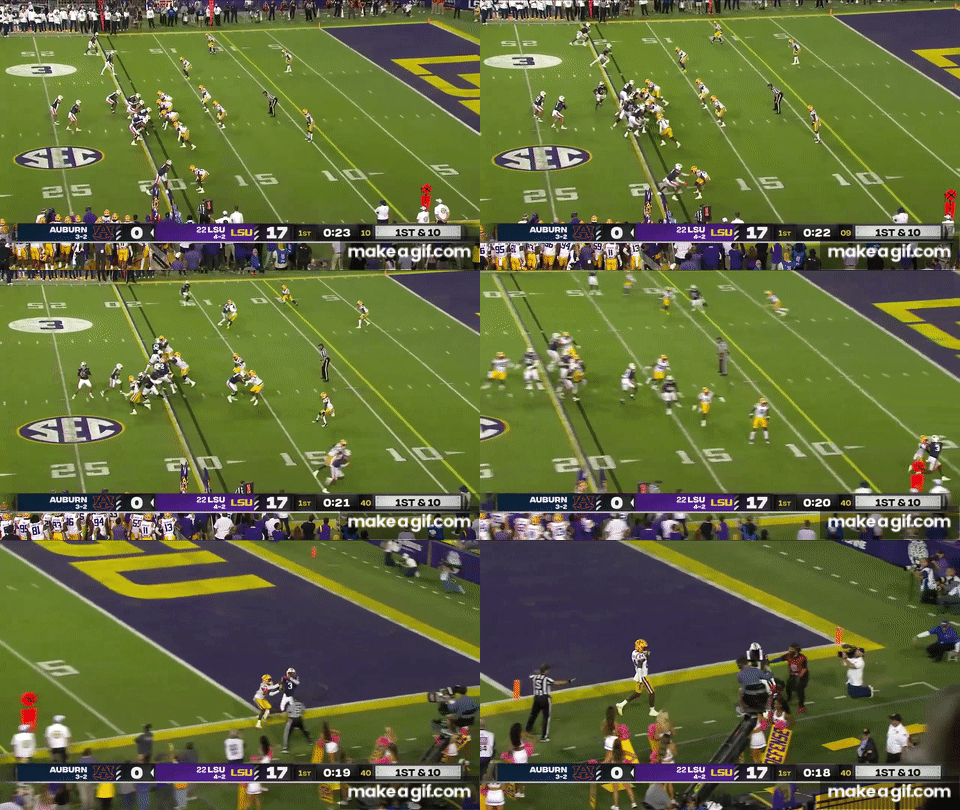
That’s how the defense thwarts all three phases of the RPO game. Man coverage is a perpetual problem for teams that build their offenses around their RPO games, which requires these teams to carry solutions to man coverage (which Brent Dearmon, a former GA under Gus who’s now the head coach at North Alabama, calls “manswers”).
Generally these consist of one of two things. The first is man-beating pass concepts, like the late Mike Leach’s beloved mesh. (For more on that, see the Cal review from a few weeks ago.) Of course, that still requires your receivers to be able to beat defenders if the concept can’t engineer an open receiver, something Auburn obviously can’t do with any consistency.
The other is to involve the QB in the run game, reading the extra defender in the box who would usually be unblockable because the offense doesn’t have enough blockers available. This has been the most consistent source of offense for Auburn all season, but the coaches seem weirdly hesitant to commit to it even though both QBs have proven pretty proficient in it. I think this is because orienting your offense around the read option game requires building the rest of the offense to protect the read option game. In particular, this means having play-action for when the defense inevitably brings additional defenders down to stop the run, something has often struggled with after having some success in the QB run game because teams just don’t fear the Tigers’ downfield threats.
The good news for Auburn is that their conference schedule was heavily front-loaded. They should have a talent advantage over the rest of the teams on the schedule until the Iron Bowl against a Bama team that looks like it could be vulnerable to some Jordan-Hare voodoo. However, we’ve already seen Auburn’s receivers struggle to win consistently against inferior teams before (particularly against Cal). Maybe Auburn can finally get things rolling in the RPO game and establish something of an offensive identity over the final few weeks to create some momentum going into the future. There are still plenty of wins on the table if the offense can just be competent, but more than anything, the new coaching staff needs some proof of concept to get recruits and fans to buy in. Can they manage that? For now, color me skeptical.
 Auburn Analysis
Leave a comment