Auburn’s second road trip of the season looked a lot like its first, with an absolutely hideous offensive performance that almost required the Ludovico technique to watch a second time.
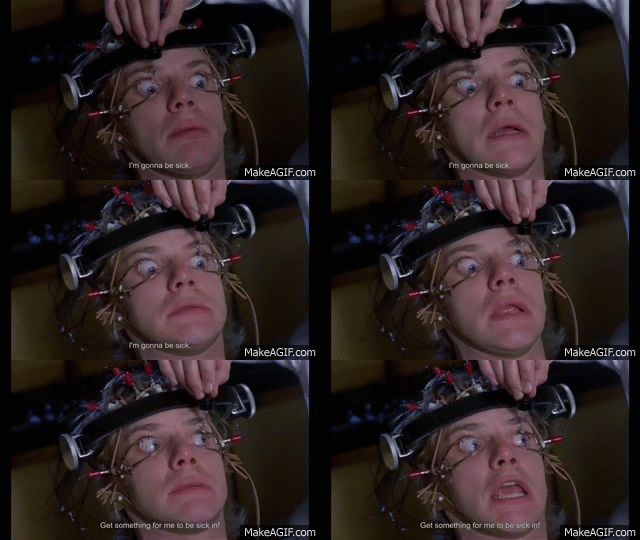
For those lucky enough to have missed it or to have spent Saturday on the golf course the way I wish I could have, Auburn struggled to get anything going on offense for the entire game and put up one of its worst offensive performances in recent memory, even worse than the leanest of the lean during the Potato Famine. I was hoping that rewatching the film would show a clear problem that we could fix and immediately turn things around, but it wasn’t just one thing. Almost everyone shoulders some degree of blame here, suggesting that there are systemic issues that are gonna take more than one season to fix. I think we all knew that going into this season (or I hope we did anyway) but it was still frustrating if not outright dismaying to see it play out in such an extreme fashion on a national stage.
This review is going to focus exclusively on the offense because this loss is entirely their fault. Blaming the defense for this loss would be like blaming the bulkheads on the Titanic for failing instead of blaming the crew for driving it into the iceberg. The only thing I can fault the defense for is Eugene Asante deciding to score a meaningless touchdown in a game we were gonna lose anyway instead of sending Jimbo Fisher to the shadow realm and becoming an instant college football legend. I can even picture the Asante-trucking-Jimbo statue on the Jordan-Hare concourse, right between Bo and Cam.
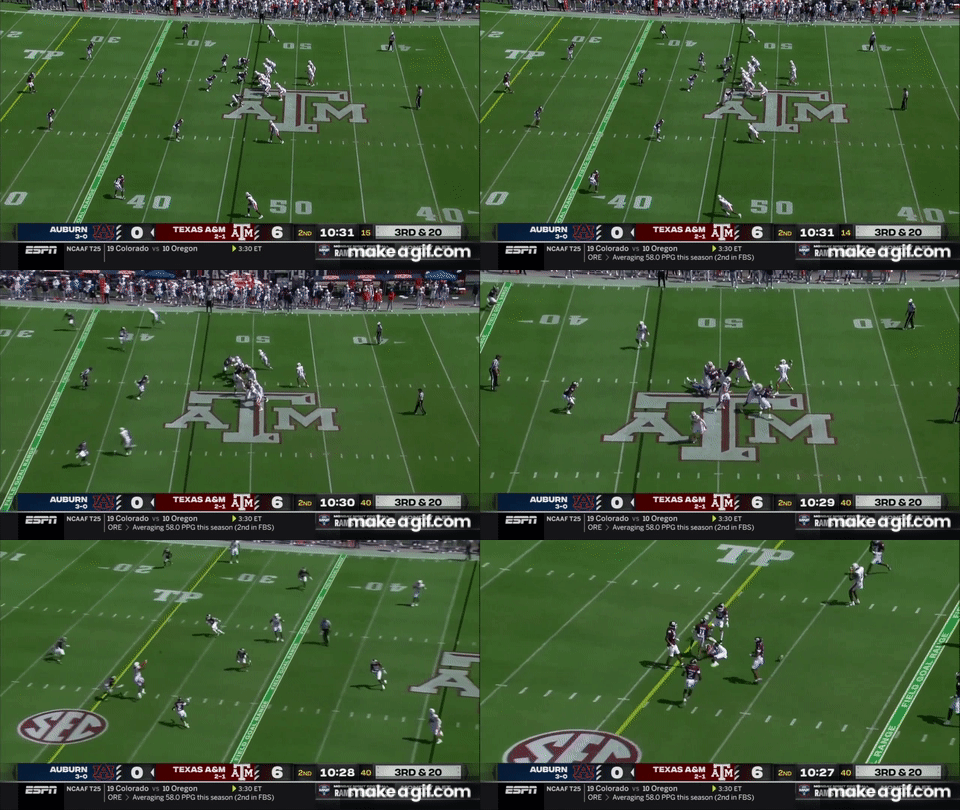
Anyway, enough metaphorical disasters, let’s get into a real one. Auburn won the opening toss, deferred, and held Texas A&M to a field goal after a long, weird, meandering drive. On their opening play of the game, the Tigers offense goes with a variation of counter we’ve seen them use a few times this season, with the center rather than the guard trapping the playside defensive end. The H-back runs to the flat on an arrow route and Thorne is reading the defensive end to either hand off or keep and then the slot defender to keep or throw the arrow. Texas A&M sends the nickel on a blitz, and after Thorne gets a pull read from the DE, the nickel is in his face before he has a chance to throw the arrow. Texas A&M DC D. J. Durkin clearly came into this game with a plan to bring the heat and it paid dividends from the very first play.
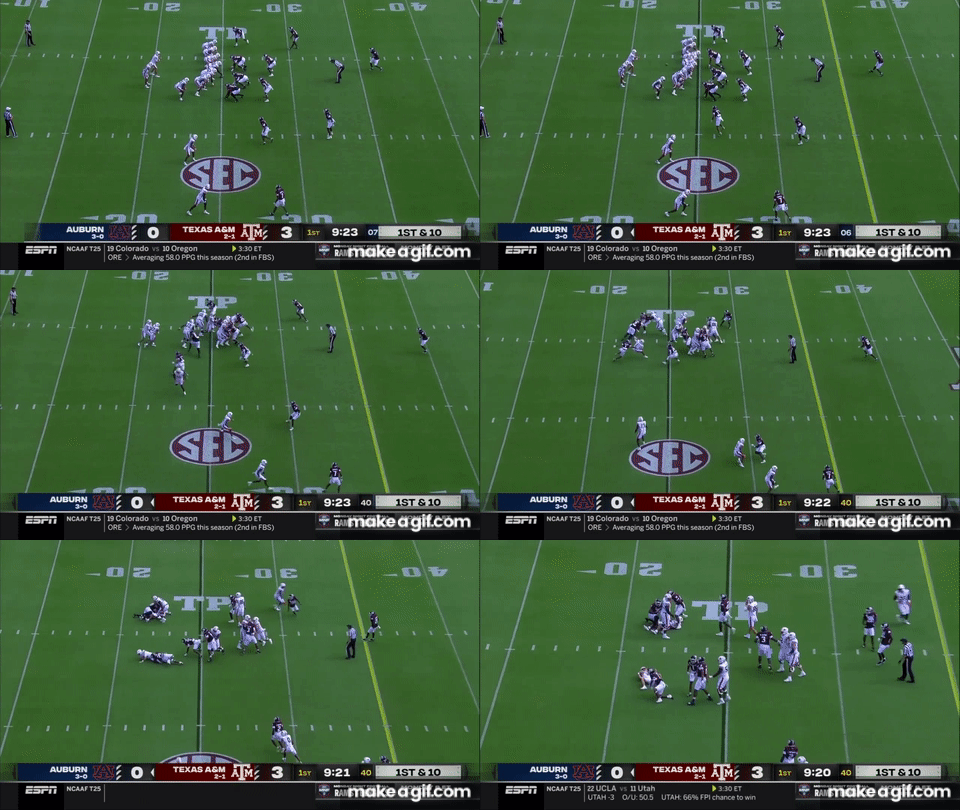
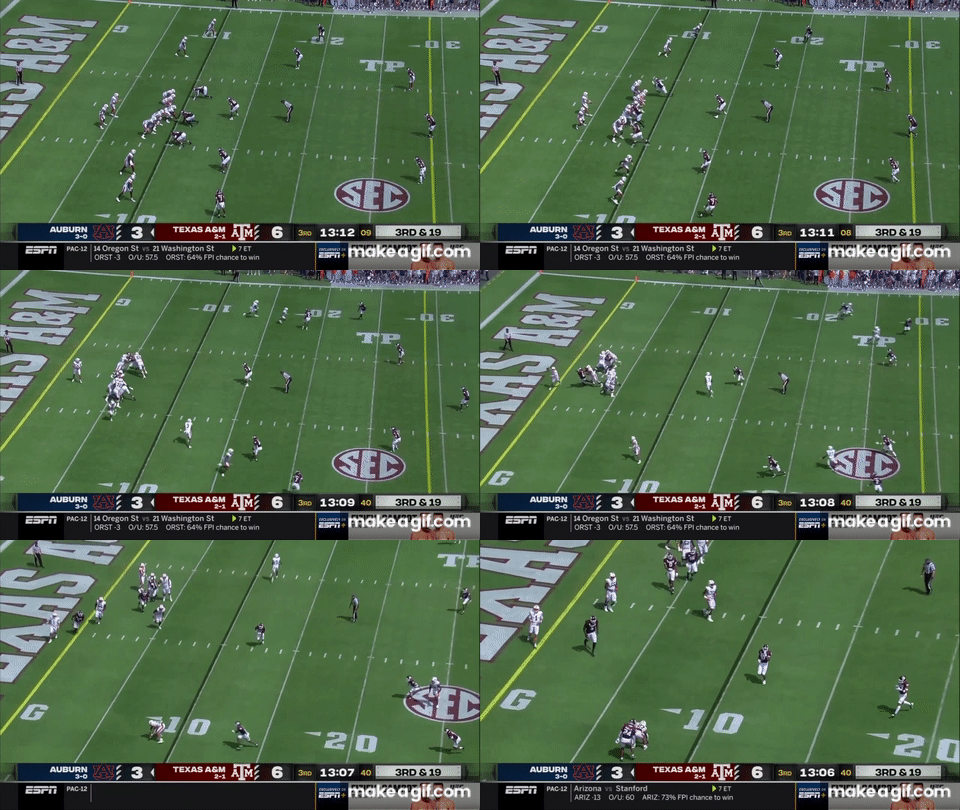
After Thorne was tackled for little gain again on second down, the Tigers faced the first of many third and longs in this game. Auburn starts in a trips look before motioning to a 2×2 look. This is a shallow cross concept, where the X receiver runs a shallow crossing route with the Y receiver running a dig route from the opposite side. The idea behind this concept is to either get the LBs to bite down on the shallow, opening up the dig, or to get the LBs to sink on the dig, leaving space for the shallow. It’s coupled with motion and a switch release to combat man coverage, although A&M is in some type of zone here (I think cover 4). Both the shallow and the dig are open here, and either of them probably would’ve gotten the first down. I’m not sure which of them Thorne was actually trying to throw to (I’m not sure he knew either), but either way he misses and it’s a punt.
After another A&M field goal, Auburn’s second possession got off to a much more promising start than the first. On first down, Auburn goes to one of its bread and butter concepts, GH counter with a stick RPO tag. Thorne hands it off and there’s really not much there up the middle, but Jarquez Hunter bounces it to the outside and gets a first down.
Rather than pushing the tempo, Auburn uses a strange tactic they’d return to over and over in this game for reasons that are unclear to me. They align in a 3×2 empty set before shifting to a 3×1 wing alignment. If this was supposed to elicit some type of reaction from the Aggie defense, I’m not sure what it was. To me, it just looked like a waste of time. The actual play goes well though, as Auburn brings the Z receiver in motion and runs a similar concept to their first play of the game, this time pairing a split zone run with the arrow to the motion man. The motion across the formation enhances the split flow action in the backfield and Jarquez has a wide open cutback lane for another first down. Note that A&M brought the nickel blitz again but the H-back is able to take him out of the play. I’m not sure if that was a conscious adjustment to the first drive or if this was still the pregame script, but it made sense.
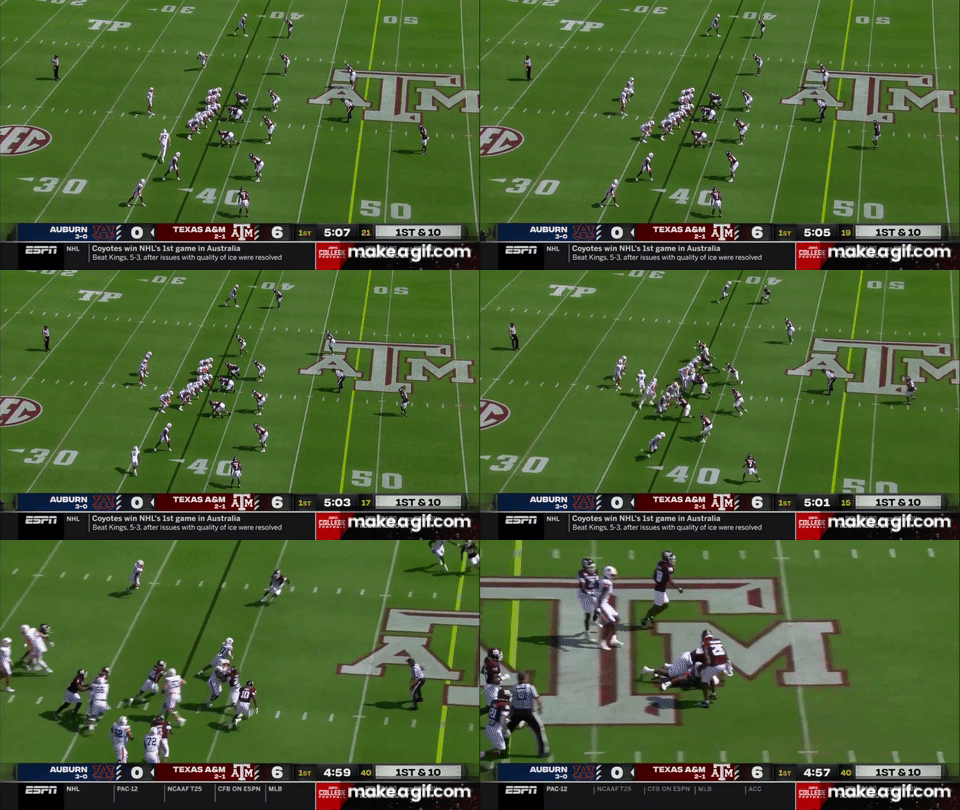
The Tigers returned to the same concept two plays later and again, they’re able to cancel an Aggie blitz and pick up another first down.
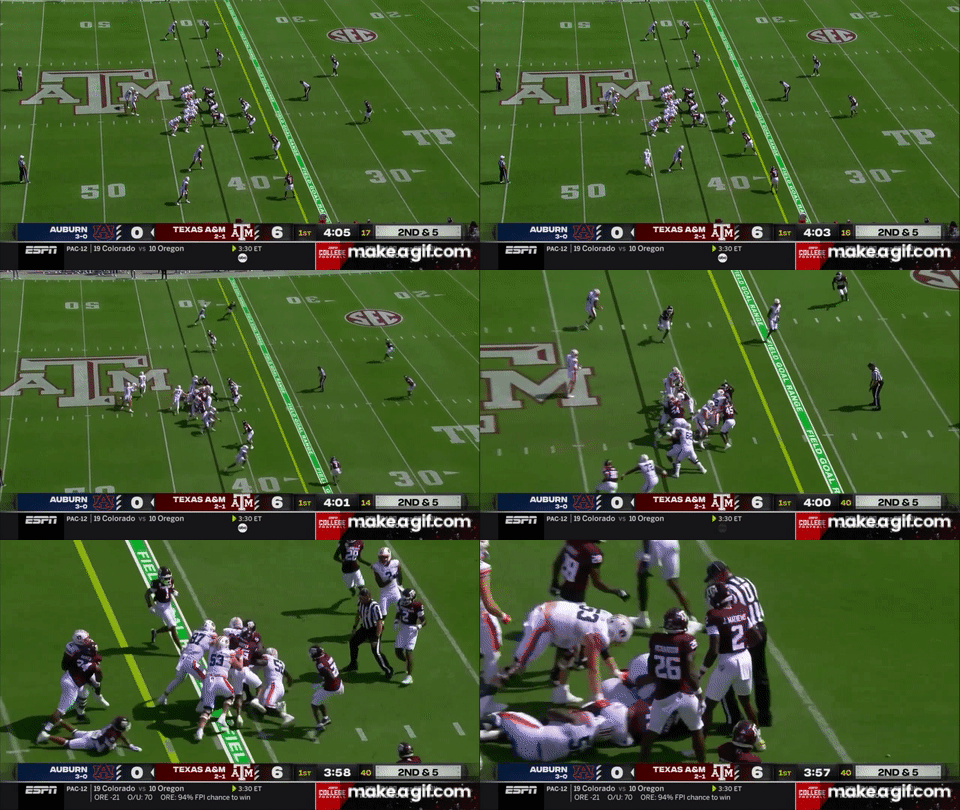
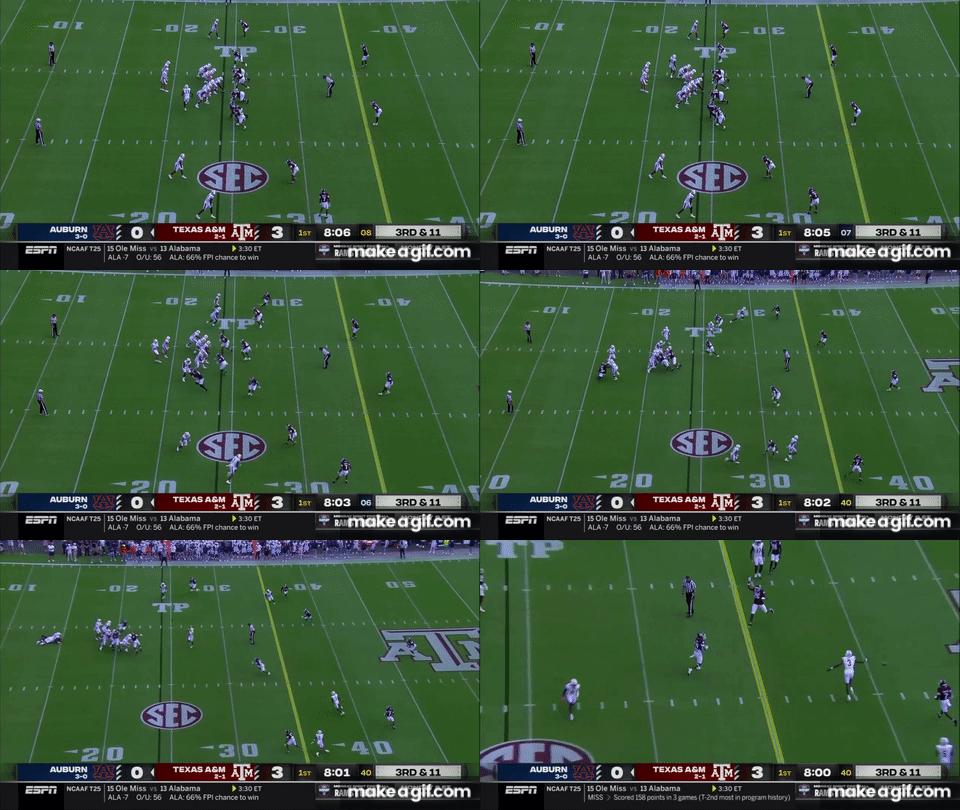
And then we get to this. Auburn runs a play that I honestly hate: a toss read off of GT counter action. I have a long, abiding hatred for shotgun toss sweeps that goes back to a fumble in a high school game 17 years ago that I doubt anyone else remembers, but even when it does work, it looks hideous. This play…does not work. The idea is similar to a standard read option play: the QB reads the DE and will either run the counter or toss the ball to the RB depends on what he does; the H-back is supposed to arc block the corner with the WR cracking the run support player (I assume), but Texas A&M brings the corner on a blitz and Brandon Frazier has no chance of picking him up, allowing him to blow the play up. Thorne makes the correct read and is very, very fortunate that his toss was ever so slightly forward, leading to it being ruled an incompletion rather than a scoop-and-score. I’ll spare you the runback that didn’t count and the interminable review (alas, the NCAA has yet to implement my proposed official review pitch clock).
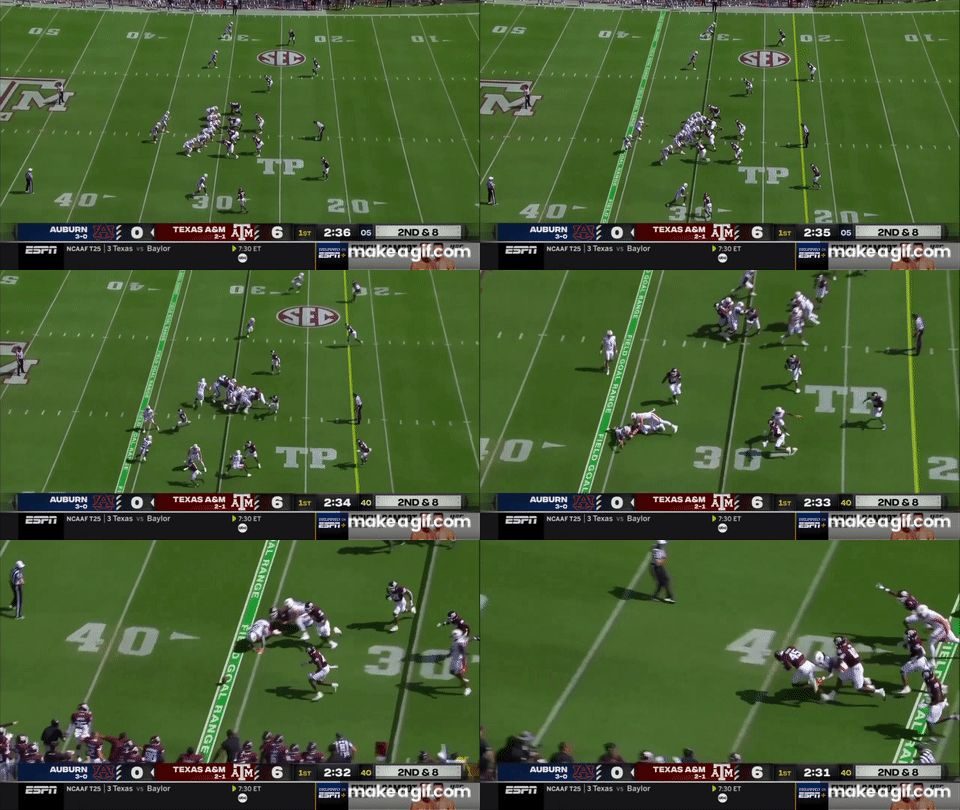
Having been given new life through Auburn Jesus’ first appearance of the day, the Tigers immediately decided to waste the opportunity. I’m honestly not sure what the pass concept is here; it looks like a quick out or stick route, combined with a post-wheel or scissors concept, something Auburn ran a few times out of 3×1 sets in this game. However, it barely matters what the receivers are doing; A&M comes with a six-man pressure, and Auburn is unable to pick it up with six protectors; Jarquez does his best but gets blown up, leading to a sack and a (near disastrous) punt that nets…six yards, despite an incredible effort from Oscar Chapman to even get it off in the first place. Bizarre game management there, especially considering that Alex McPherson was allowed to attempt (and converted) a field goal from roughly similar distance later in the first half.

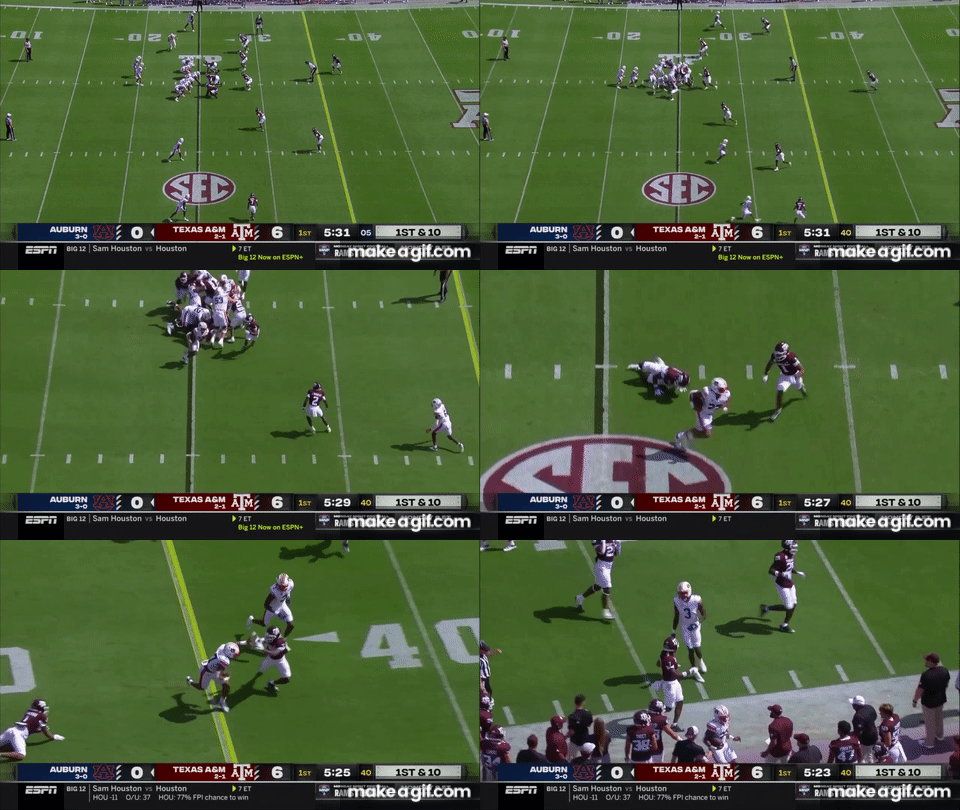
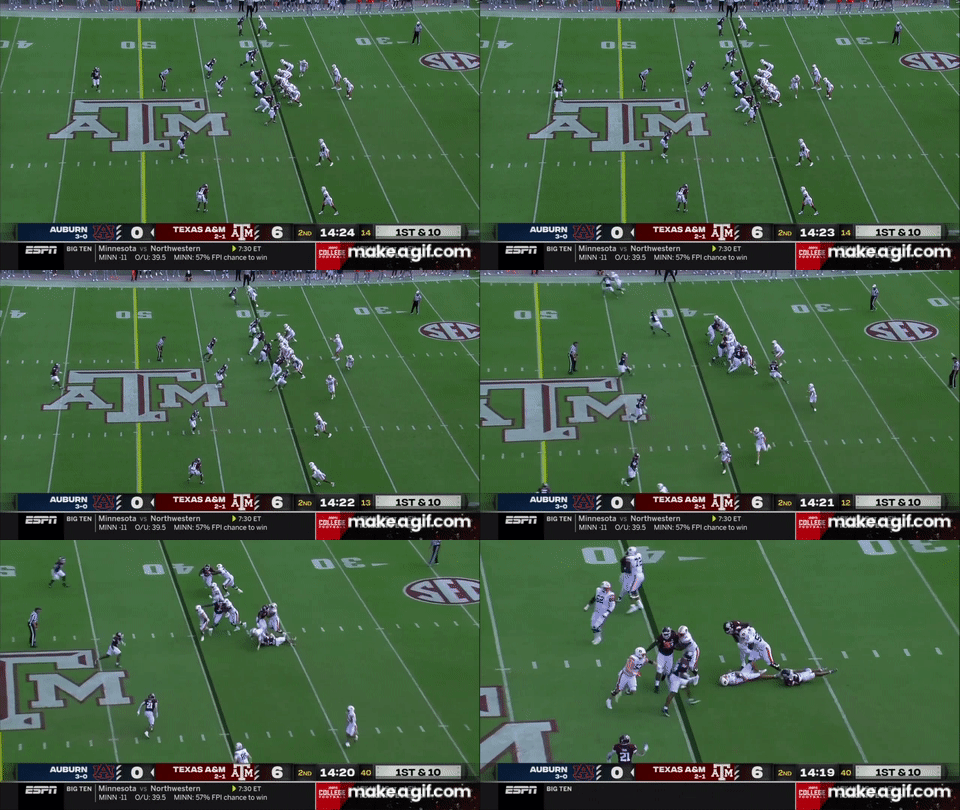
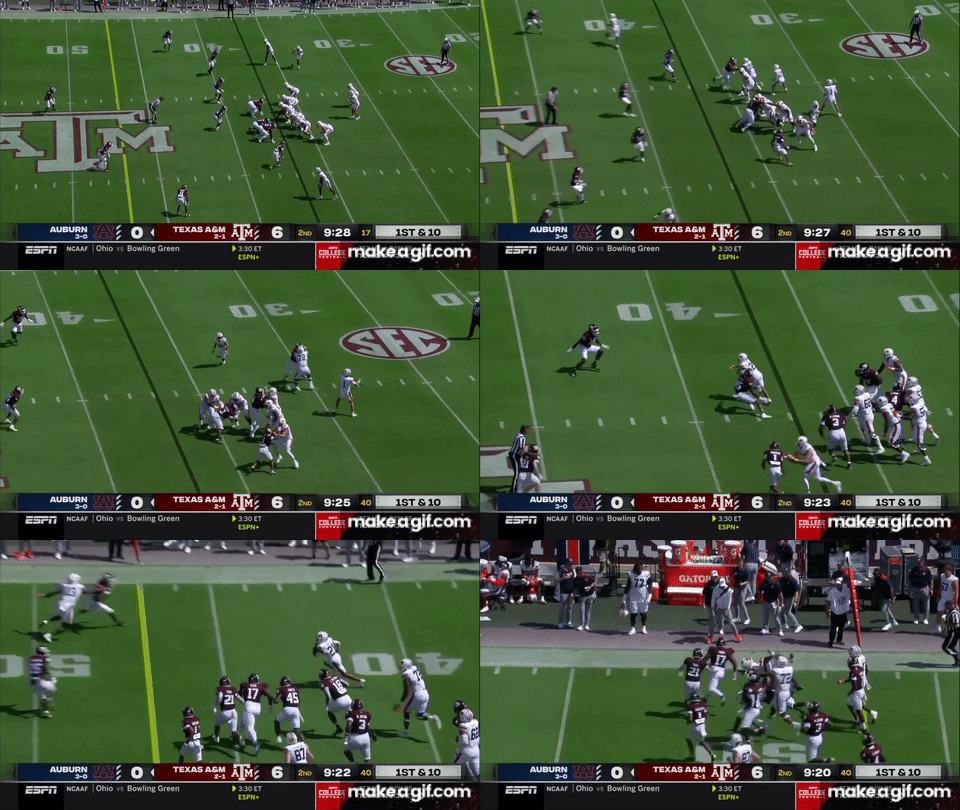
Auburn came out on the next drive and went back to the air, this time deciding to move Payton Thorne out of the pocket and away from the teeth of the A&M pass rush. This is a simple flood concept: three receivers running at different depths on the same side of the field, hoping to create a three-on-two overload against a zone defense. Thorne isn’t exactly great at throwing on the run and doesn’t deliver the best ball here, but he gets it to Battie in space, which is always a good idea, and he’s able to scamper out to the 40 for a first down.
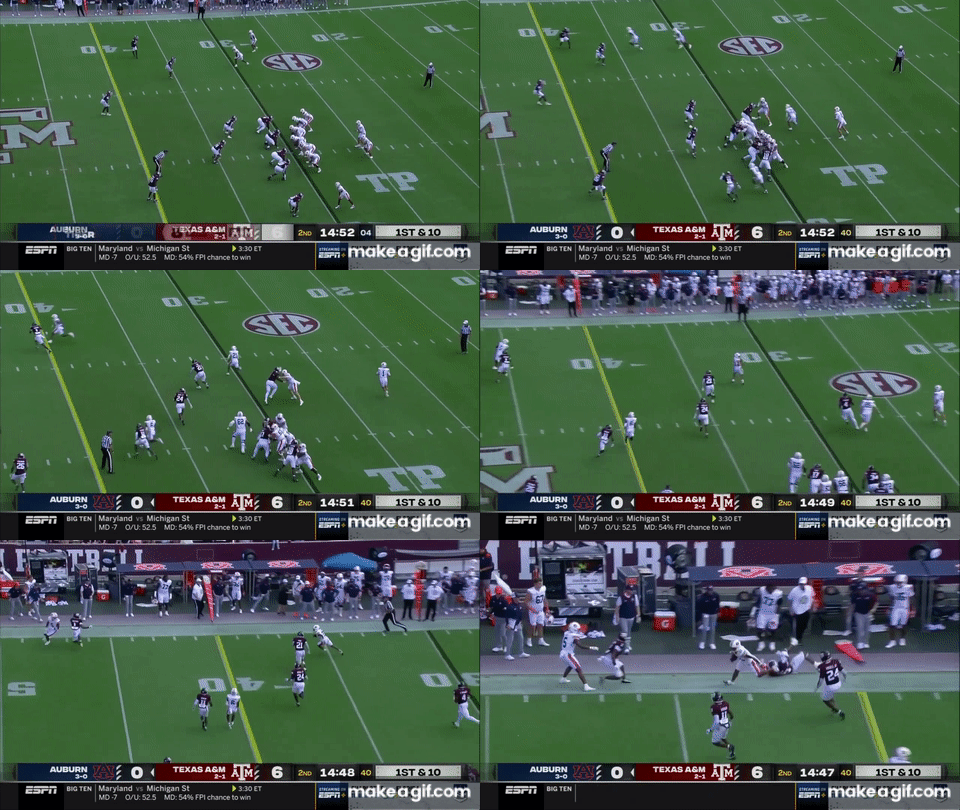
However, on the next snap, Auburn decides to try to use Thorne’s legs directly and it doesn’t go so well. Running a draw when you’re getting pressured makes sense in general terms, but it should have been obvious pre-snap that this wasn’t gonna end well. Auburn motions the H-back out of the backfield and the Aggie nickelback comes down the line to the edge of the box showing blitz. Thorne either doesn’t see it or doesn’t recognize the problem here and goes ahead with the called play, which predictably gets blown up to put Auburn behind the chains yet again.
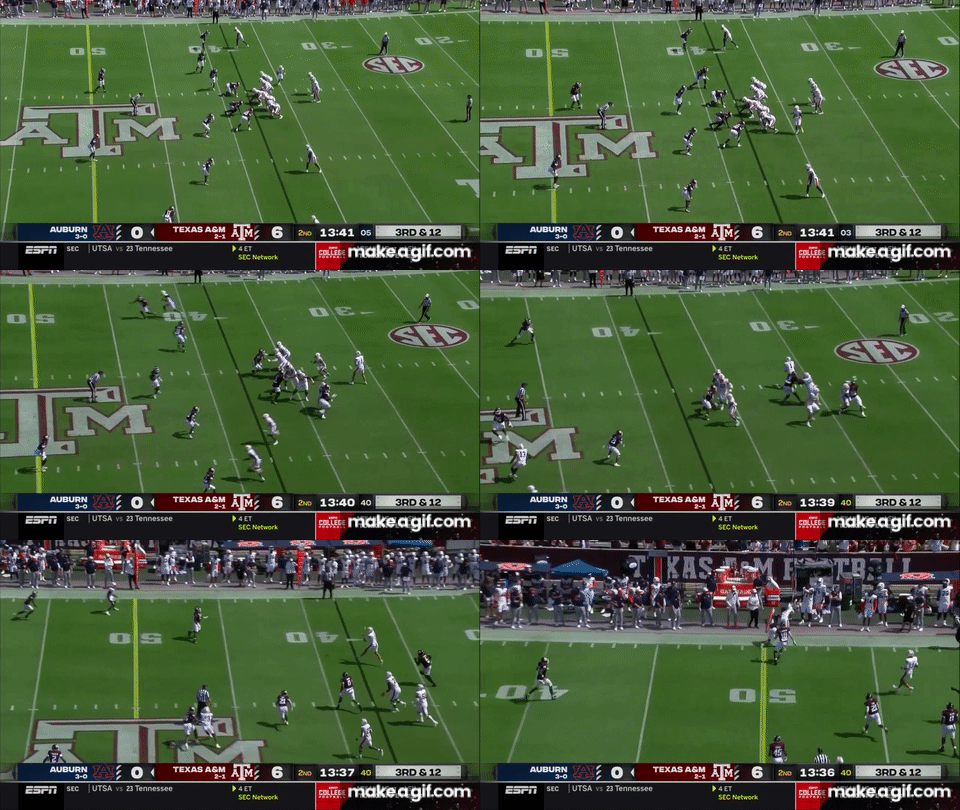
After Thorne overthrew a receiver who wasn’t really open anyway, the Tigers offense was looking at another third and long and a passing situation. I’m not exactly sure what Auburn is running here (thanks TV camera angles). This time, Thorne makes one of the few good decisions he made in this game, seeing and avoiding the pass rush, escaping the pocket, and finding Shane Hooks at the sticks for the first down.
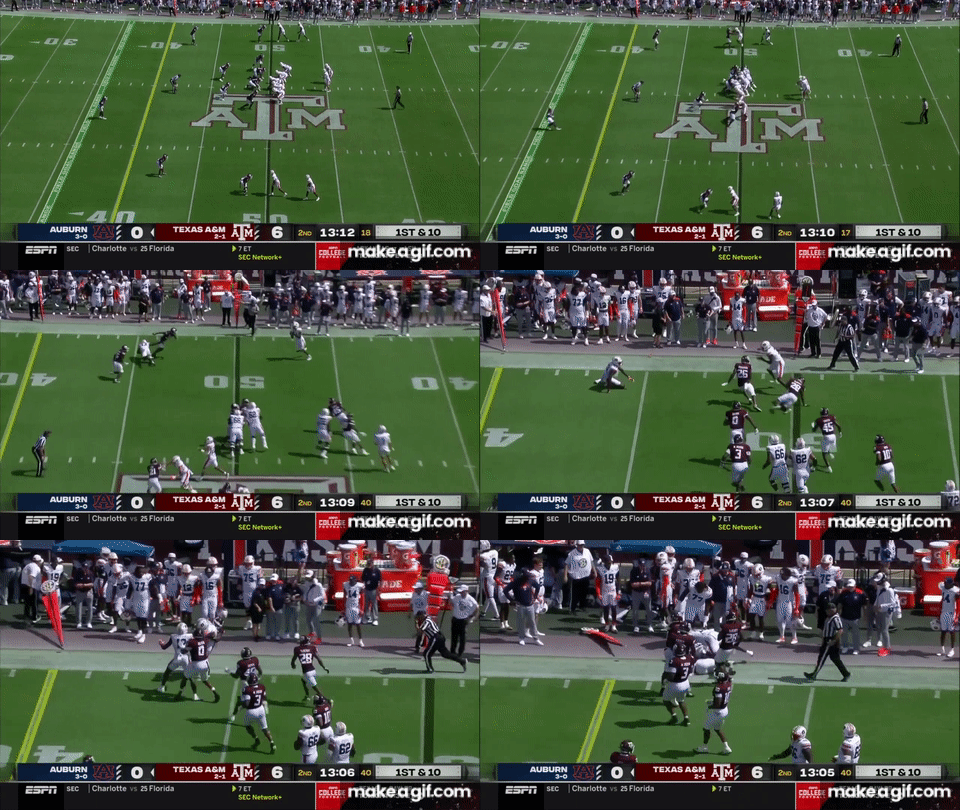
On the ensuing first down, Auburn goes with another tactic that we’ve discussed before here: stacking the outside receivers to create confusion among the defenders about who is responsible for covering whom. In this case, it’s just a simple RPO with Auburn’s base inside zone run and a quick receiver screen; A&M matched the numbers but Thorne likes the leverage of the DBs (I assume) and throws the screen for positive yardage. This was one of the few times during the game where I thought that we were actually doing a decent job of consistently executing our core concepts. It was also one of the last, so don’t get used to it.
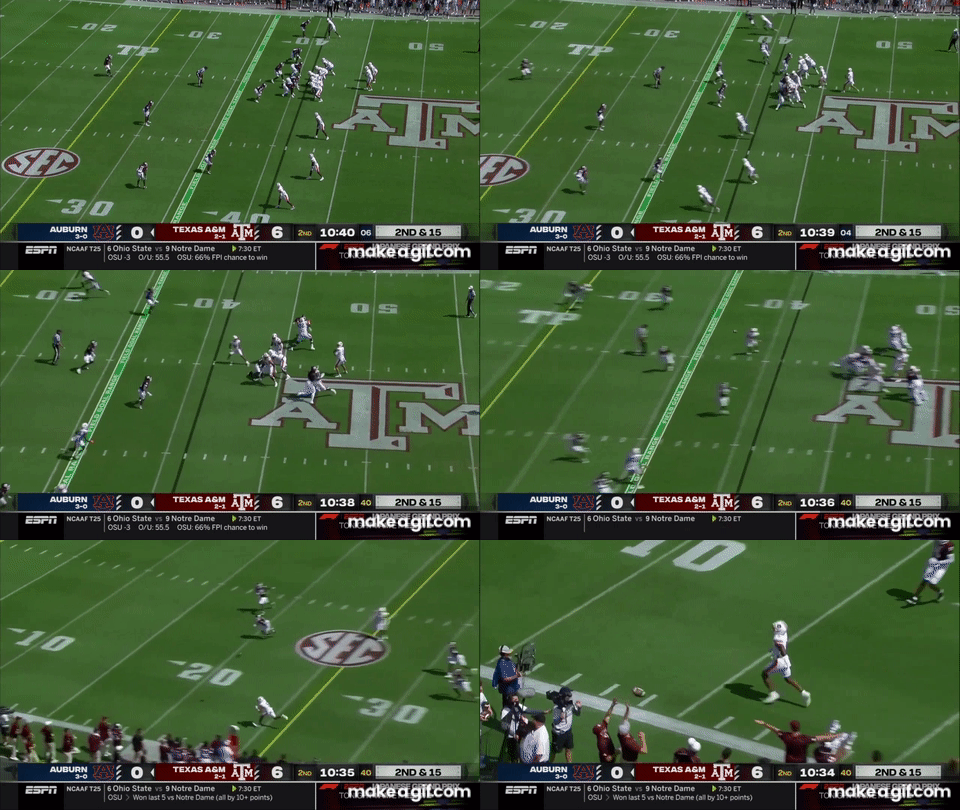
After a good run picked up another first down, Auburn found themselves back in scoring territory. On first down, the Tigers used that weird shift followed by the receiver motion again, but the Jarquez Hunter does a good job of being patient and making a decisive cut for another first down…that was subsequently wiped out by a hold. Longtime readers of the blog (aka people who read the last post) will know that this has been something of a theme for Auburn this season: get a drive going, get to the edge of scoring territory, commit a stupid penalty and kill the scoring opportunity. More to come.

Thorne managed a short completion on the replayed first down, and then on second down, Auburn went back to that post-wheel concept they had run earlier in the game. This looks like the way Mike Leach would run the stick concept out of 3×1 sets, with the #1 and #2 receivers running a post-wheel and the #3 receiver running the stick.

(Shoutout to Millennial Football for the image)
Despite Auburn already having run it a couple of times, A&M completely busts this coverage and leaves the wheel wide open for a walk-in touchdown…but Thorne throws the ball into the next county. The #1 rule of playing QB is that you never overthrow a wide open receiver. If that ball is anywhere near him, it’s an easy touchdown. Maybe the fact that he’d already been under significant pressure much of the game got to Thorne, as it looks like he’s got happy feet here and never really sets to throw, which was a frequent problem early in the career of another Auburn QB who has since gone onto bigger and better things elsewhere. No ambiguity here, this one is 100% on Thorne.
After a false start, Auburn was right back in the same place they’d already spent much of the game: third and long. Here, Auburn opts for some type of double post concept (could be mistaken for outside choice but I’m almost certain it’s not). For once, the pass rush is actually picked up pretty well, Thorne stands in the pocket and delivers a catchable ball to the receiver on the post route that would have been close to the first down and he…drops it. The throw was a bit high, but if you want to be a starting WR in the SEC, you’ve got to catch those types of balls.
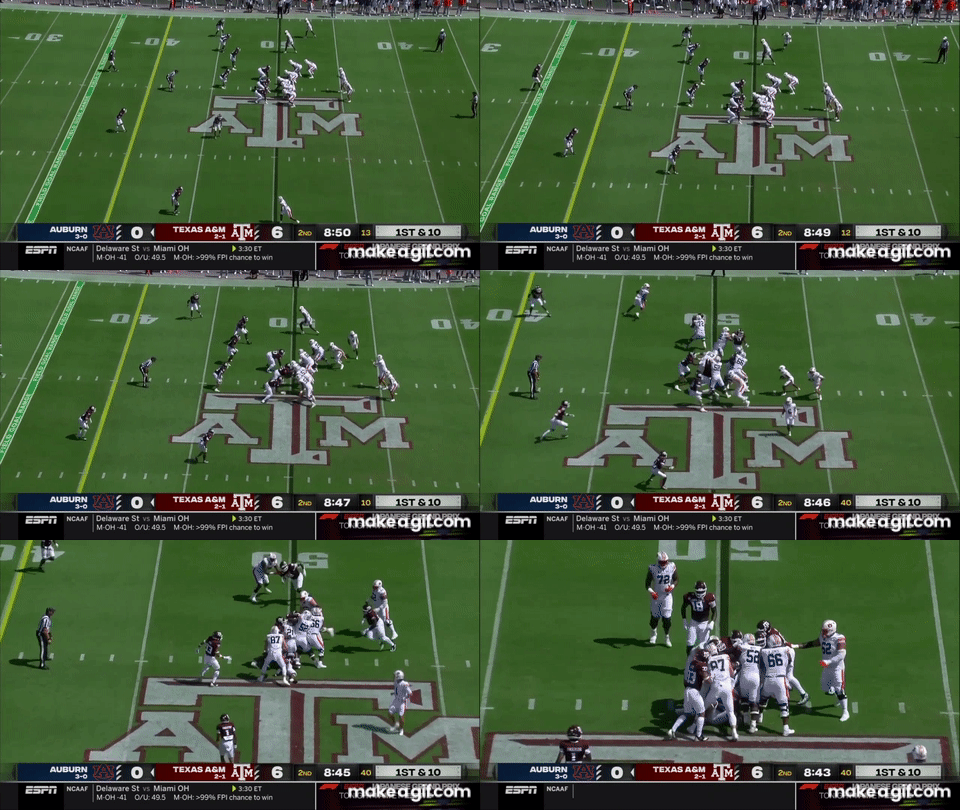
Auburn and Texas A&M exchanged punts again, netting a loss of about 20 yards. On the first play of the next series, Auburn goes with some type of play action concept (not sure what it was, thanks again TV camera angles), Thorne actually gets through his progression, finds his checkdown, and he manages some great yardage after the catch to get the Tigers out to midfield.
Once again, instead of pushing the tempo and getting the next snap off as quickly as possible, Auburn opts for that weird shift from 3×2 to a 3×1 wing set. This is just baffling to me and I can’t really discern any explanation for it. The playcall is the same as it was on the previous plays where they used that shift, a split zone play with an arrow to the backside. This one is dead in the water though as the TE completely whiffs on his block and the LB stuffs the run for no gain.
On the next snap, Auburn tries another QB draw and actually finds some success…but it’s wiped out by a holding penalty. This is really a nice microcosm of the game here, because even when the other parts of the offense are working well, someone manages to make a mistake that undoes all of that good work. Sometimes it was bad playcalling from the coaches. Other times, it was Thorne making bad decisions or missing open receivers when he wasn’t under pressure. Still other times, the offensive line missed an assignment in run blocking or pass protection or committed a penalty that negated a good play. The plays where all three of those parts of the offense came together and avoided mistakes went well, but those were few and far between.

Thorne ate a sack on the replayed second down where he stepped right into pressure against a three-man rush even though he had an open receiver and time to hit him, followed by a give-up run call on third down that actually got the Tigers back into A&M territory. Here we have more bad game management from the coaching staff. 4th and 4 at the opponent’s 44 midway through the game is a bit of a gray area, but the math says that you’d increase your win probability by about 2.5% by going for it and converting here. I can understand their lack of faith in the offense to get four yards, but the defense was playing well and the amount of field position you gain from punting there is relatively small. They should have gone for it here. I didn’t end up changing much since they got the ball back in identical field position after the exchange of punts, but it was still the wrong call.
Auburn opened its last possession of the half on the fringes of scoring territory and on the fringes of the #MiddleEight. For the first time in this game, the Tigers offense started under center, shifting from a heavily unbalanced set and then motioning to create a bunch to the right. There’s only one play I’ve ever seen Freeze’s offenses at Ole Miss and Liberty run out of this type of set, and it was a toss sweep (incidentally, that’s about the only thing Gus ever ran from the under center bunch sets he used out of fire alarms). And what do you know, toss sweep. Not much doing there. Kind of predictable. I like the idea of shifting the TEs across the formation to flip the run strength (one of the very very very few good ideas that we saw on offense during the Potato Famine) but it works better if you snap it as soon as they’re set rather than giving the defense time to reset their front.
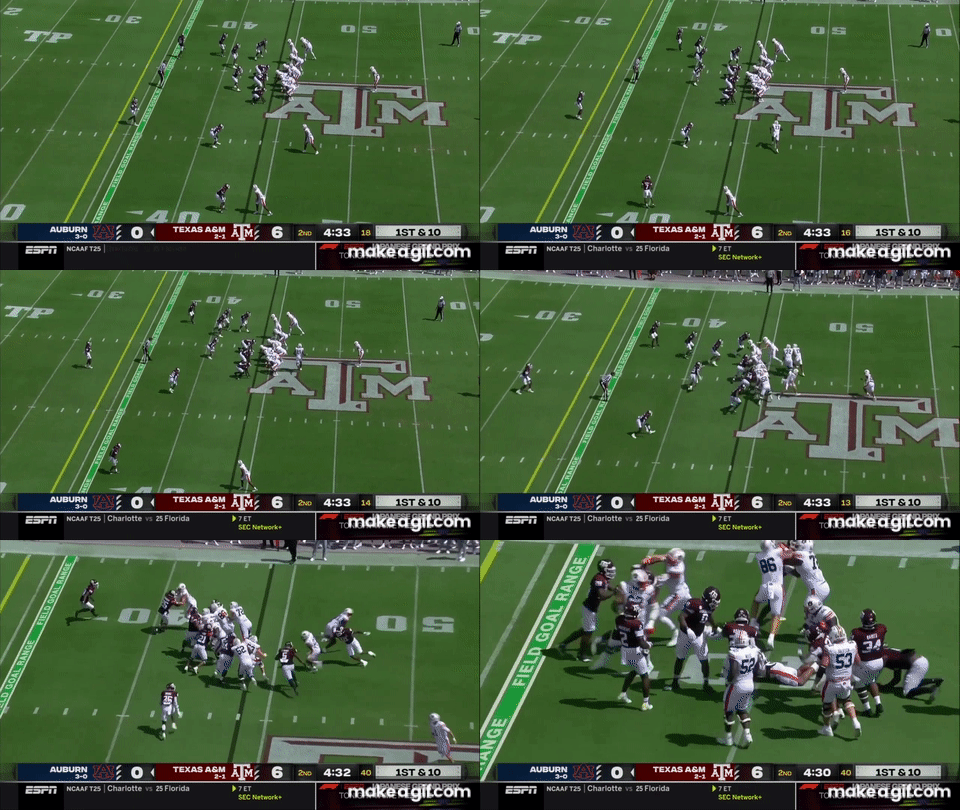
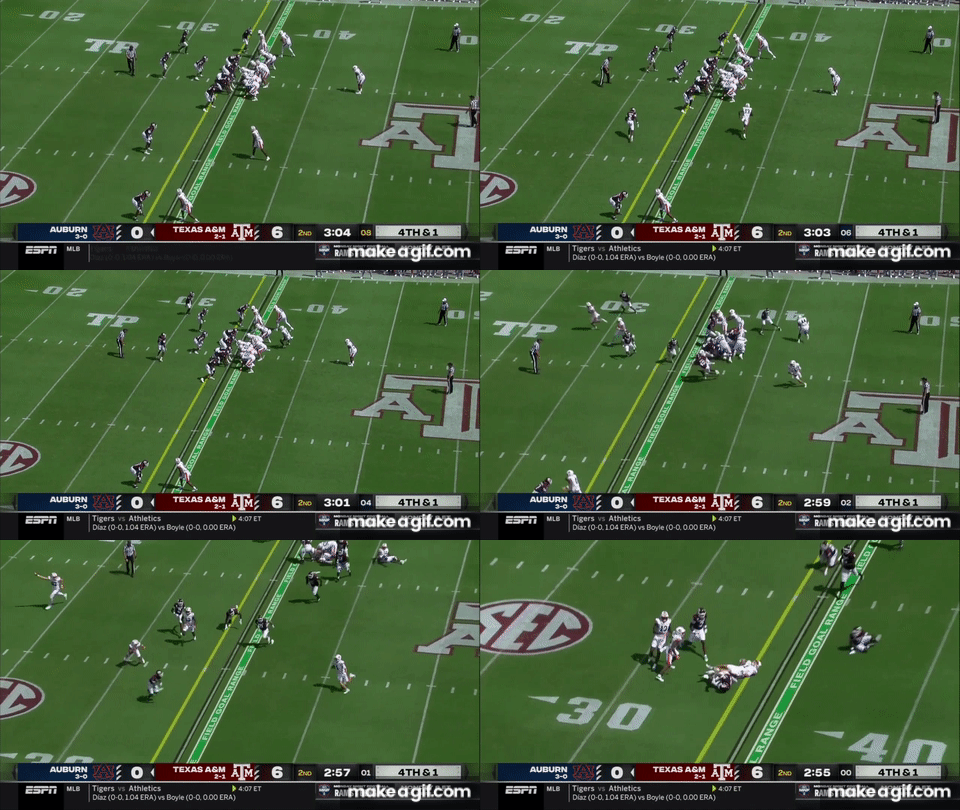
However, that toss sweep did set up an interesting fourth down call. Auburn got a good gain on the ground on second down, followed by getting stuffed on 3rd and 1. On the ensuing fourth and short, Auburn showed that toss sweep and ran a naked bootleg to the backside. If you’re old like me, you might remember another famous naked bootleg in short yardage: Stan White’s game-winning fourth-and-goal touchdown run against Indiana in the 1990 Peach Bowl. Thorne’s relative lack of speed shows on this play, but he manages to helicopter his way to a first down. Good call, maybe not the exact personnel you’d want running it.
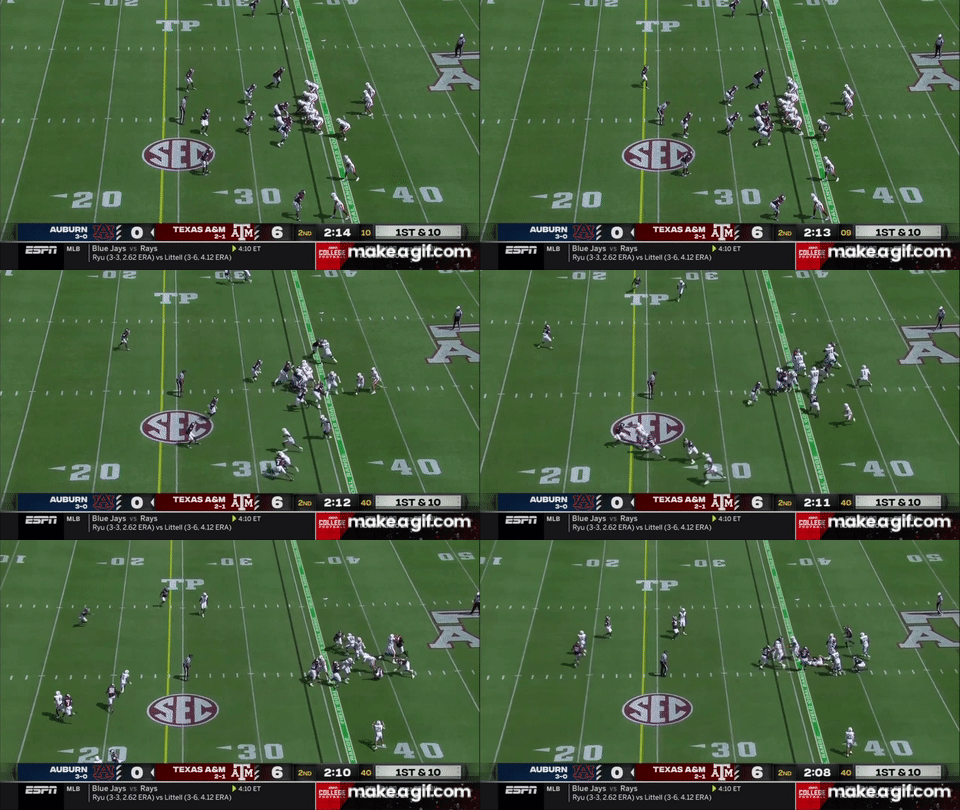
Following that conversion, with about two minutes left (the tempo on this drive was oddly slow given the situation), Auburn went to the air looking for a big chunk. This looks like some kind of dagger concept with a wheel route to the outside and a shallow from the other side, maybe hoping to elicit the same kind of coverage bust Auburn got on that post-wheel concept where Thorne overthrew an easy touchdown earlier in the quarter. It’s actually an interesting design, combining the post-wheel on the frontside with a levels read on the backside and I don’t think Auburn went back to it, which is a shame. However, once again, it hardly matters what the receivers were doing, as the RG whiffs on the DE, forcing Thorne to take evasive action and allowing the fifth rusher to get home.
Auburn managed to get a bit of the sack yardage back on a second-down run to set up third and 8. Not ideal, but shorter than the average third down yardage for Auburn in this game if you can believe it. Auburn uses a bunch set for the first time in this game (one of the first times all season I think), with the idea being similar to the two-receiver stack: create confusion about coverage responsibility and create rubs against man coverage. This is a drive concept, which is a variation of the shallow cross concept we discussed earlier; in this case, though, the shallow crossing route and the dig route come from the same side of the formation. However, and stop me if you’ve heard this one before, Auburn fails to pick up a six-man blitz with six pass protectors.
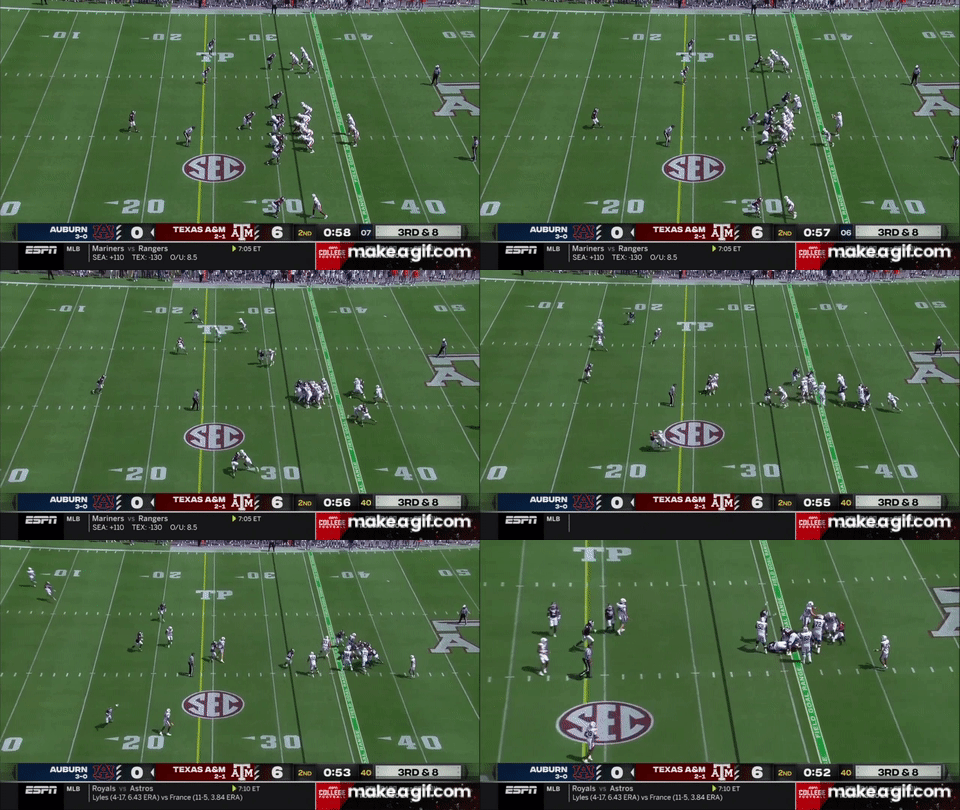
By this point, A&M has realized Auburn’s pass protection is a sieve and they were bringing the house on almost every passing down, knowing that Thorne wasn’t going to make quick enough decisions to punish them. Alex McPherson was nonetheless able to convert the field goal and prevent the Tigers’ offense putting up a bagel in the first half.

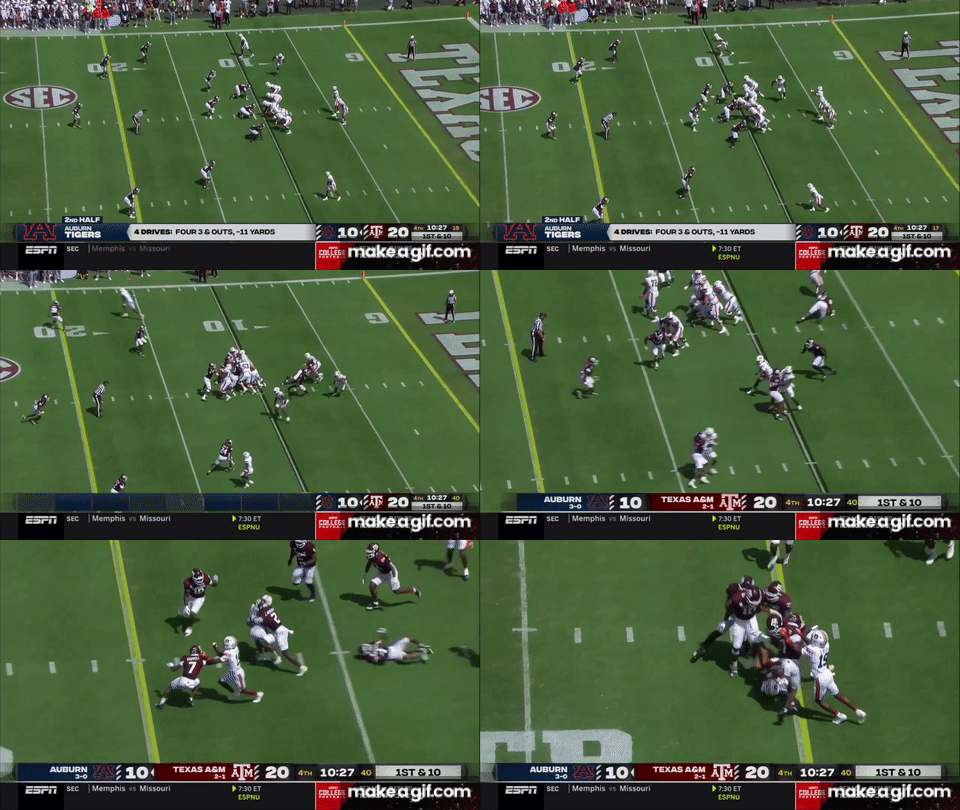
For those hoping to see some second-half adjustments, I’m afraid you’re out of luck (although I’m generally not a believer in the idea of second half adjustments and I doubt Auburn’s problems in this game were something you could adjust your way out of). On the first play of the second half, A&M picked right back up where they left off, bringing the heat with impunity and once again creating a negative play, as the backside rush is able to get to the RB from behind.
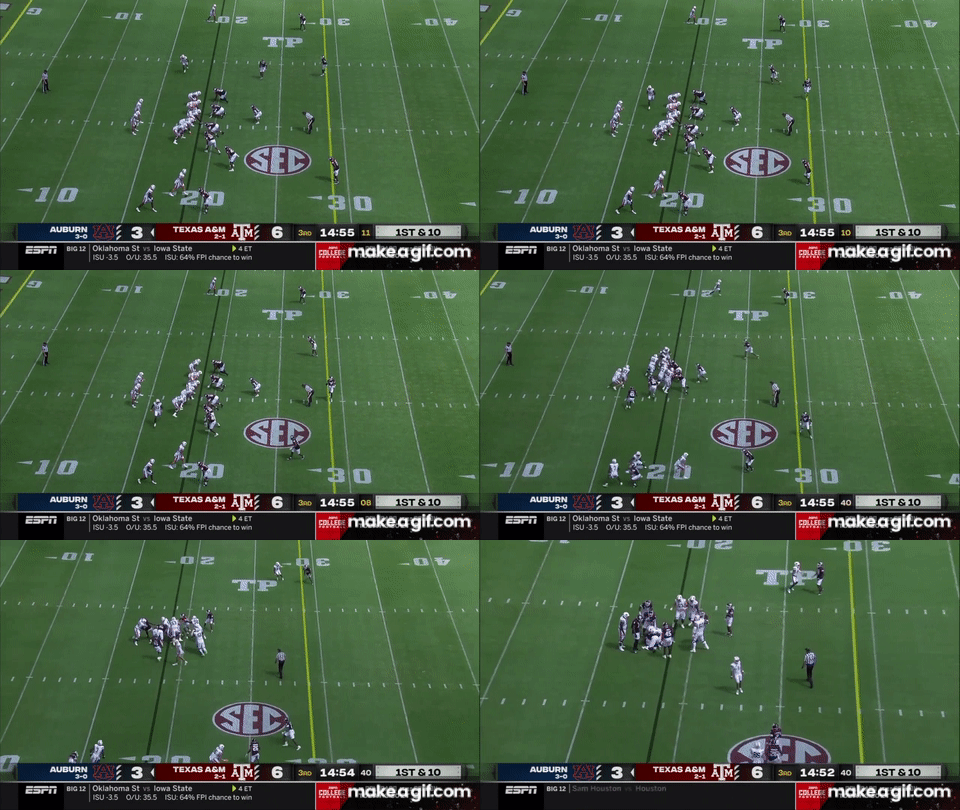
Following a sack and a false start, Auburn was once again in a third and very long situation, backed up against their own end zone. In this situation, A&M was content to drop eight defenders into coverage, figuring that it wasn’t necessary to apply pressure in that situation. They were completely right, as the nose bullies his way right through a double team, forcing Thorne to bail out and try to find his checkdown, which he was unable to do (probably for the best because he would have been tackled for a loss and gotten lit up in the process had he caught the ball). I know I’ve been critical of him, but I feel for Thorne here. It’s hard to play QB when your line can’t even pick up a three man-rush.
On the next series, now down 13-0, the coaching staff enters the “throw stuff at the wall and see if it sticks” phase of the contest, bringing Robby Ashford off the bench in place of Payton Thorne, presumably hoping his legs could provide enough of a spark to reignite a stagnant offense. Except…they didn’t really use his legs on this series? Very weird sequence here.
On first down, Auburn lines up with two backs and a tight end, which already raises questions since having that many players in the backfield is just inviting more defenders into the box, which makes no sense when you’re struggling to block even against light boxes. I don’t think this counter play even had a read component, which makes it even weirder. The RB doesn’t really give the blocks time to set up on the playside, and it’s stuffed for no gain. (Not sure why the video gets dark there, I assume it’s something like the part of the crucifixion story where the sky turns dark because God has to turn away from the sight of the embodiment of sin.)
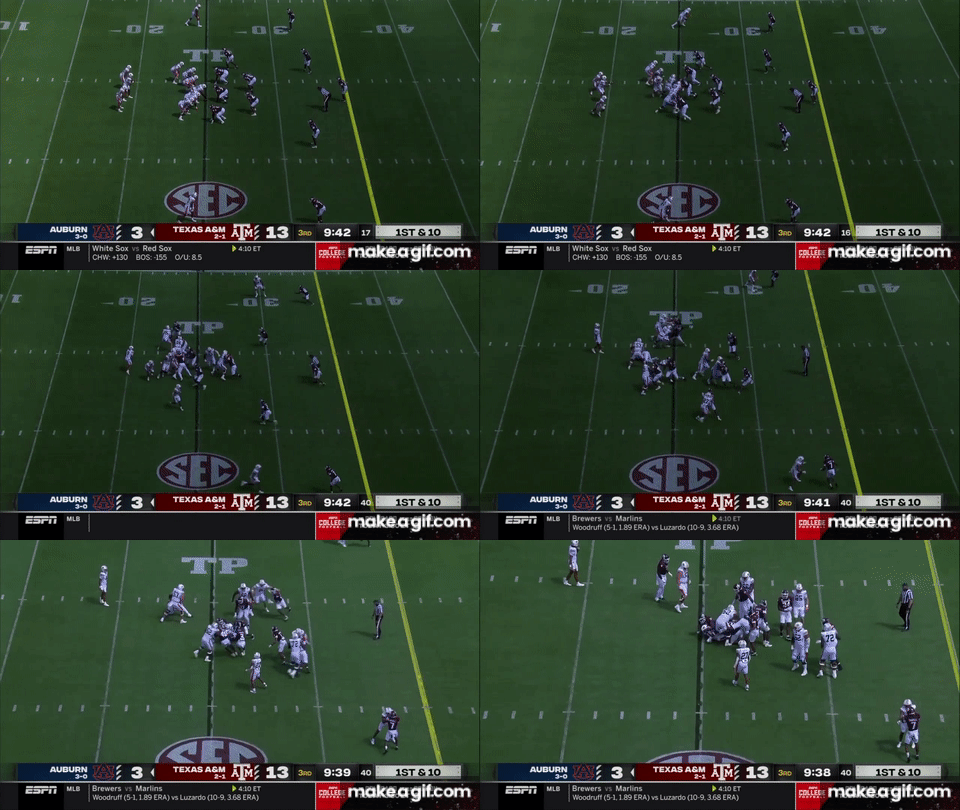
This was followed by an incompletion where Ashford overthrew a receiver who may have had a step on the defender on a deep post route by about 10 yards, followed by another false start and a play that would have been a coverage sack if it weren’t for Robby’s legs, and where it wouldn’t have mattered anyway since Auburn still managed to get called for a hold. Shaky QB play followed by a comedy of errors from the offensive line. The more things change, the more they stay the same. No need to sit through any more of it. Onward.
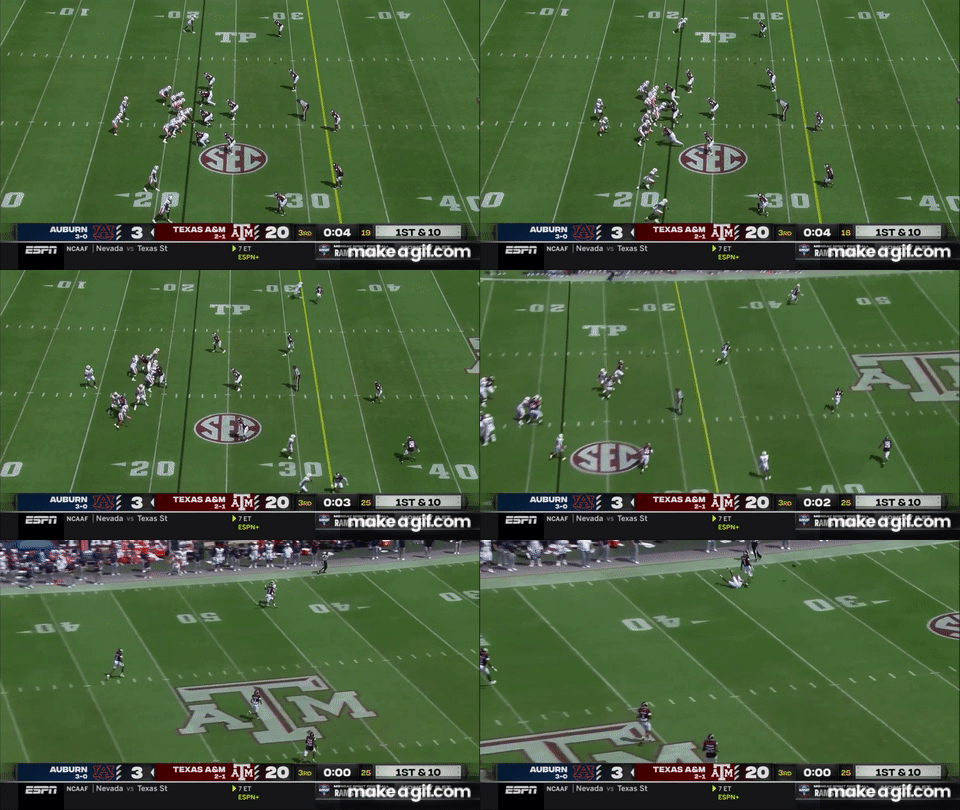
Auburn went three and out again on the next series, but got the ball back with four seconds left in the quarter. Here, for the first time all game, Auburn goes to a vertical choice concept. I can kind of understand why they hadn’t run it before, given that Auburn could barely protect long enough to throw short passes, but this again calls into question whether Auburn has the personnel to really make vertical choice a significant component of the offense. It should go without saying that even though the receiver managed to stack the corner, the ball was underthrown and incomplete. After a short run by Robby and a debacle of a play by Thorne that nearly ended as the most embarrassing fumble ever, Auburn punted the ball away yet again.
The next Aggie possession gave us the hilarious Asante scoop and score for Auburn’s only touchdown of the game, followed by a punt that left Auburn backed up on their own 10 yard line. On the ensuing series, Auburn was essentially at a make or break point in the game, where they had to score or the game would have been over. Thankfully, the Tigers finally decided to run plays that properly used Robby Ashford’s skill set. On the first play of the series, Auburn brings a receiver in motion to use him as an extra blocker on a zone read play. This is known as arc read, where the extra blocker pulls around the end to care of the run support player on the perimeter (i.e. arc blocks, named for the shape of his path) in case the QB pulls the ball; this was a staple of Gus Malzahn’s offense during the Nick Marshall era and it works well here too.
Two plays later, Auburn went to a concept I had been begging the TV for since Robby entered the game. This is what’s known as a bash concept (an abbreviation for “back away”). Many even-front (four-defensive-lineman) defenses will respond to shotgun sets by setting the strength of their defensive line to the side where the back is lined up, usually with a defensive tackle in a 3-technique (on the outside shoulder of the guard) and the defensive end in a 5-tech (on the outside shoulder of the tackle) or a 6-tech (directly over the tight end), since this tends to be a difficult look to run core plays like inside zone and power against. Bash concepts take advantage of that by having the RB show run action across the formation while the QB runs to the side where the defensive line set its strength (i.e. where the angles are favorable for gap runs like power and counter).
Here, you can see A&M has loaded up the left side of the line. Auburn runs its basic GT counter scheme, leaving the defensive end to the wide side of the field unblocked; Robby will either hand it to the RB on the sweep to the right or pull it and run the counter based on what he does. In this case, he crashes down (as defensive ends are usually coached to do in response to the tackle pulling away), opening up space for the sweep and Auburn’s longest run of the game (that probably should’ve had another 15 tacked on but whatever).
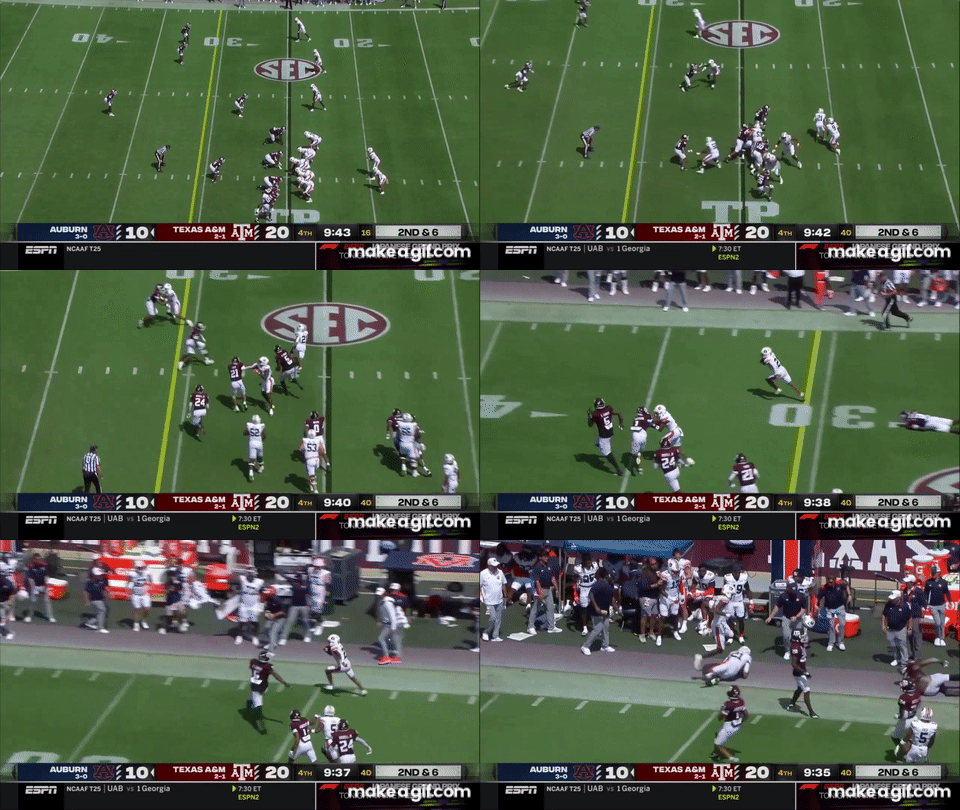
After that big gain, Auburn does something else that I’d been clamoring for: exploiting the defense’s disorganization by pushing the tempo after an explosive play. This is a pretty basic idea in any hurry up offense, but Auburn scarcely did it at all in this game, often stopping to substitute instead (a common source of frustration during the late-stage Gus era as well). Here Auburn goes back to the first play of the series, running an arc read off of WR motion and it’s another successful first down run (and may have gone for six if not for a shoestring tackle). One thing I don’t like is how Robby just stands there after handing off; he should continue his fake past the line of scrimmage to try and hold the second- and third-level defenders as long as possible. Not a huge thing but one of those little details that coaches and players on good teams pay attention to.
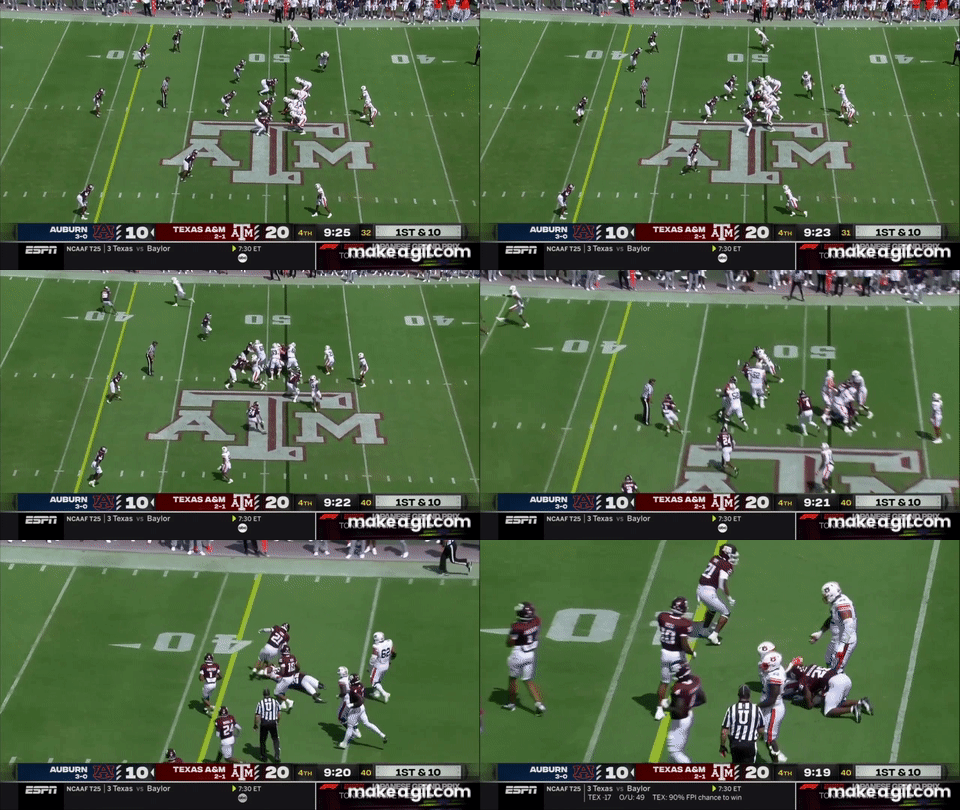
On the next play, the coaching staff keeps the good times rolling, doing yet another good thing. This is really RPO football 101: you use the pass component to punish a defender for playing aggressively to stop one of your base runs by throwing the ball where he came from. Auburn shows outside zone action with an arrow route to the backside; A&M brings a blitz from the field and Robby correctly dishes the ball out to the arrow for a first down. Not exactly great mechanics on the throw but as I often say on the golf course, it’s not how, it’s how many.
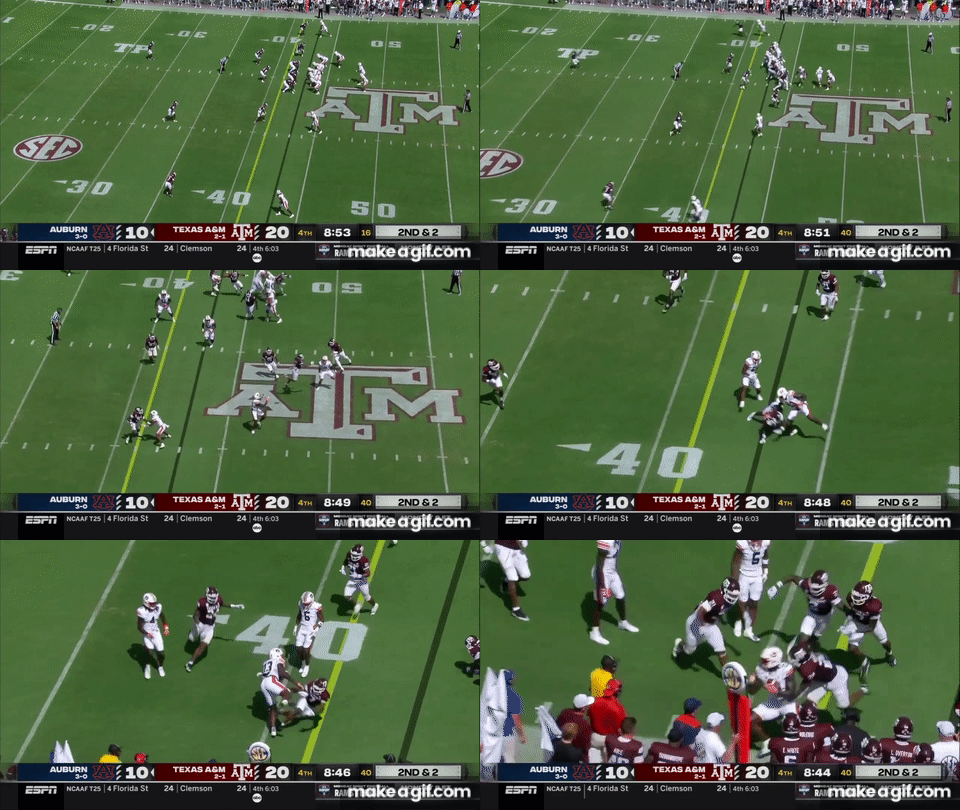
However, for whatever reason, the coaching staff decides to go to the air on the ensuing first down. Yes, I know that the analytics say that passing on first down is almost always optimal, but we were running the ball well at tempo, and the pass they called makes no sense. This looks like a screen-and-go route, which is designed to punish the defense for crashing down aggressively on the ubiquitous quick WR screens that most teams use in their RPO game. But up to this point, I think Auburn had only thrown one receiver screen and it went for a good gain, so there’s no reason to try to run a play that exploits the defense doing something that it wasn’t really doing (i.e. jumping the screen). Robby makes something out of nothing and gets five yards on the scramble, but it was still a weird call.
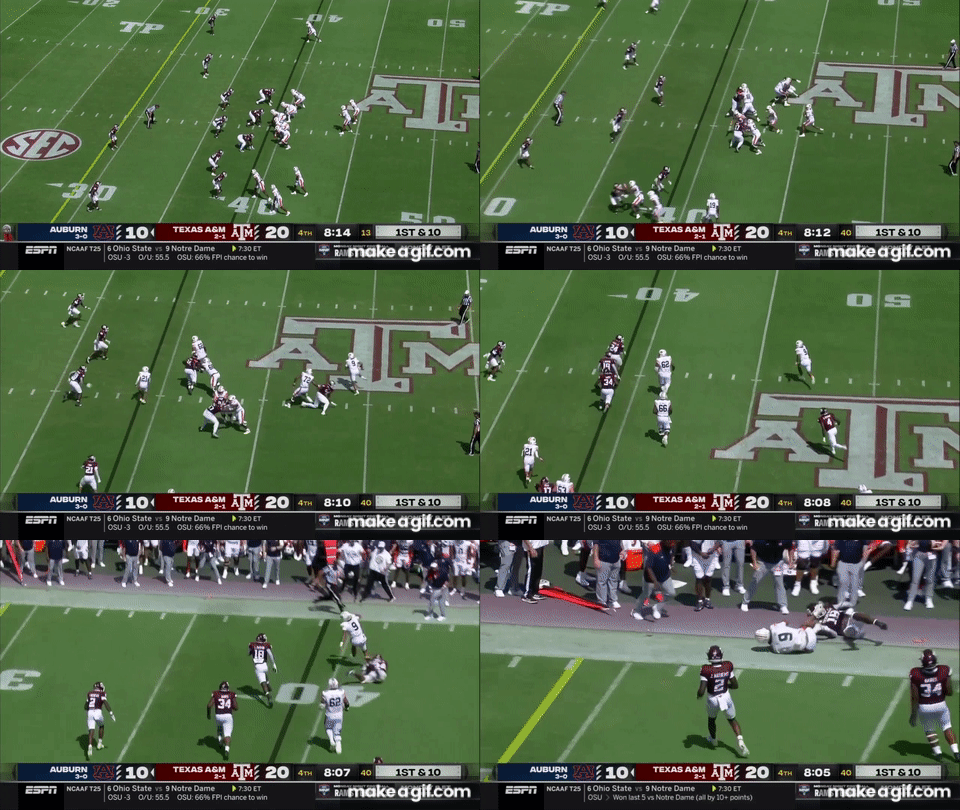
After a successful second down run, Auburn had a first down at the Aggie 28, the farthest Auburn had advanced into Aggie territory all day (with less than seven minutes in the game, yikes). I think this is another vertical choice concept, again a single choice. The receiver looks like he has outside leverage on the defender, but Robby throws it to the inside. Not sure if it’s a bad read or a bad throw, but he’s probably lucky it wasn’t picked off. The receiver nearly manages to manufacture a miraculous catch and make something out of nothing, but it falls incomplete.
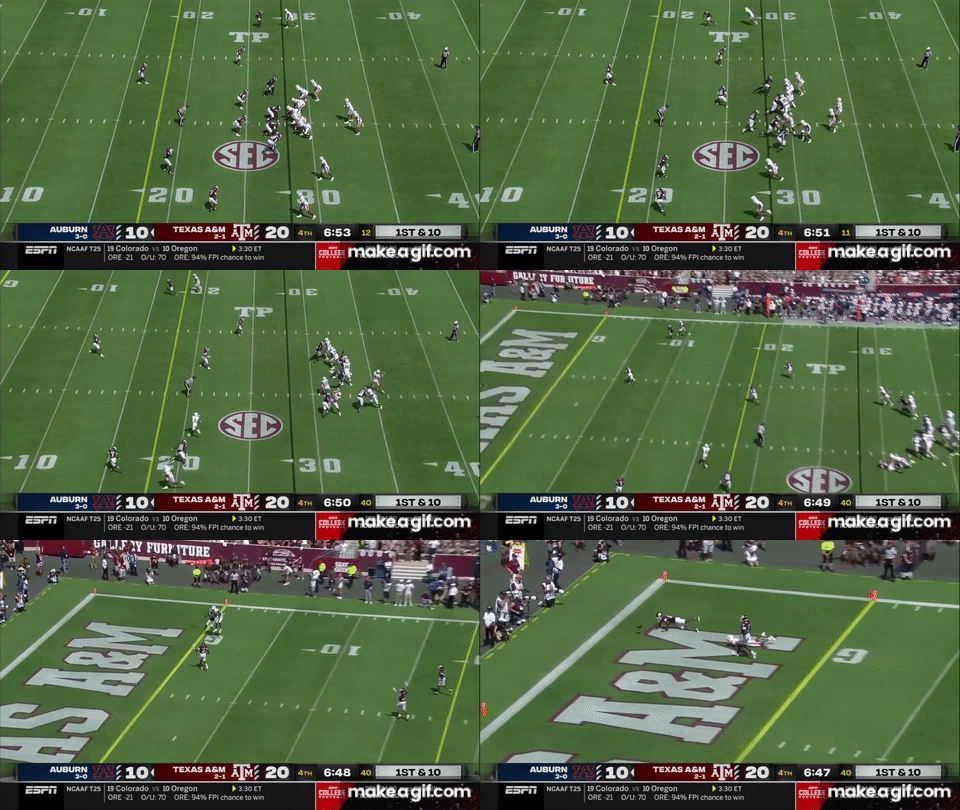
Following a run that was blown up by a heavy blitz and a holding penalty, Auburn was backed way up into third and 25 at the Aggie 43. A decent gain here would give Auburn a shot at a field goal to cut it to a one-score game with more than enough time to get the ball back and score again. I assume this was the coaching staff’s rationale, but the playcall here is just bad. The Tigers bring the X receiver in motion behind the QB to pull the defense to the right so they can throw a slip screen to the RB to the left (with a bit of a statue-of-liberty action, which I assume was Brother Hugh’s way of pouring one out for his departed homie Gus). This play hasn’t worked at any point this season (or any other season), and it doesn’t work here either. Quelle surprise.
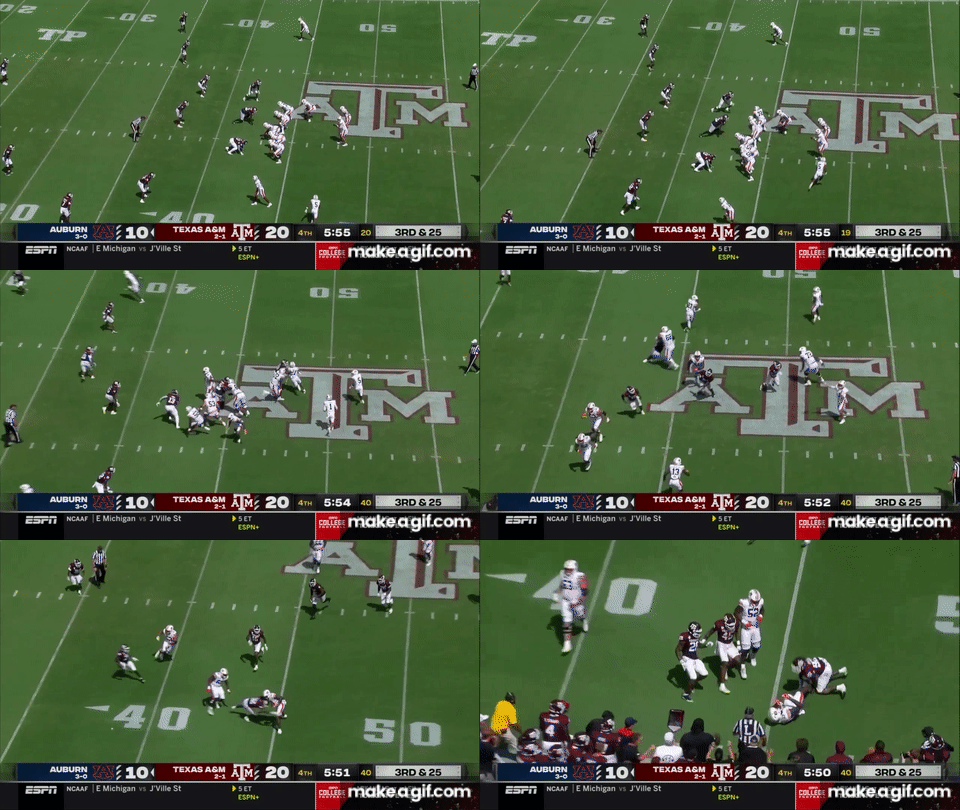
This really felt like a give-up call rather than one that was trying to set up a field goal attempt. Even more baffling, however, is the decision that followed it: Freeze elected to punt the ball back to Texas A&M. Yes, it would be a long shot to convert that fourth down, but you’re probably not getting much more than 20 yards of field position here, which is meaningless when you’re down two scores with just over five minutes left in the game. The folly of this decision was exposed on the second play of the next drive, as the Aggies busted an 80-yard run against an exhausted Auburn defense that finally reached a breaking point after a valiant effort at keeping Auburn in this game to the very end. The Aggies scored a touchdown to make it a 17-point game with four minutes to go and sent Auburn packing with their first loss of the season.
From an offensive perspective, there’s no amount of lipstick that’s gonna pretty up this pig. This was one of the worst offensive performances in the recent history of Auburn football. The Tigers never reached the Aggies’ red zone, much less threatened the end zone. There were a myriad of problems: the offensive line was very poor in pass protection (although surprisingly good in run blocking), giving Payton Thorne very few real opportunities to make plays down the field. When those few opportunities did arise, Thorne overthrew open receivers. The playcalling didn’t do him any real favors either, with a number of inefficient run-run-pass and run-pass-pass sequences; once Robby entered the game, it took the coaches a couple of possessions to reorient the offense to his skill set, which made no sense and allowed Texas A&M to build a three-score lead before they got things figured out. The vacillation in schematic ideas really looked like an offense that was experiencing an identity crisis, with no discernible logic to the playcalling or use of personnel.
So where does Auburn go from here? I don’t think there’s much cause for optimism over the next couple of games, as the Tigers are likely to take two beatings at the hands of Georgia and LSU before a home date with the coach who might be regretting his offseason decisions right now. That game feels like the make or break point, as Auburn has two more winnable games after that, hosting Mississippi State and then traveling to Vanderbilt. Each of the last six games on the schedule looks winnable if Auburn can get its act in gear on offense, but it’s hard to see how that’s going to happen right now. The offense looks every bit like the MacGyvered unit that it is, none of the QBs looks especially confident or competent, nobody has stepped up to become a go-to guy in the receiving corps, and the RBs haven’t been able to pick up the slack because defenses don’t fear Auburn’s passing game at all.
I don’t know if there’s really a schematic quick fix to this. It feels like something of a vicious circle: Auburn (ostensibly) wants to build the offense around vertical choice concepts and RPOs, but both of those struggle against man coverage if your receivers can’t win one-on-ones consistently. With the defenses playing man coverage, they can get +1 in the box to stop the run game and there’s no pass option available to equalize the numbers (as we discussed after the Cal game). The easiest way around that would be to run man-beating pass concepts, but our offensive line struggled to protect even a three-step drop and teams aren’t afraid to bring the heat because they know it’ll get home. Bringing Robby in to run some read option helped alleviate the +1 in the box issue and seemed to be a solution until A&M realized there was little threat of the pass with him in the game and sent 6 and even 7 on blitzes to blow up those runs in the backfield. Every possible solution to our problems is short-circuited by a shortcoming somewhere else.
Whatever optimism the first three games had engendered is gone and we’ve been brought down to earth. There’s not going to be a preposterous 2013-type run here. This really is a year zero, and the real way forward is probably going to come down to improving the roster over the long term and doing whatever we can to keep our heads above water in the meantime. My own thoughts have gone from wondering if we could muster a bit of Jordan-Hare voodoo against Georgia this week to wondering what will be higher: the number of points we give up or the number of passing yards we manage. I’m…not optimistic it’ll be the latter. Eat at AUrby’s.
 Auburn Analysis
Leave a comment