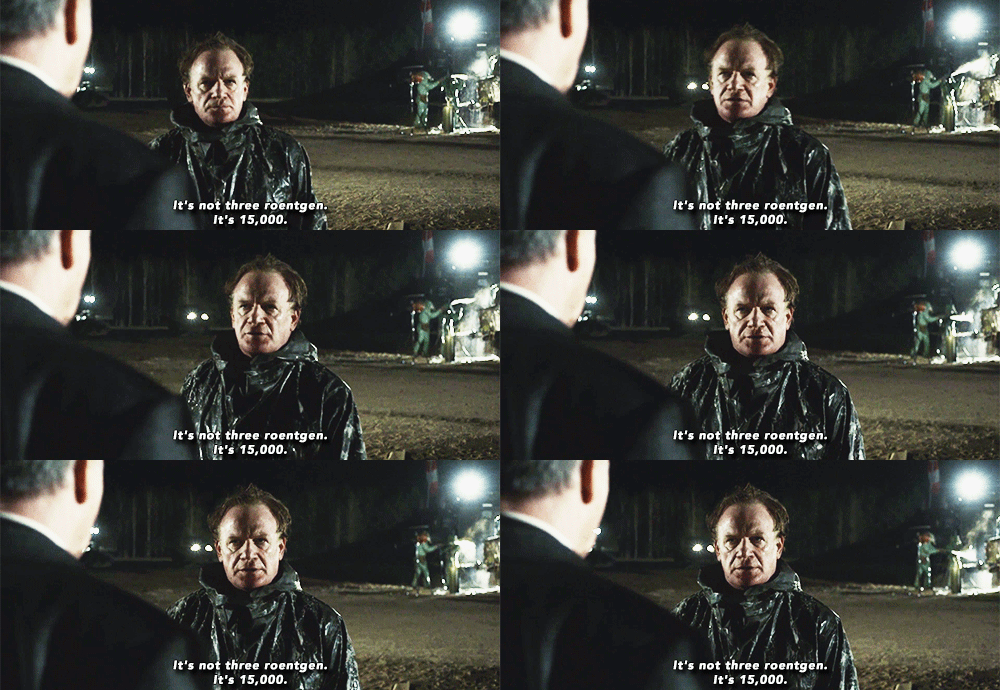
Auburn defeated the Cal Golden Bears 14-10 on Saturday night/Sunday morning, because the rules of football state that one team has to win the game even if neither team deserves to. Congratulations to those of y’all who were smart enough not to stay up until 2 a.m. watching that. Before you go any further, you should acquire one of those lead bodysuits the Chernobyl liquidators wore, because otherwise you’ll receive a lethal dose of radiation from this film. It’s already too late for the rest of us.
OFFENSE
After a pretty encouraging performance (with some caveats) against UMass, the flaws in Auburn’s offense were on full display against Cal. The Tigers’ offensive output was a pitiful 230 yards on just 55 snaps, with 5.5 yards per attempt in the passing game and fewer than four yards per carry on the ground. It’s hard to single out any one aspect of Auburn’s performance that was particularly bad when almost none of it was good, but I think I have an idea of what the core problems are with Auburn’s offense at the moment, and I’ll try to elaborate on those more as we go through these clips.
One of the biggest issues for Auburn over the last two years was the total lack of any sort of identity on offense. The hires of Hugh Freeze and Philip Montgomery brought in two coaches with defined offensive styles, and there was some question as to whether those styles could come together to create a cohesive identity. In the UMass game, we saw some of Montgomery’s fingerprints on the offense with the use of vertical choice concepts, but those concepts were almost absent from the Cal game. This wasn’t necessarily an identity crisis for Auburn’s offense, but it did hearken back to some of the questions I raised in my season preview article as to whether Auburn had the personnel at WR and OL to run those concepts effectively.
Cal’s defense is exactly the type of defense that can frustrate an offense that wants to build its identity around vertical choice concepts and RPOs. Justin Wilcox has never been afraid to play man coverage and dare the opposition to beat his secondary one-on-one, even against much more talented teams. If your receivers can’t win one-on-ones, it’s very hard to run vertical choice, because those concepts are premised on beating the opposing DB deep.
Man coverage also poses a problem for RPOs, because RPOs depend on attacking defensive players who are in conflict between run and pass responsibilities; if the defense is playing straight man coverage across the board, then nobody is in conflict because they’re either playing run or pass, so there’s nobody to key for an RPO read.
Cal was generally playing man free coverage, also known as Cover 1, where the defensive backs are all in man coverage, aside from the free safety, who plays deep zone coverage to provide help over the top. By using only one deep safety, the defense allows itself to put an extra defender into the box to stop the run. Thus, for much of the night, Auburn was faced with the prospect of a defense that was +1 in the box and had all of the receivers locked down in man coverage.
So, what do? In this situation, there are a few possible solutions. The first is to just beat them in man coverage, but as we’ll see, Auburn’s receivers struggled to do that. The second is to run pass concepts that are designed to attack man coverage, which we’ll discuss later. Finally, you can involve the QB more in the run game, which will equalize the numbers in the box and allow you to run the ball again.
The conundrum caused by facing a loaded box and man coverage really exposed Auburn’s lack of a clear go-to player on offense. This extended both to the receiving corps (where, thankfully, Rivaldo Fairweather finally stepped up) and the QB position, where Freeze and Montgomery spent much of the second and third quarters re-enacting the 2016 Clemson game, trying to figure out whether either of Auburn’s QBs could make something happen and largely failing.
However, with that criticism of the coaching staff established, I do want to add that a lot of Auburn’s problems on offense were self-inflicted wounds. Four turnovers, three sacks, and seven penalties will sink you, no matter how good your gameplan is. If the Tigers hadn’t shot themselves in the foot several times, they could have made the score much more comfortable (although the same could be said for Cal’s kicker doing his best Cade Foster impression).
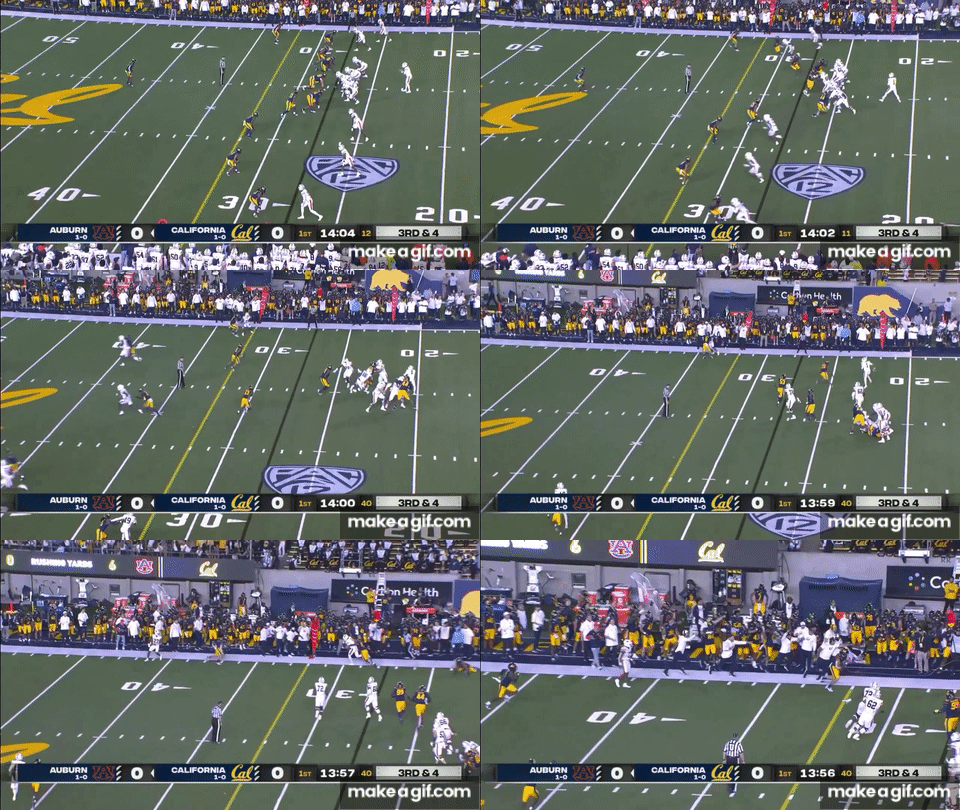
Okay, enough rambling, let’s get to the film and see how these problems played out and how Auburn managed to do just enough to survive. The comically bad conclusion to Auburn’s first drive illustrates a lot of what I was talking about above. Auburn lines up in a 3×2 empty formation and Cal sets up to play man free (which is easy to see as they align a defender over every receiver and a single safety deep). Cal only rushes three here, dropping the other two box defenders to spy Payton Thorne or disrupt short routes. I can’t really tell what Auburn is running here concept-wise, but it’s some kind of vertical/curl thing. Thorne has time, but nobody gets open and he’s eventually flushed out of the pocket. He doesn’t switch the ball to his outside arm, and he’s very lucky this play was blown dead because it should have been a touchdown for Cal. Yikes.
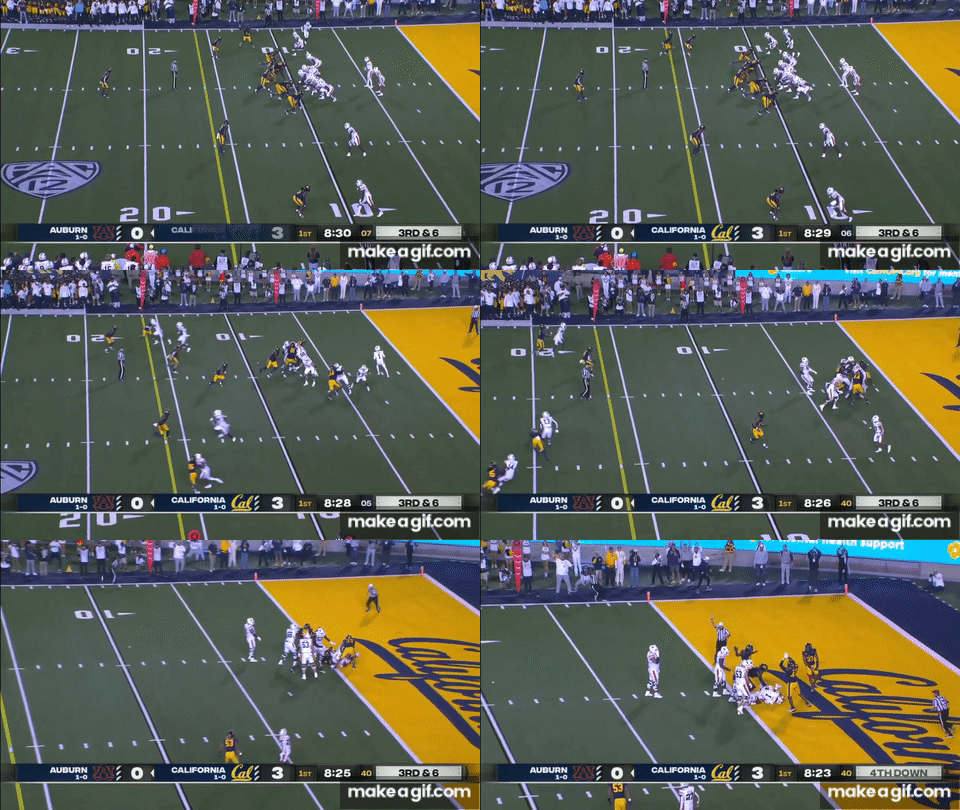
After the first of many heroic efforts by Auburn’s defense to limit Cal to just a field goal, the offense immediately provided another lowlight. Facing a third and 6 from their own 9, Auburn lines up in a 2×2 set and runs what looks like some type of sail route after motioning the Z receiver into a stack alignment. Again, Cal is in man free here, and again, nobody is able to get any separation for Auburn, leading to another coverage sack (that was nearly a safety). Sensing a pattern yet?
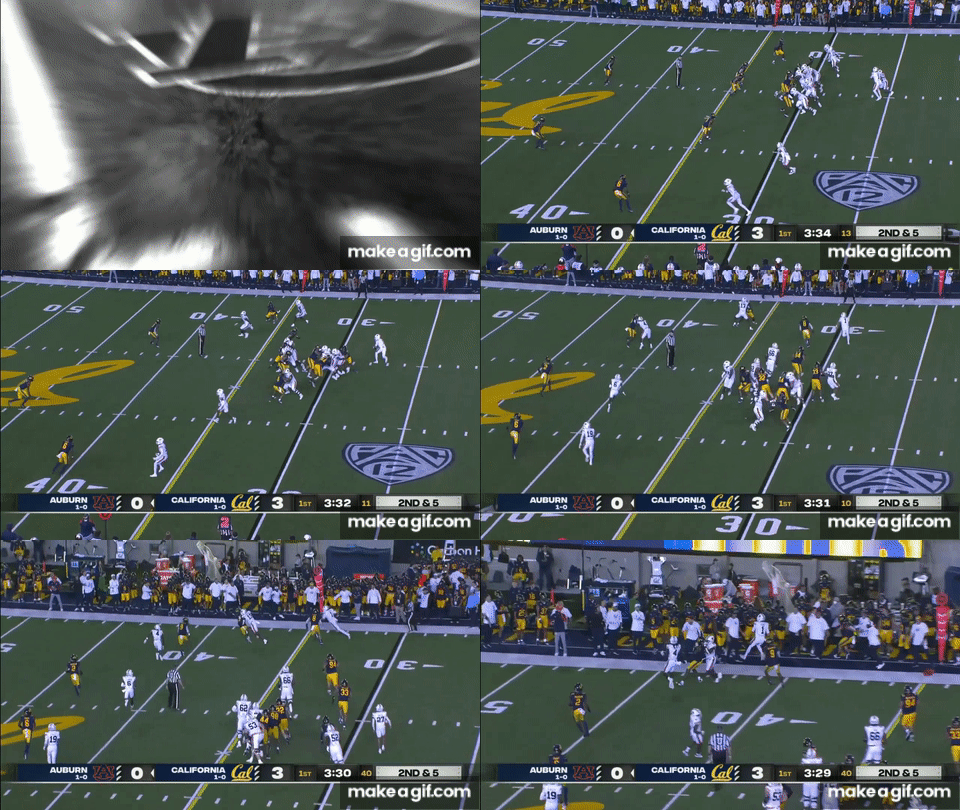
Following another excellent defensive stand and the first of many missed field goals by Cal, Auburn’s offense briefly showed a bit of a pulse on its next possession. On second and 5 from their own 30, Auburn uses one of the options I mentioned above to counteract a defense that’s determined to play man and keep +1 in the box: getting the QB involved in the run game. Obviously Payton Thorne isn’t Robby Ashford, but he’s fast enough to do what you need him to in this situation: pull the ball and get five yards if the defense gives it to you. This is a basic zone read with the TE arc blocking the run support player on the perimeter; the DE pinches, so Thorne pulls it and gets an easy first down. (Note, however, that Cal actually wasn’t in man here; this looks like some type of Cover 3 match.)
But after that, it’s right back to the same old problems. On third and 8, Auburn goes to the vertical choice concept for the first time this game, in this case running outside choice to the #1 receiver on the right. Cal shows press man, but the corner bails hard at the snap and the receiver can’t win deep. Thorne tries to look elsewhere with the ball, but since the backside receivers on vertical choice are told to do nothing, there’s nowhere for him to go, and he just has to throw it away, leading to another punt.
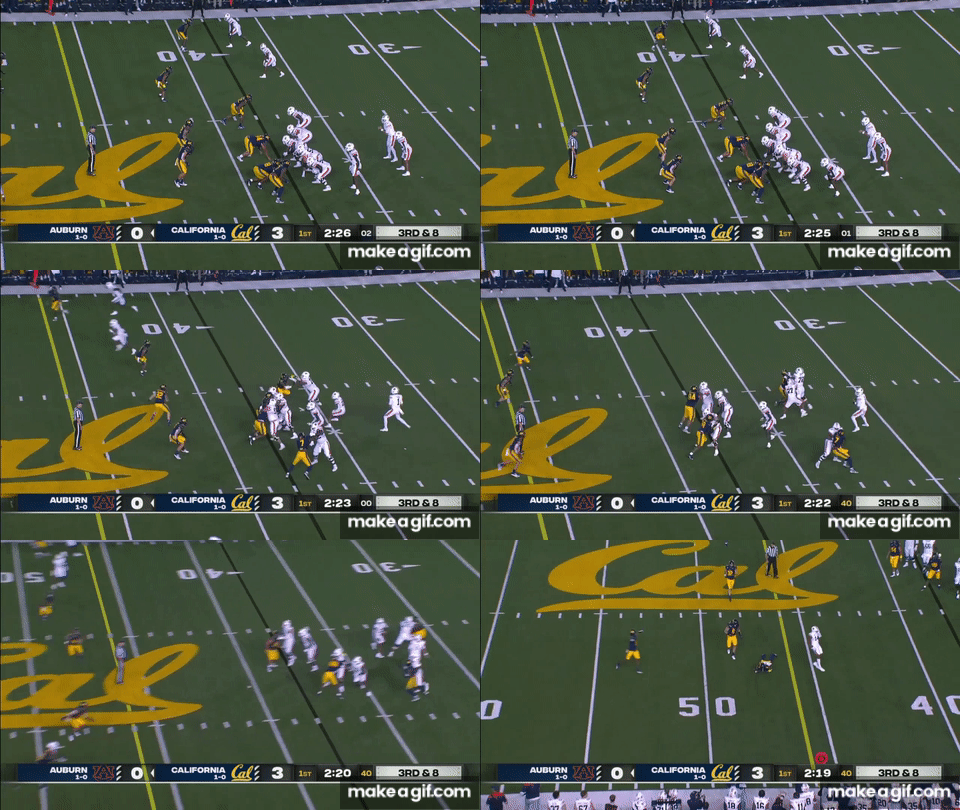
After an exchange of punts, the subsequent Auburn possession brought a rare bright spot: a successful RPO. Auburn lines up in a tight bunch set with three receivers and the RB to the left. This is an outside zone run combined with a bubble screen; it’s a weird-looking design, but it makes sense, because the outside zone scheme allows Auburn’s OL to get leverage on the pinched-in defensive line and the bunched receivers have good angles to seal the other defenders inside, opening up some space for Ja’Varrius Johnson to work on the screen and pick up the first down.
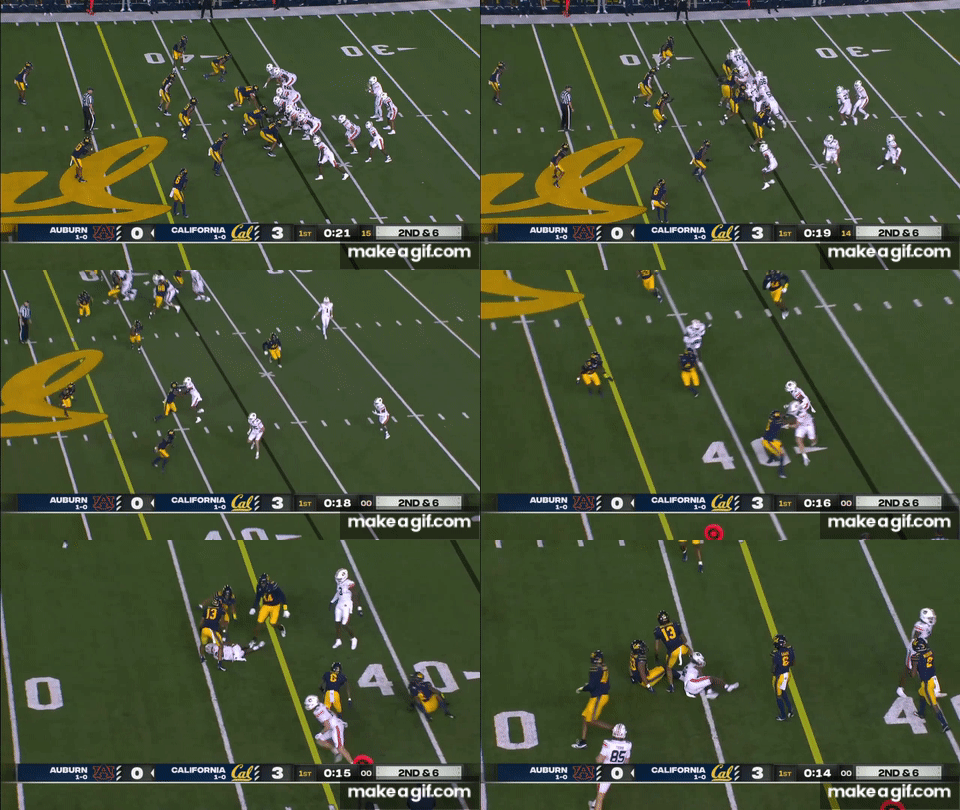
At the start of the second quarter, Robby Ashford made his first appearance, because the offense was getting into too much of a rhythm and we had to put a stop to that. While Robby was effective in the red zone last week, bringing him in like this is too predictable, because the defense knows the QB run is coming. This lands Auburn behind the chains and on third and long, the coaches don’t seem to trust Robby to throw downfield, so Auburn sets up a screen, which is ineffective due to Cal’s man coverage (and some poor blocking by the OL), forcing yet another punt.

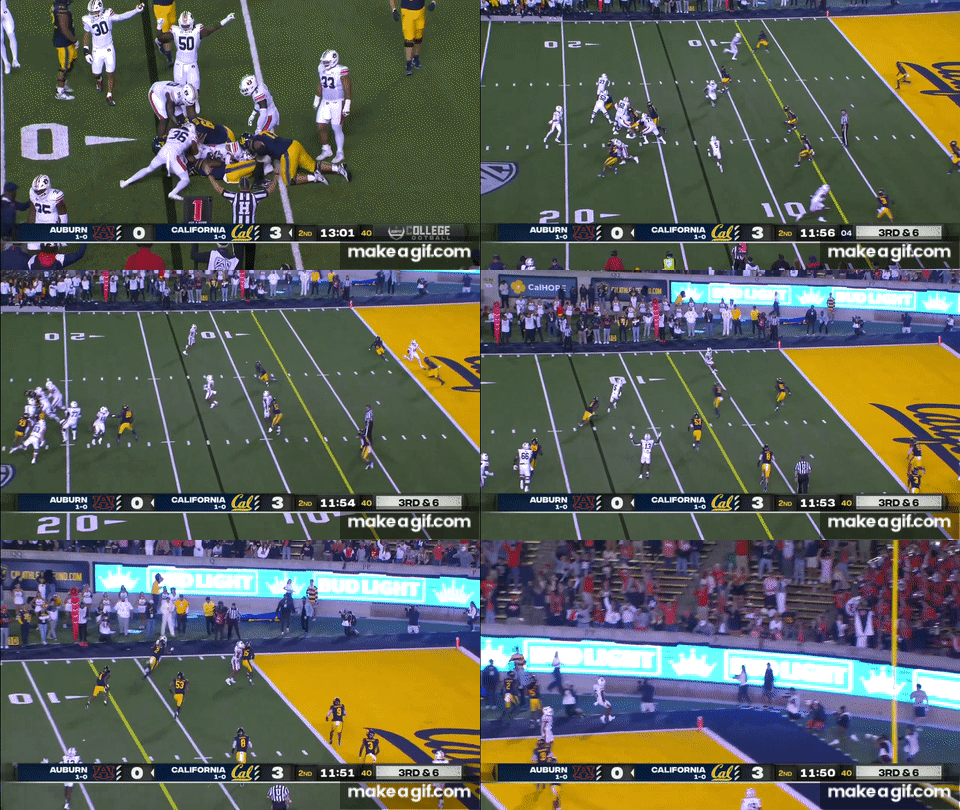
Basically the sole bright spot for the Auburn offense in the first three and a half quarters came on the next possession, after Auburn’s defense forced a fumble and recovered it inside the Cal red zone. This is one of the few times Auburn really went to a true man-beater, which is funny because Cal was actually in zone on this snap (some type of quarters it looks like). This is the mesh concept, made (in)famous by the late Dread Pirate.
/cdn.vox-cdn.com/uploads/chorus_asset/file/18939283/mesh.jpg)
The premise is simple: two receivers run crossing routes from opposite directions, hoping to rub off each other’s defenders. If the mesh is tight enough (Leach taught them to slap hands on the way by in practice to make sure they were close enough to one another) it should be impossible for the defenders to stay with the receivers without re-routing, which makes it the ultimate man-beater concept. You can see in this clip that Rivaldo Fairweather is basically just setting a pick on the defender covering Fair (although again, Cal is in zone here and that shouldn’t have mattered).
Auburn combines this with a post-wheel concept on the front side of the play, something Leach also liked to do; Mississippi State scored three touchdowns on Auburn in the second half of the 2021 debacle on this exact play. I’m not really sure what Thorne’s progression was here, but I find it hard to believe he was supposed to read the mesh before the RB on the wheel route, which would have been an easy touchdown; the corner in quarters chased the post even though the safety had it covered and there was nobody to pick up the wheel; Kaylin Moore (#4) kind of tracks the wheel but then sees Fair running into his zone and tries to get back to cover that too, but he ends up not covering either of them and both of them end up wide open. Really strange defensive playcall and uncharacteristically poor execution as well by Cal.
After forcing another Cal punt, Auburn continued to roll with the old Mike Leach staples, in this case the Y Stick concept.
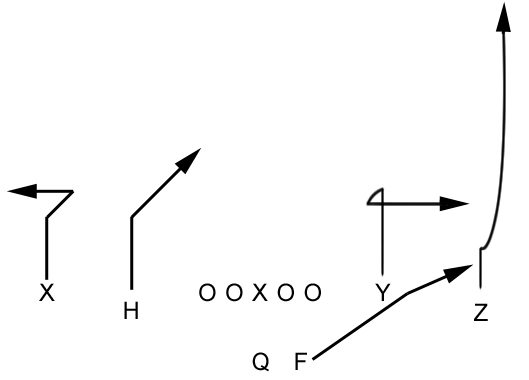
This is actually a very common concept that isn’t unique to the air raid; most teams run it in some form or another. Like mesh, it’s a triangle read, with the #1 receiver running a deep route, the #2 receiver running a 5-yard option route, and the RB releasing to the flat, creating a triangle of receivers on the playside. The QB will peek at the deep route, then throw either the stick or the flat based on what the outside LB does; option football through the air. This is really more of a zone-beater concept, but that’s rendered moot here as the Cal LB on that side blitzes, leaving Damari Alston wide open, as the inside LB has no hope of catching him. Thorne recognizes his hot read and gets the ball out on time for an easy first down.
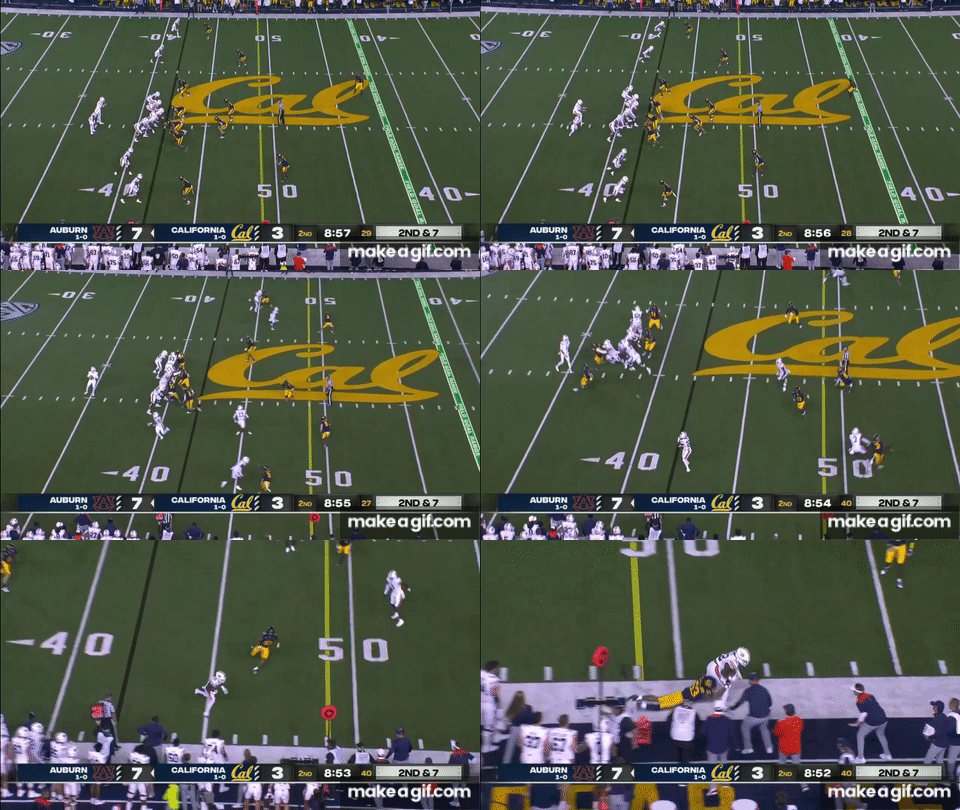
Two plays later, we see a bit of adaptation from the coaching staff to try to get the RPO game rolling. Auburn is again in a 2×2 set, and they’re going to run an outside zone into the boundary tagged with a stick route by the backside receiver. However, they bring Rivaldo Fairweather in motion from the slot to kick the backside DE, creating a split zone look; this has the added benefit of triggering a rotation from the Cal safeties, so the playside safety, who would have been in good position to make the tackle, actually runs himself out of the play and isn’t able to make the stop until Alston has a first down…and then he fumbles the ball. This is why I said earlier that the Tigers’ struggles on offense weren’t solely on the coaches. This was a good design and playcall, from a coaching perspective you won this play…and then you just drop the ball. C’mon, man.
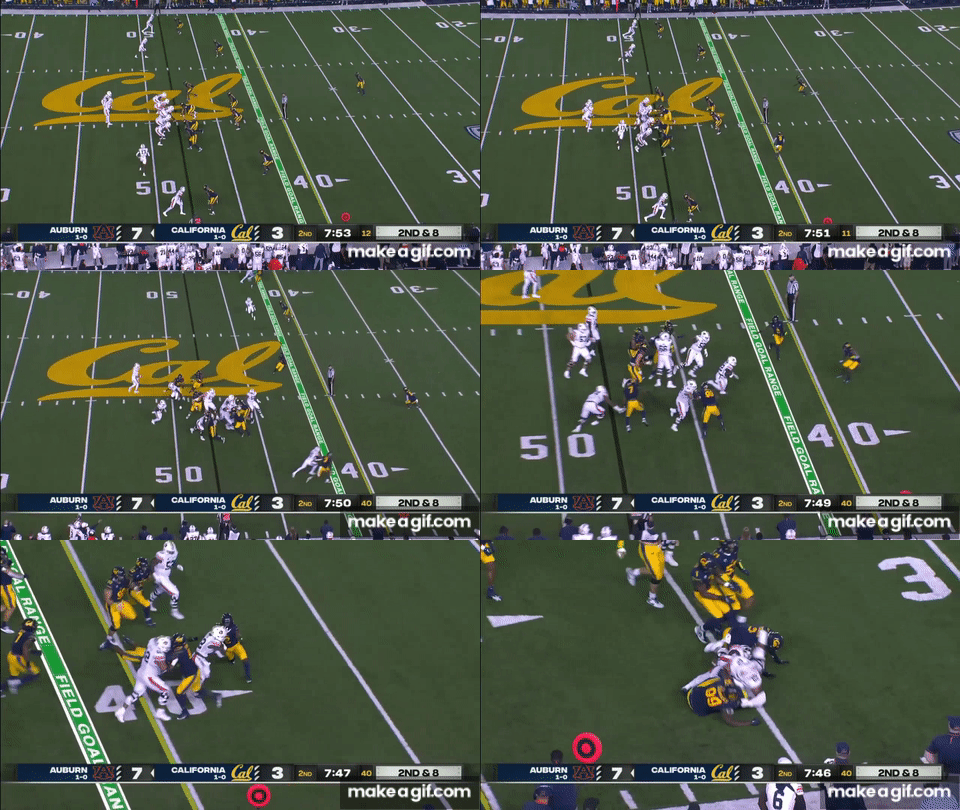
After another interminable review, Cal was awarded the ball, and finally decided to cash in one of Auburn’s gifts, scoring their only touchdown of the game. On the ensuing possession, Auburn faces a manageable third and 2, but this play really encapsulates the issues the Tigers had in the RPO game for most of the night. This is a split zone run (inside zone with the TE kicking out the backside DE to open up the cutback lane), tagged with a stick route on the backside. The single receiver on the playside is running a fade/stop, which was apparently Thorne’s pre-snap read. I guess he liked the leverage of running the fade against press man, but I can’t imagine the coaches were happy with that decision, especially given what an awful throw it was. That said, both of the other phases of the RPO were busted as well; Cal’s man coverage negated the stick and the extra defender in the box would have blown up the run if he’d handed it off. It’s generally not great when the defense is able to take away all three phases of the RPO with no tradeoffs!
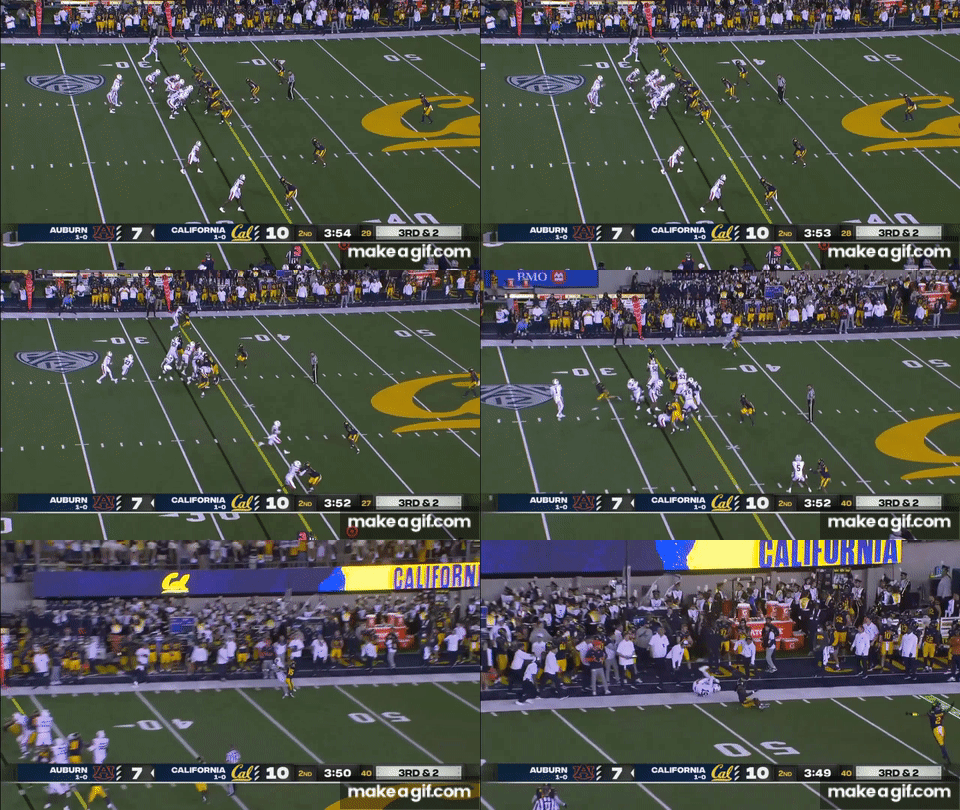
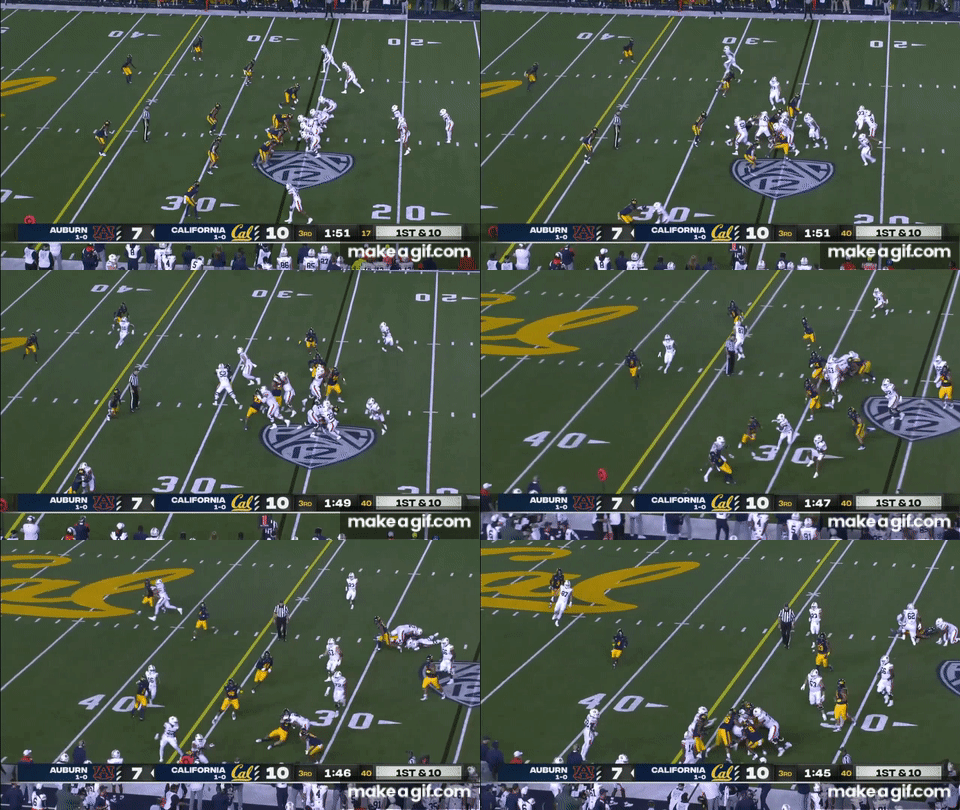
After another exchange of punts, Auburn got the ball back with about a minute and a half left and all of their timeouts, and the coaching staff for whatever reason decided to try to get points before the half when their offense hadn’t done anything for two quarters. The game management was suboptimal, but the failure of this drive is entirely on Thorne. On first and 15 after another dumb penalty, Auburn runs a curl-flat concept from a 3×1 set, anticipating (correctly) that Cal would be in some type of Cover 3. The idea behind this concept, which is as old as the modern passing game, is that you have five receivers underneath and only four zone defenders, so someone should always be open, and indeed, the curl is open to the wide side of the field. Thorne sees the open receiver and…airmails it straight into the arms of the defender. There’s not much to analyze here, this just an awful throw by Thorne. Auburn was once again lucky not be punished for a brutal mistake thanks to Cal’s special teams woes, in this case a penalty wiping out an actual made field goal, and went into the half down three.
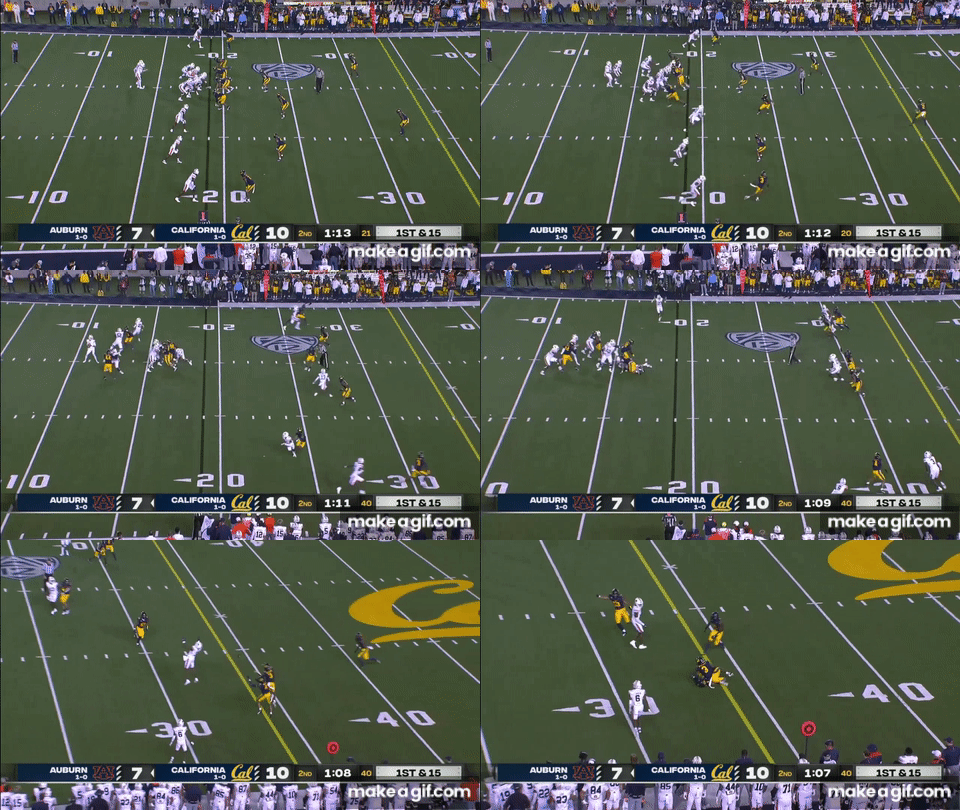
After Cal burned off about half the third quarter on a drive that ended with a turnover on downs, we got a Jarquez Hunter sighting. Hunter was underwhelming in this game and looked pretty rusty, but he gets some good blocking here and is able to pick up a first down. This is a weird counter variation, run with the center and tackle instead of the more common guard-tackle counter. We’ll revisit this concept later.
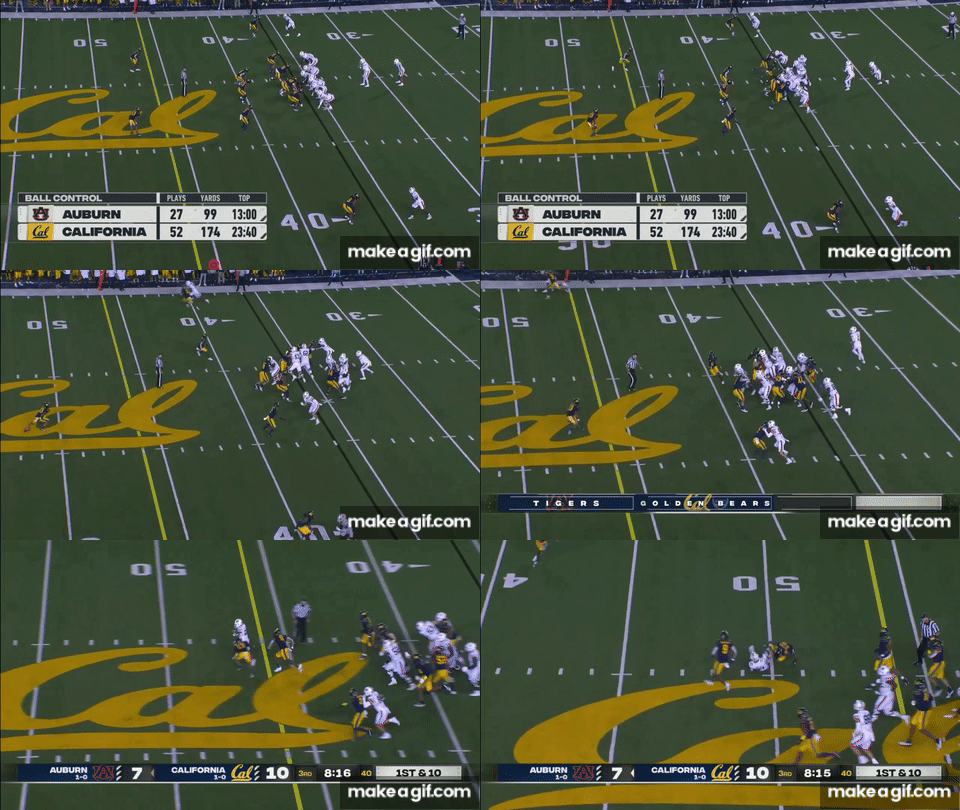
Of course, Auburn’s offense, realizing it was in good field position and had a great chance to retake the lead, immediately set about squandering that opportunity. For whatever reason, the coaching staff decided it was time for another Robby cameo at midfield, and it turned out about as well as it did before. I’m not going to break these two plays down in detail, but note that in both cases, the defense has the line stacked and the offense hopelessly outnumbered in the box because they weren’t afraid of Robby throwing the ball. This was too predictable for the defense, and if the coaching staff wants to keep Robby involved outside of the red zone, they’ve got to get him involved in the downfield passing game or the opposing defenses will just do this all season with the same result.
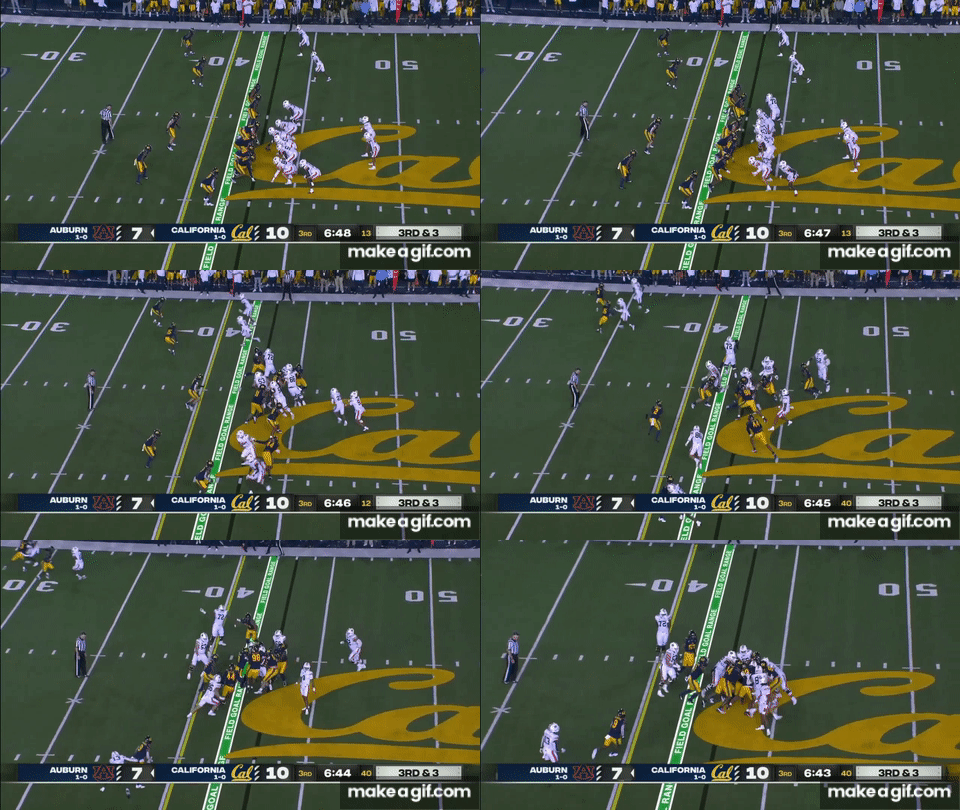
After, and stop me if you’ve heard this one before, a missed Cal field goal attempt, it’s Robby time yet again. In this case, it’s actually a good play design for getting the QB involved in the run game and it works pretty well. Auburn lines up in a pistol set and runs GT counter with what’s known as a bash scheme. “Bash” is derived from the abbreviation “BA” or “back away”, which means that the offense will fake the RB carrying the ball to one side and then run away from that side with the QB. This isn’t really new (it was a staple for Gus Malzahn a decade ago and my high school was running it in the mid-2000s), but it’s a good way to attack a defense that shifts the defensive line over toward the RB. Robby fakes the sweep to Jeremiah Cobb and then runs the counter with Damari Alston leading for him and it’s a successful run on first down.
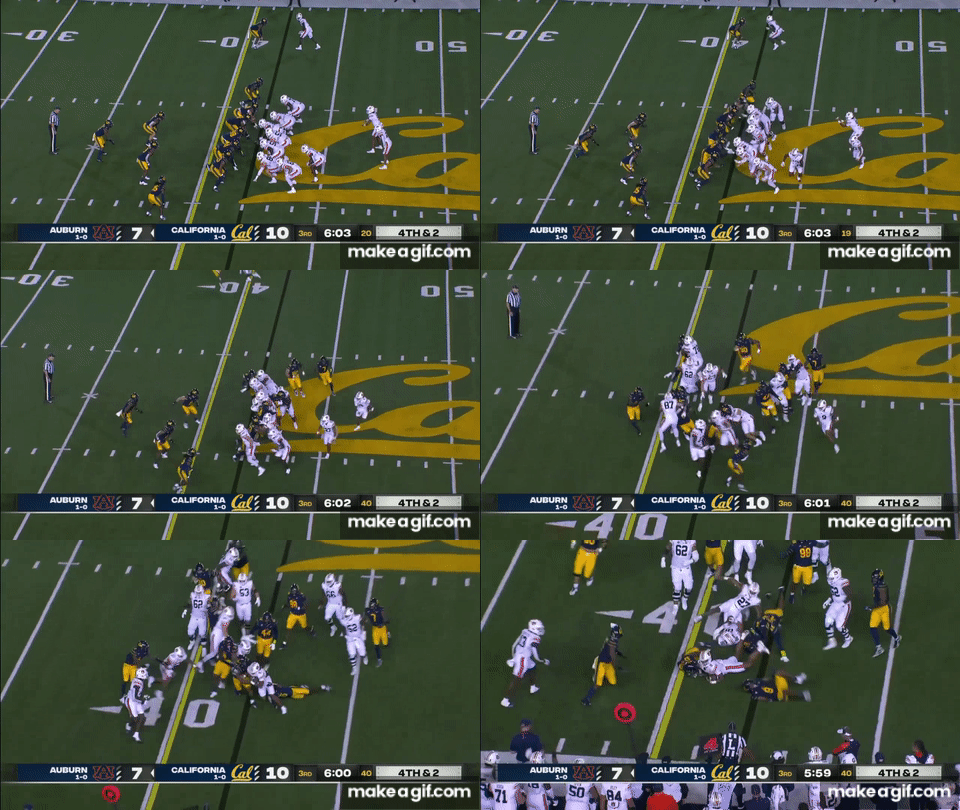
On the first play of the fourth quarter, Auburn finds itself in a familiar spot: third and long. In desperation mode, Auburn lines up in a 3×1 set and goes with another old Mike Leach staple: four verts (“6” in air raid terminology). This is exactly what it sounds like: all four receivers run vertical routes with the back check-releasing. Generally, receivers are told to win deep, and if they can’t, to put their foot in the ground to allow a back-shoulder throw, which happens here.
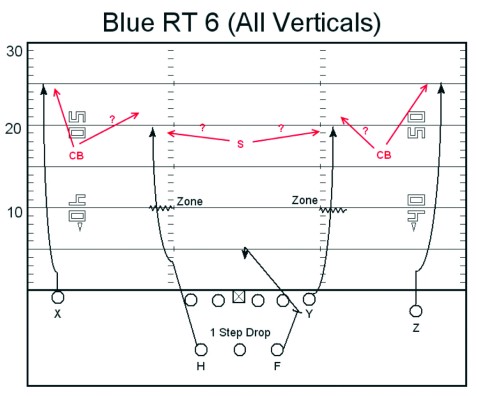
Auburn motions the back out of the backfield for some extra eye candy, but Thorne is looking down the seam to Ja’Varrius Johnson here, but he’s absolutely blanketed by Cal’s man coverage. It’s hard to run verticals when you can’t win those one-on-ones.
But then….
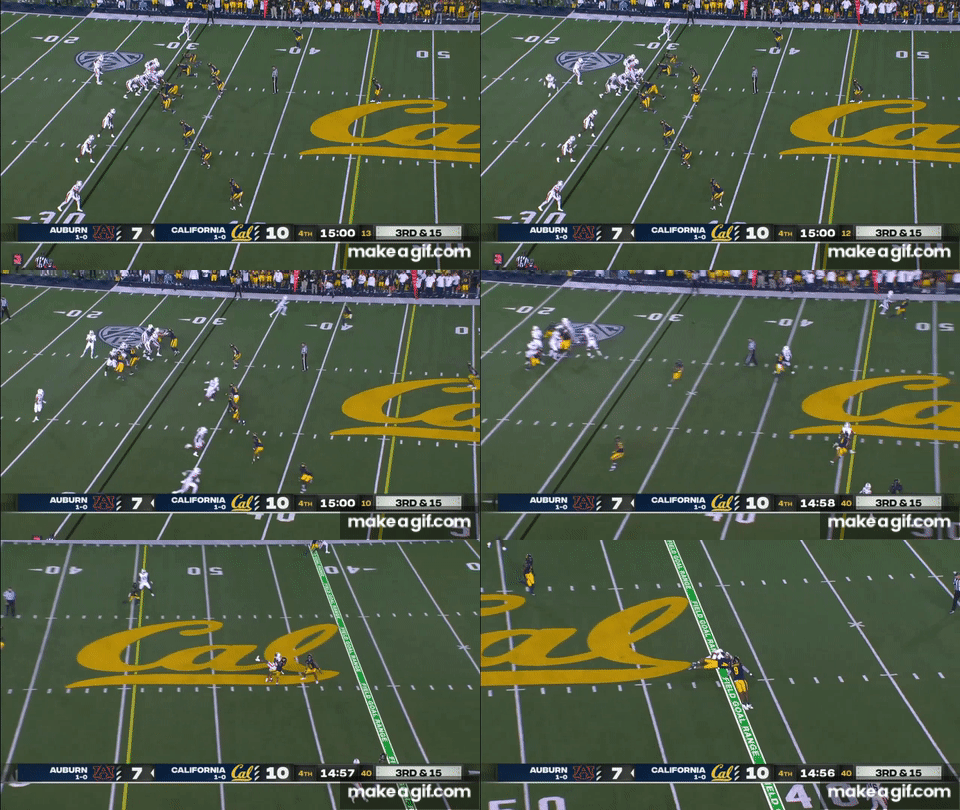
The only times that an Auburn receiver really, convincingly beat man coverage came on the final drive and they both came from Rivaldo Fairweather. On this play, on 3rd and 17 following a sack, Auburn goes back to the well with the 3×1 four verts concept from before, but with a twist (literally). The #2 and #3 receivers (Fairweather and Ja’Varrius Johnson) take a switch release, which is a common tactic against man coverage, and it looks like Cal is in man free coverage here, so that makes sense. Fairweather isn’t able to get over the top of the defender, but he does a good job of slamming on the brakes and using his big body to shield the ball from the defender and makes the catch (while getting interfered with).
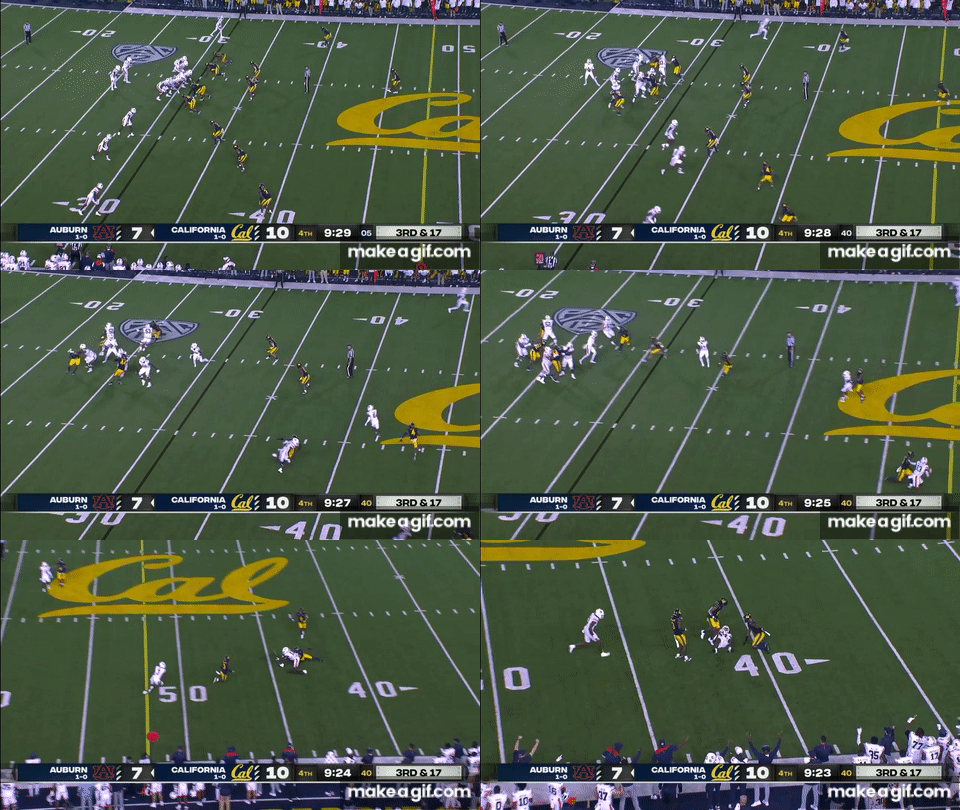
On a critical 3rd and 2 later in the drive, Auburn goes with yet another of the air raid staples: Y corner (which some coaches call snag, Leach called it “8”). This is my favorite pass concept in all of football. It’s a triangle read for the QB. The #1 receiver runs a slant route and settles in the hole in the zone coverage; the #2 receiver runs a corner route, and the back runs a swing, setting up a triangle of receivers, which creates both vertical and horizontal stretches on the defense. In this case, though, the wide receivers basically just picking the interior defenders trying to get outside to cover the swing route and it’s successful since Cal is in man coverage here.
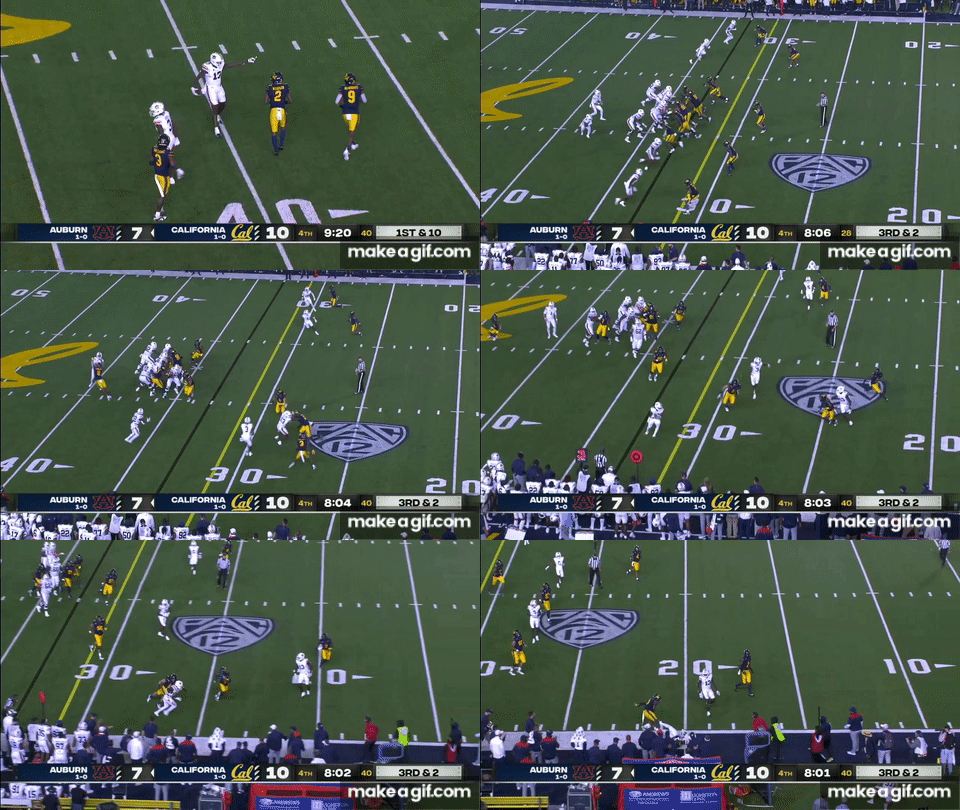
And now we’re going to go from my favorite pass play in all of football to my least favorite: the goal line fade. It looks like this is an RPO, with Auburn running that C/T counter concept they kept running out of the pistol with a fade route tagged to the backside. I really don’t like the goal line fade, and the numbers agree with me; it’s just not a very successful play most of the time. However, it can still work if your dude is better than their dude, which is the case here, as Fairweather just straight up Mosses the Cal DB for the game-winning TD. Can’t scheme hops.
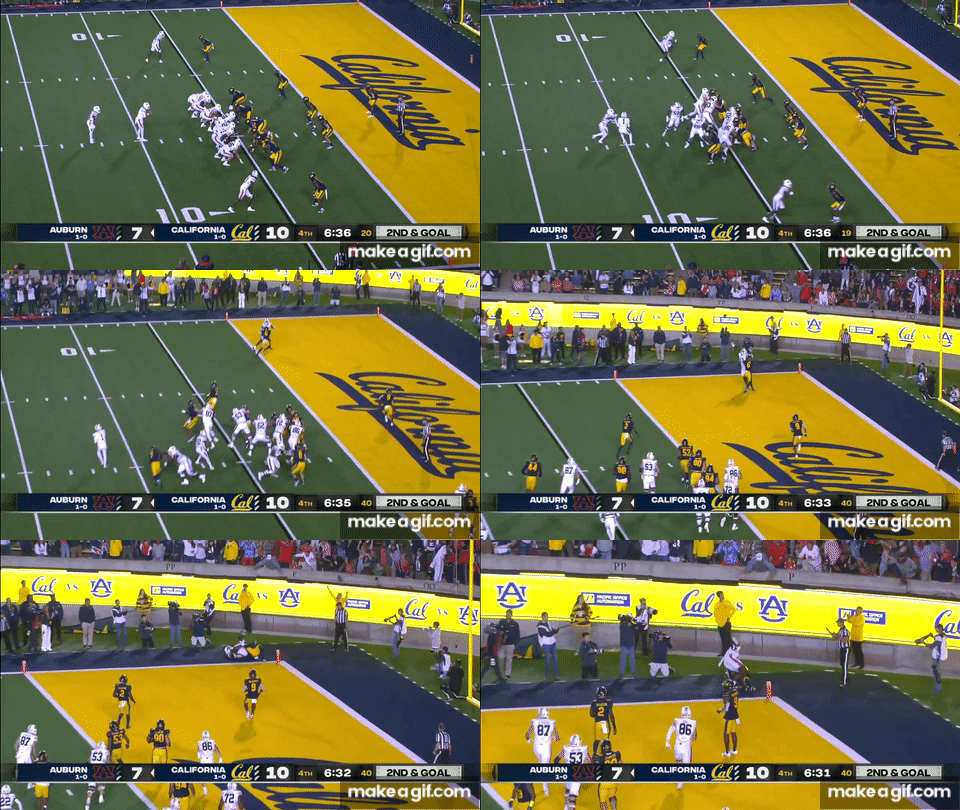
Auburn, of course, couldn’t make this easy, fumbling on the first play of their next possession and forcing a final, dramatic defensive stand, which culminated in a fourth-down interception. After that back-breaking pick, the Tigers’ offense was able to pick up a first down on the ground and ice the game. Now that I’ve subjected you to some truly Tubervillian offensive ineptitude, it’s time to turn our attention to the real star of the show, the defense.
DEFENSE
Going into this game, I was somewhat concerned about how Auburn’s offense would match up with Cal’s man-heavy defense, but I was absolutely terrified thinking about how our defense would hold up against Cal’s ground game. Their passing game was a mixed bag against North Texas (thanks in part to the same kind of QB carousel that hamstrng the Auburn offense), but their run game, led by RB Jaydn Ott, gashed the Mean Green. Ott, of course, decided that he was going to run his mouth in the leadup to the Auburn game, which I personally would not do if my team had gone 4-8 last year, but to each his own.
Cal’s rushing success against North Texas was largely based on their execution of their dart concept, which is essentially a standard one-back power play, but with the tackle pulling and blocking the playside LB instead of the guard. So, of course, being the brilliant offensive mind he is, first-year OC Jake Spavital…barely ran it at all against Auburn. Admittedly, dart is mainly used to attack odd fronts and Auburn spent most of the game showing four down linemen, but still a very weird gameplan.
After the aforementioned Thorne fumble on Auburn’s opening possession, the Golden Bears managed to pick up one first down via a short fourth-down run, but quickly found themselves right back in third and long. They dialed up…a screen to Ott. While Auburn defenses of yesteryear often overplayed these screens, which was a key contributor to the Third and Auburn meme, the Auburn linebackers (particularly Eugene Asante) are very disciplined here and are able to stop Ott for basically no gain with some excellent pursuit. This will be a theme.
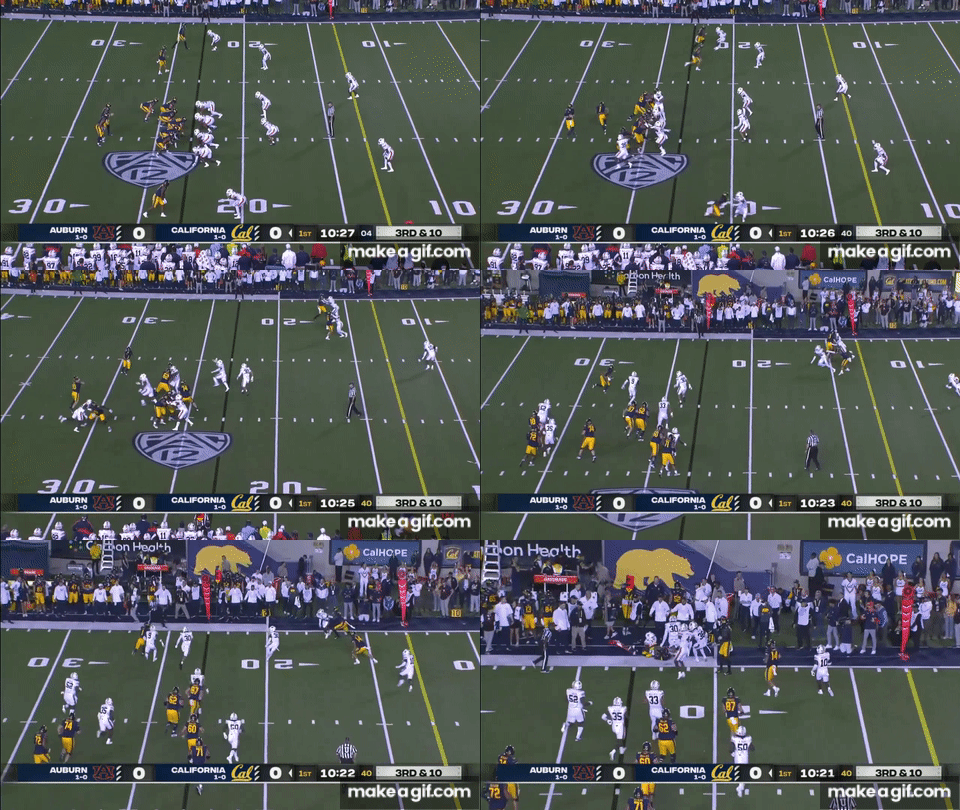
After a made field goal and a bad Auburn punt, Cal once again had great field position to start their second drive, and once again did nothing with it. They picked up one first down, but then found themselves in another third and long and Spavital again opted for a coward’s playcall, this time a QB draw with the not-especially athletic Ben Finley. One of the keys to Auburn’s defensive improvements against UMass was aggressive playcalling, rushing five or more on almost every snap and making life miserable for Taisun Phommachanh. The Tigers channel that same energy here, rushing five and bringing a delayed stunt with DT Marcus Harris, who blows the play up in the backfield, forcing the first of four missed field goal attempts.
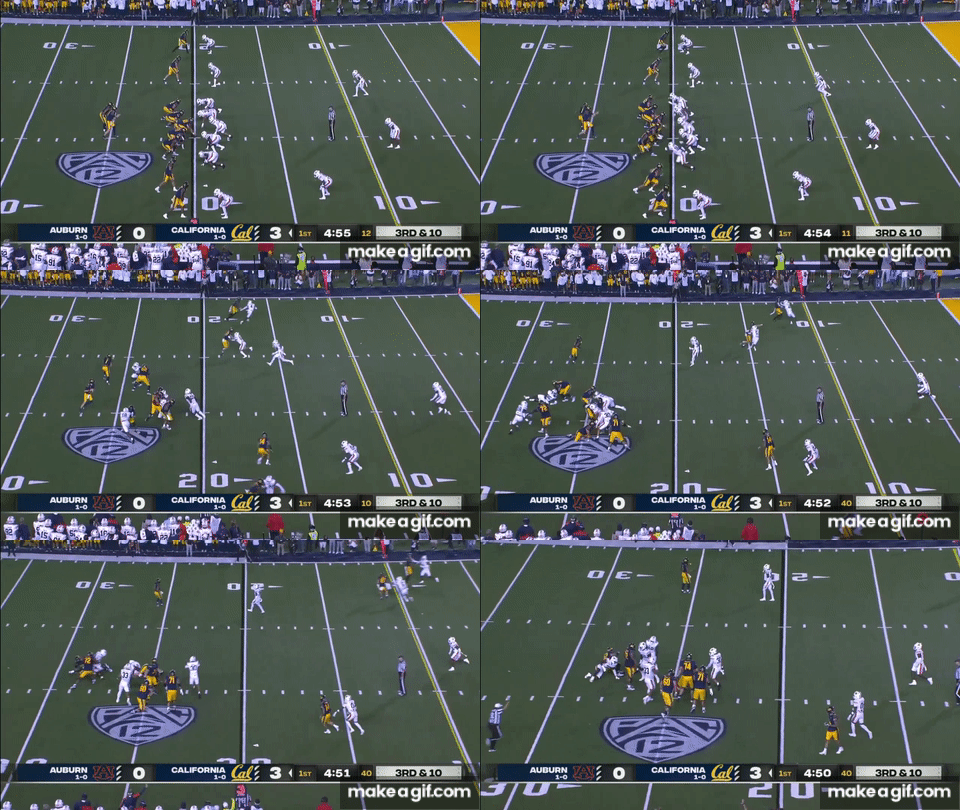
After another Auburn punt, Cal faces another third down, and again, it’s another cowardly playcall from Spavital: a double screen that mirrors the one Auburn would later have blown up on a third and long (see above). They fake the bubble screen to the right and run a slip screen to the left, which is once again read beautifully and blown up by Eugene Asante. If Asante seems to have come out of nowhere, that’s because the Potato Posse had him playing on the scout team last year. Shoutout to Scientologist Doug Barfield Bryan Harsin, who stole every cent Auburn ever paid him.
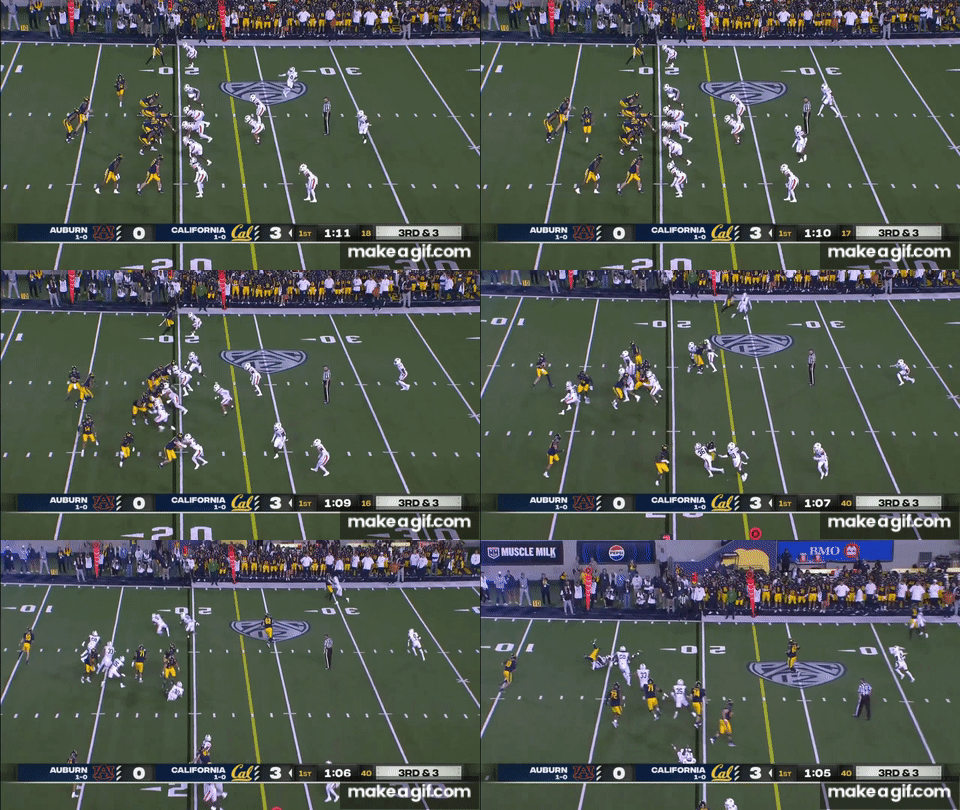
After yet another Auburn punt, Cal finally decided to go to their bread and butter from the North Texas game, the dart concept, but it backfired in a big way. Donovan Kaufman was a big play machine against UMass, and he kept it up in this game. Jalen McLeod, who had an excellent debut in his own right, does a good job of stringing this play out, allowing Kaufman to come flying up from his safety position, rip the ball out, and recover it inside the Cal 20. Thankfully, Auburn’s offense didn’t waste this spectacular effort, cashing in a touchdown two plays later.
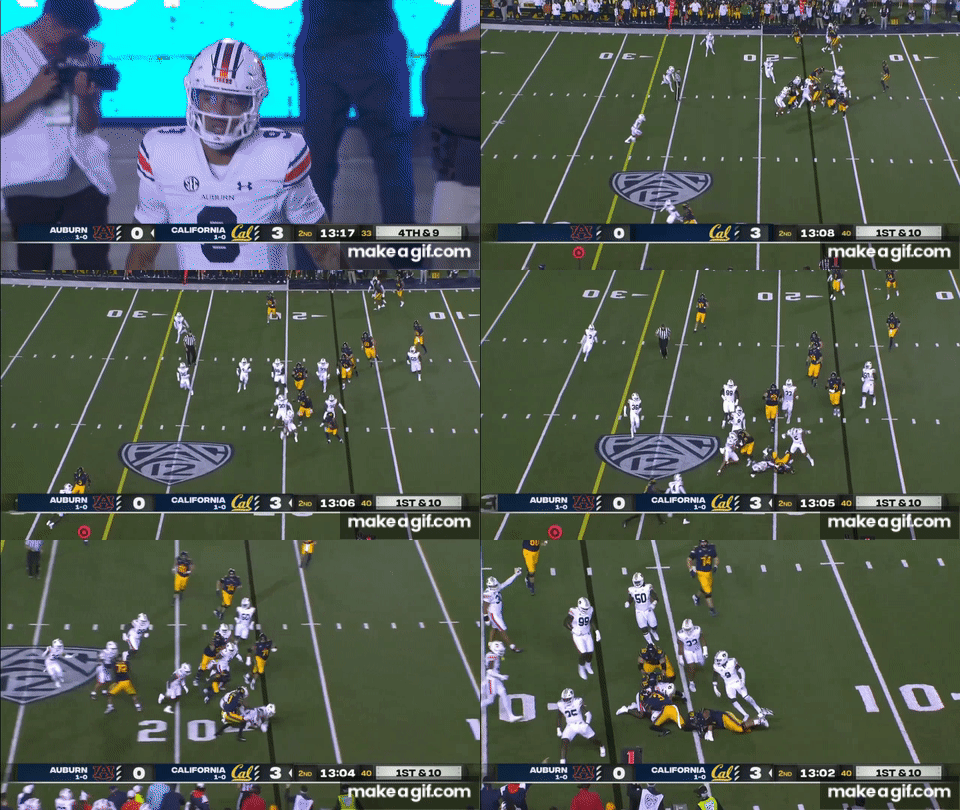
On the ensuing Cal possession, the Golden Bears again got themselves into a third and long. At least this time Spavital tried to get the ball past the sticks, running a post-wheel concept off play-action. Of course, as the great American philosopher Homer Simpson taught us, trying is the first step to failure; the lesson is never try. Auburn’s DBs do a great job of pattern matching and the front six get pressure with a delayed blitz, leaving Finley with nothing to do but throw the ball into the Auburn bench and bring up another punting situation.
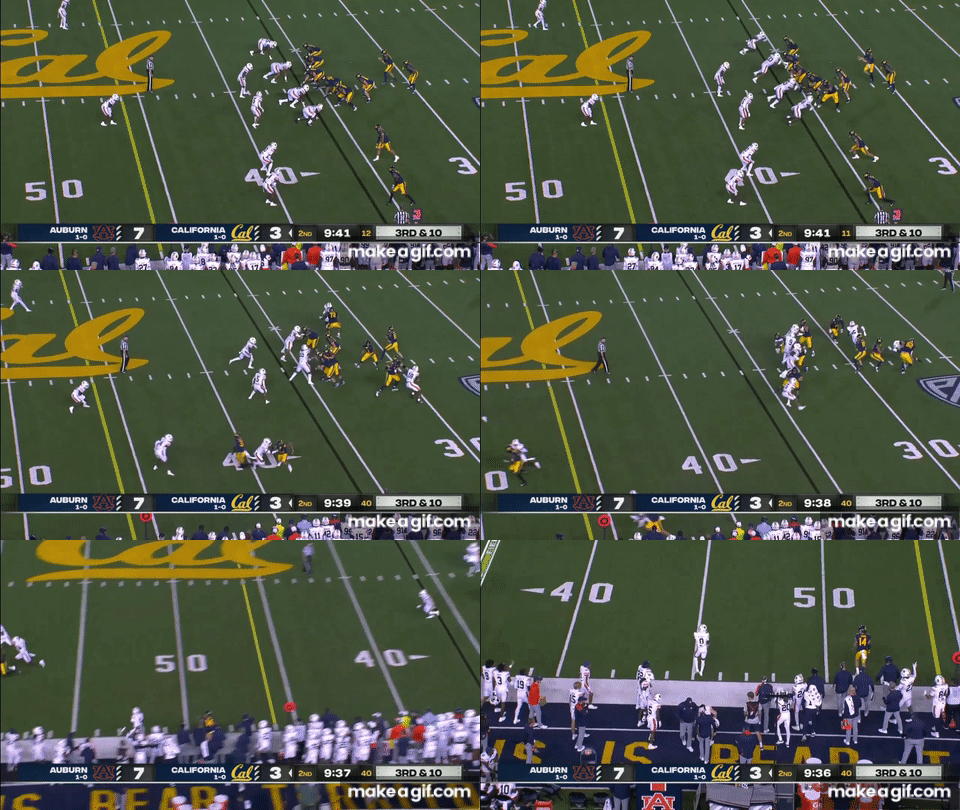
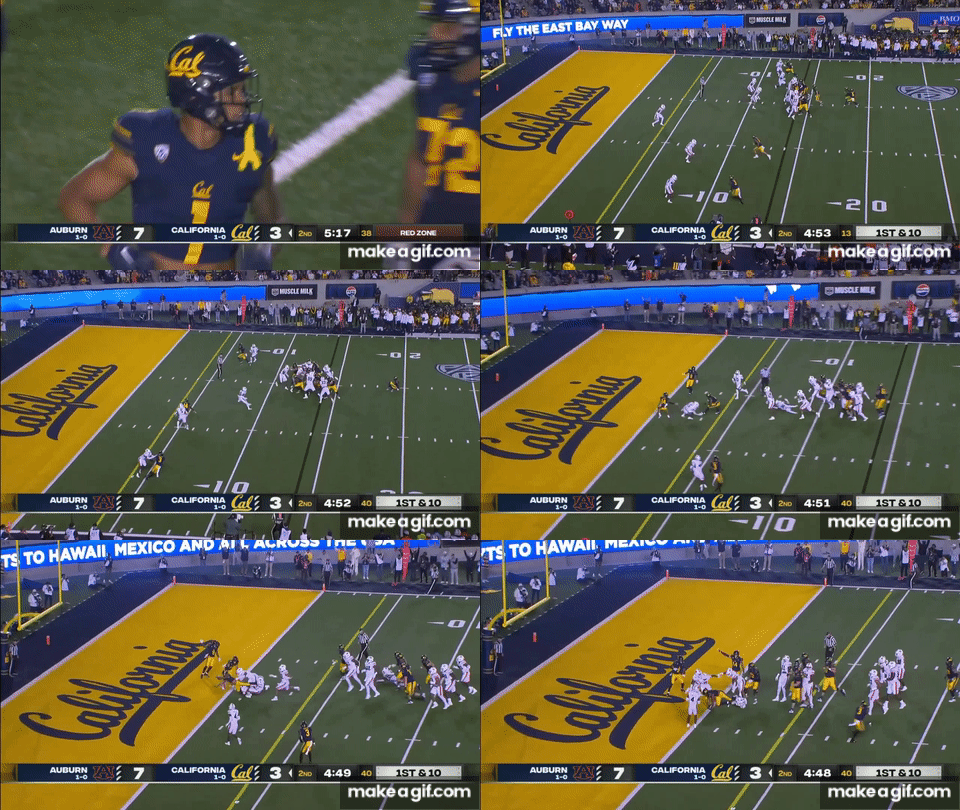
After Damari Alston’s fumble, Cal finally found a way to generate a couple of explosive plays with their second QB, Sam Jackson V. This drive saw some of Auburn’s bad tendencies from the UMass game rear their ugly heads again. On this play, the Tigers only rush four and are unable to get pressure with Cal basically in max protection, leaving Jackson time to find an open receiver downfield.
Two plays later, Cal gets its first big play on the ground. This is a zone slice scheme, with the H-back pulling across the formation to lead for the zone run. Wesley Steiner creeps too far inside, allowing himself to get outleveraged and sealed inside by the H-back and leaving lots of space for Ott to scoot around the end. Zion Puckett makes a touchdown-saving tackle, but it’s another first down for the Golden Bears.
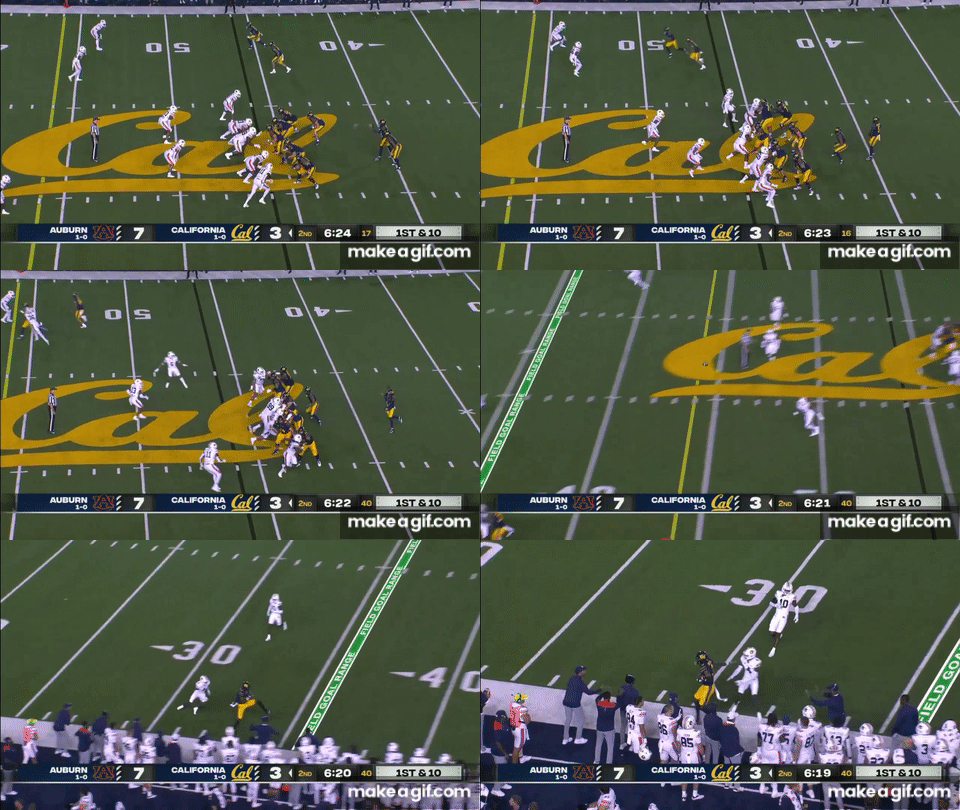
On the next play, Cal gets into the end zone for the only time on the night. This is a basic zone insert play, where the H-back inserts himself into the interior blocking scheme, in this case taking out the playside LB. Auburn brings a blitz off the backside with Puckett, but he doesn’t get there in time, and the backside LB, Cam Riley, is unable to get over the top quickly enough to prevent Ott from bursting through the gap and into the end zone.
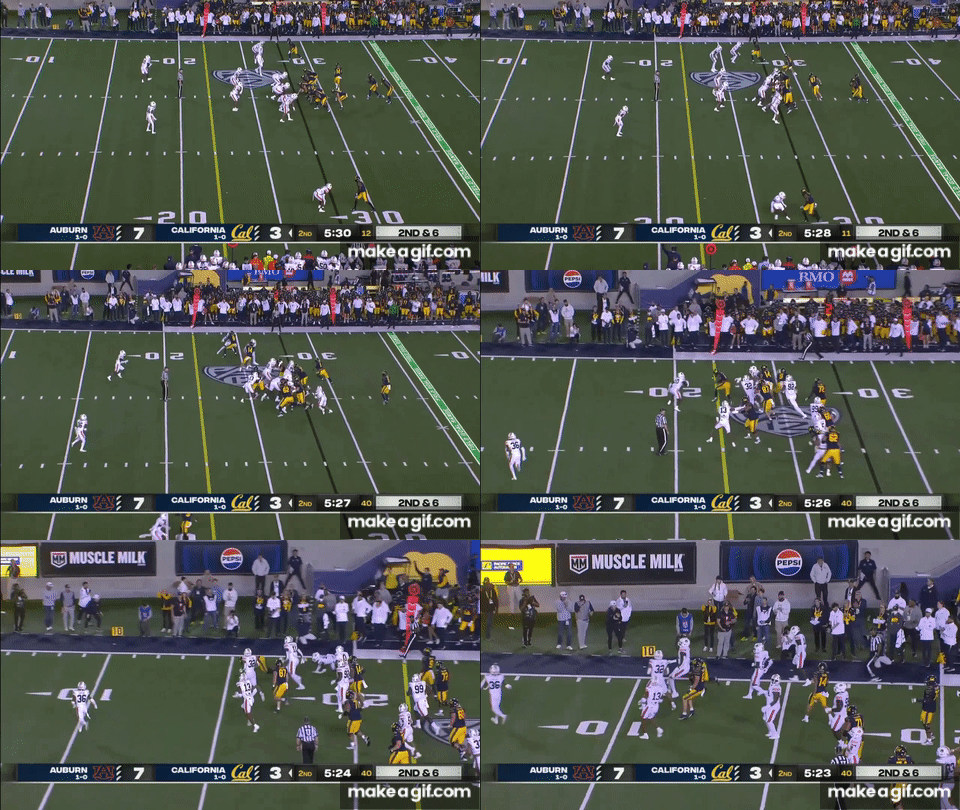
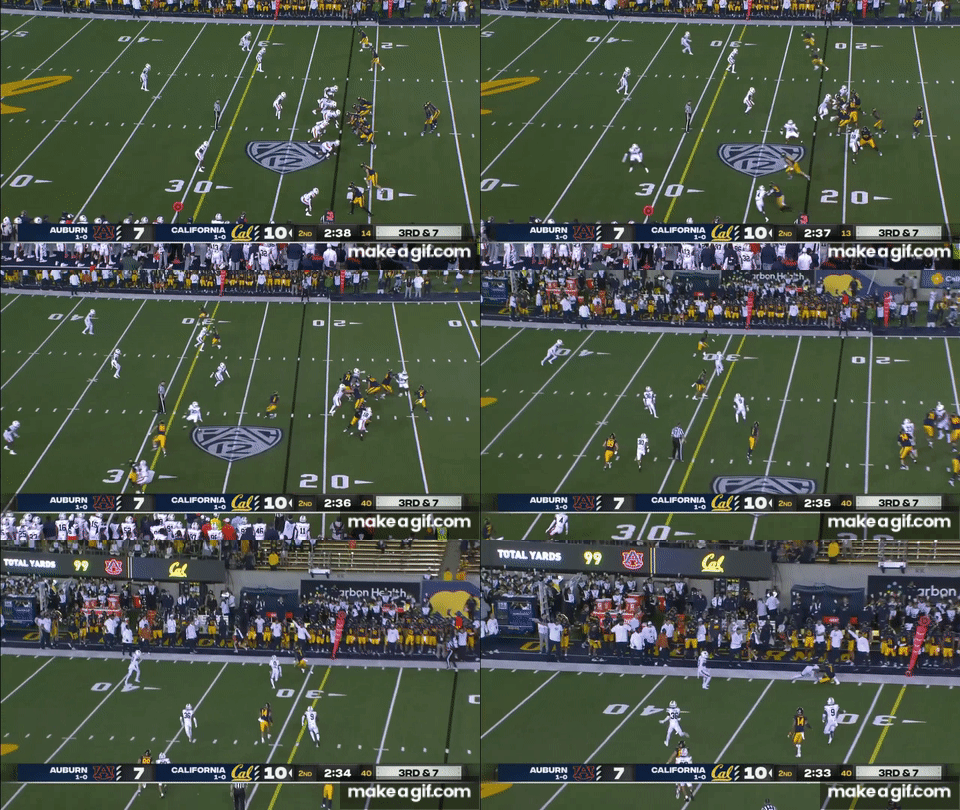
On the ensuing possession, we see once agan the Tigers struggling to get pressure with four rushers. Cal is running some type of curls concept and Jackson has plenty of time for his man to get past the sticks and find him with a back-shoulder throw for a conversion. However…
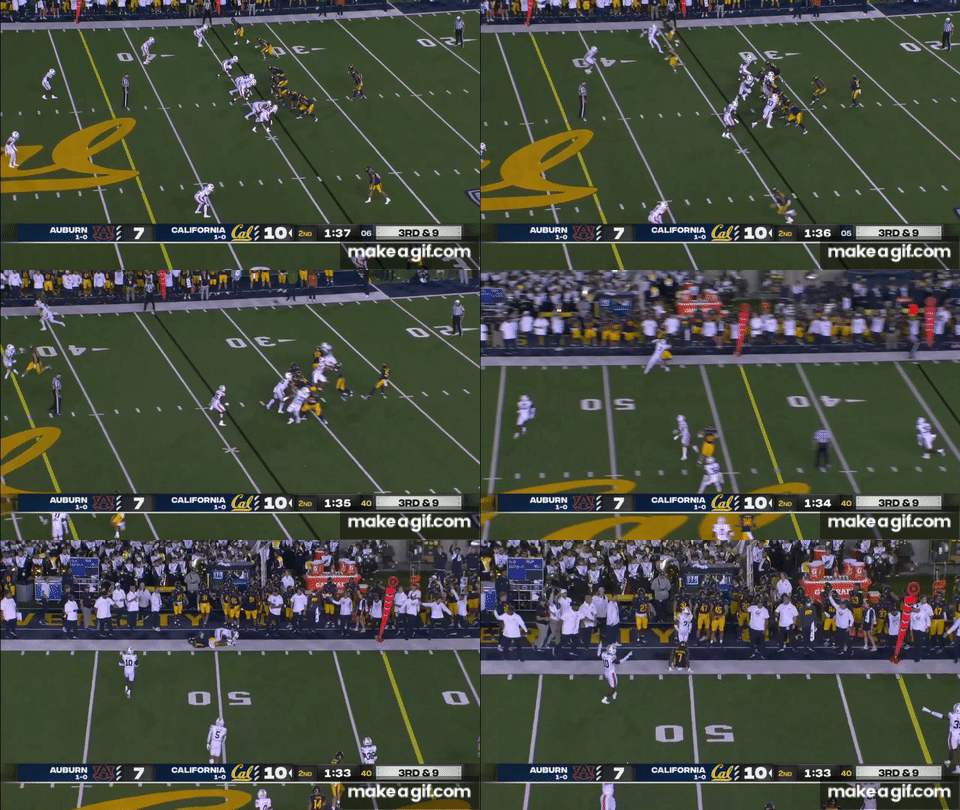
…on the next set of downs, Cal again faced a third and long and went back to the well with the same concept. This time Auburn is able to hurry the throw a bit and has much tighter coverage as well. The Cal sideline tried to beg for a flag but there’s no way they’re getting that call and it the Auric Ursines were forced to punt.
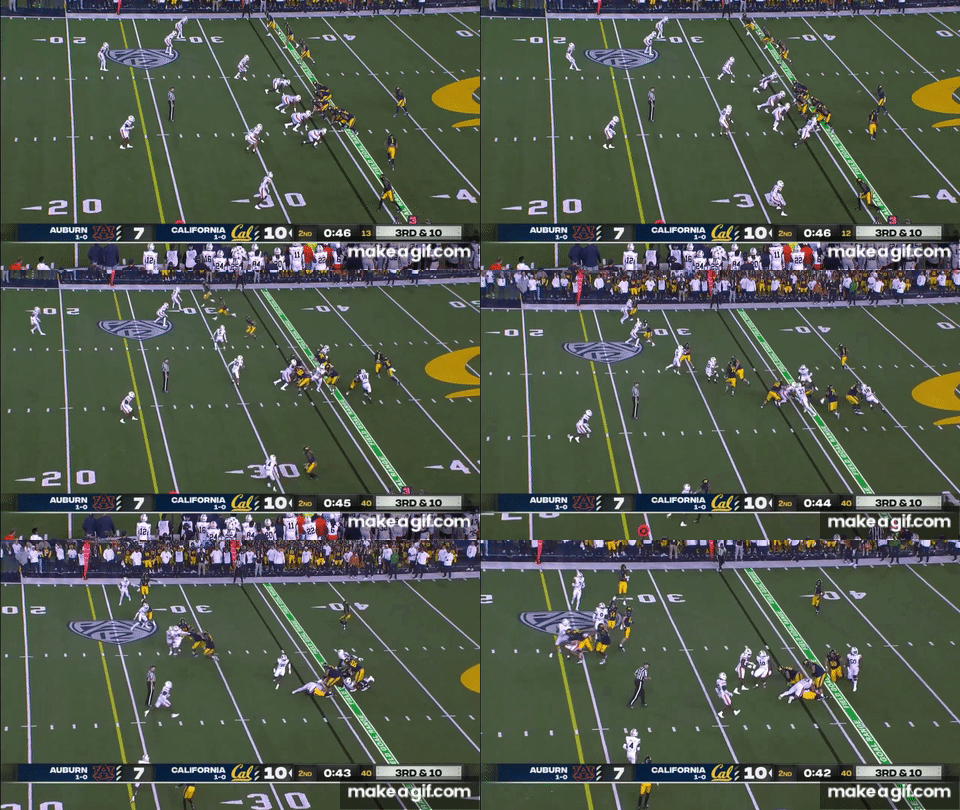
After Payton Thorne’s brutal interception with just over a minute left in the half, the bears once again had great field position, and once again they squandered it completely with a combination of inept offense and shambolic special teams. The Golden Bears line up in an empty set and bring Jaydn Ott in motion from the slot to run a power read concept. This concept should be familiar to Auburn fans as one of the preferred weapons of the Tigers’ 2010 offense. It works a bit better with Cam Newton and Onterrio McCalebb than with Sam Jackson and Jaydn Ott though. Jackson gets a keep read but both of Auburn’s interior linemen, Marcus Harris and Josiah Nakili-Kite are able to get off their blocks and disrupt the play. Cal somehow managed to get called for holding on a field goal, wiping the points off the board and forcing an unsuccessful Hail Mary, totally wasting an opportunity to extend their lead before the half.
Cal received the second half kickoff and went on a lengthy drive that consumed almost half of the third quarter, converting a fourth down and then a third down to reach Auburn territory, where they faced another fourth down. Spavital continued his trend of oddly passive playcalling with another screen, this time motioning the RB out of the backfield to run an F swing concept. Jalen McLeod, who was dropping into zone coverage, read this play the whole way and was able to get out and make the tackle well short of the marker and get the ball back to the offense.
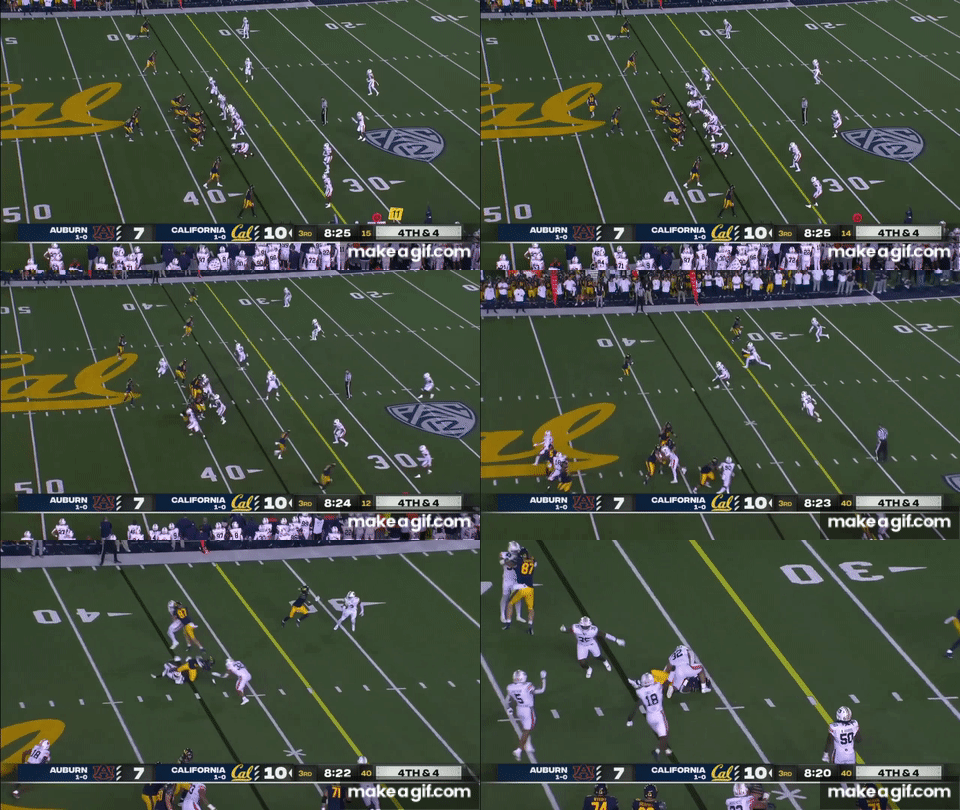
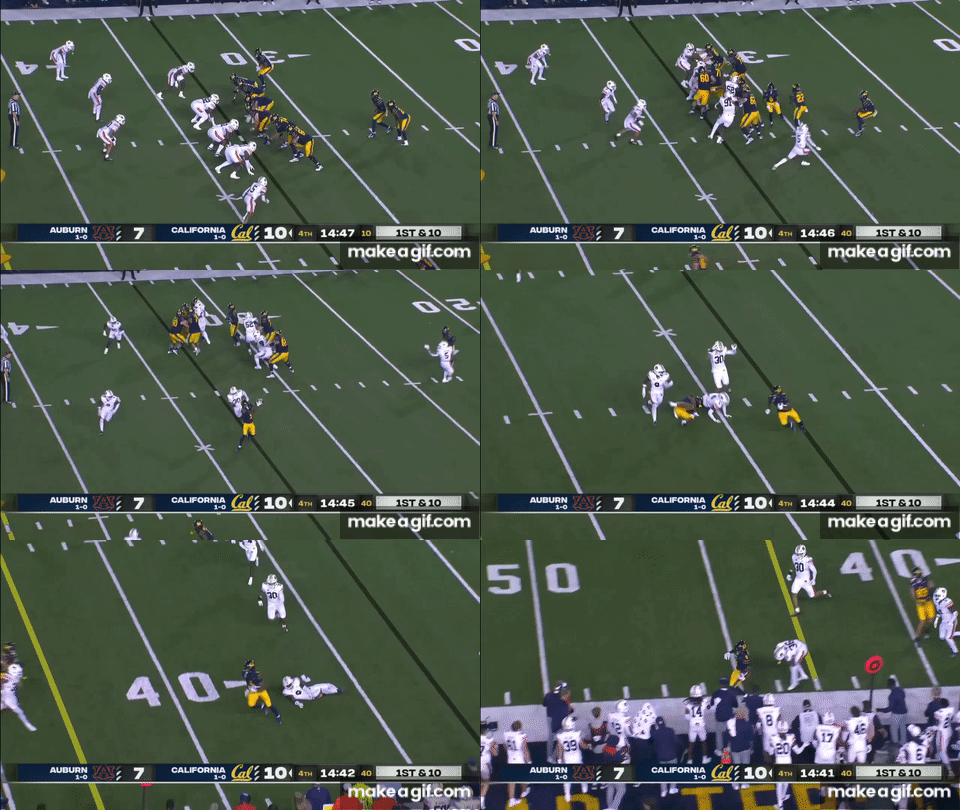
After stopping Auburn on fourth down, Cal got the ball back near midfield. I want to look at two similar plays on this Cal drive and the next one, neither of which, and I know I sound like a broken record at this point, ended with missed field goals. These two plays are basically identical and they’re good examples of Cal exploiting Auburn aggressively blitzing third-level defenders. Both of these are inside zone runs tagged with an arrow route; it looks like split zone, but instead of blocking the end, the H-back releases to the flat, and the QB reads the first defender outside the box for give or throw. In both cases, Auburn brings heat from the secondary (Jaylin Simpson in the first case, Donovan Kaufman in the second) and in both cases, Jackson makes the correct read and gets the ball out to the H-back for a first down (although I will note the refs missed a pretty blatant block in the back on the second play). Auburn’s pressures have generally been a net positive this year, but it’s undoubtedly a double-edged sword.
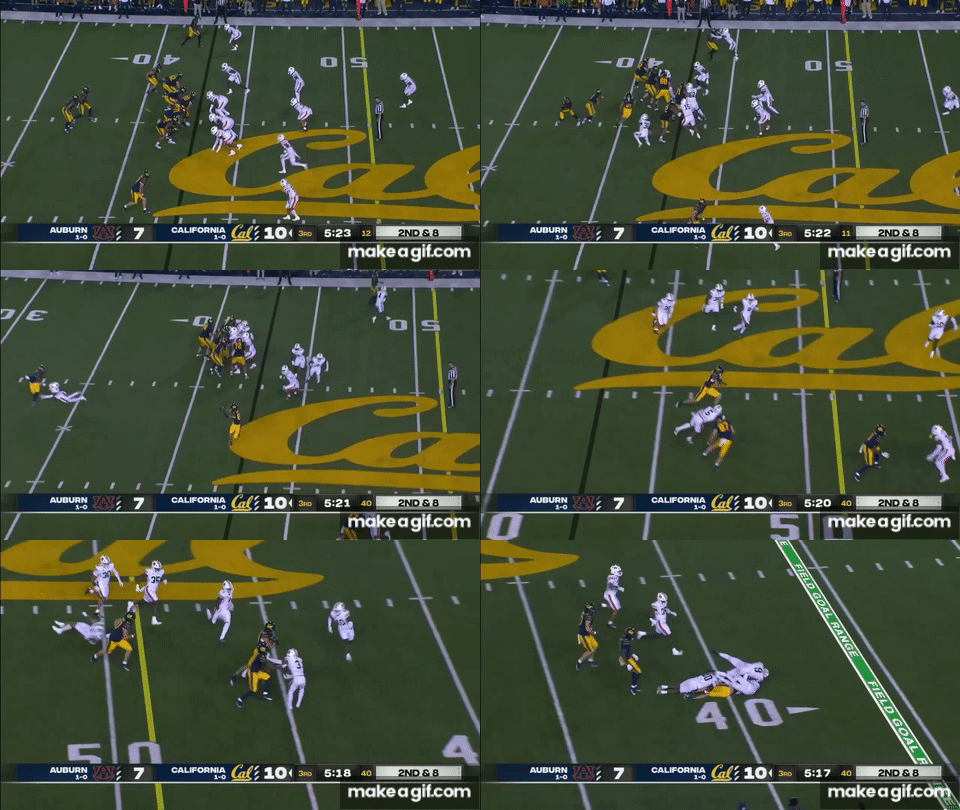
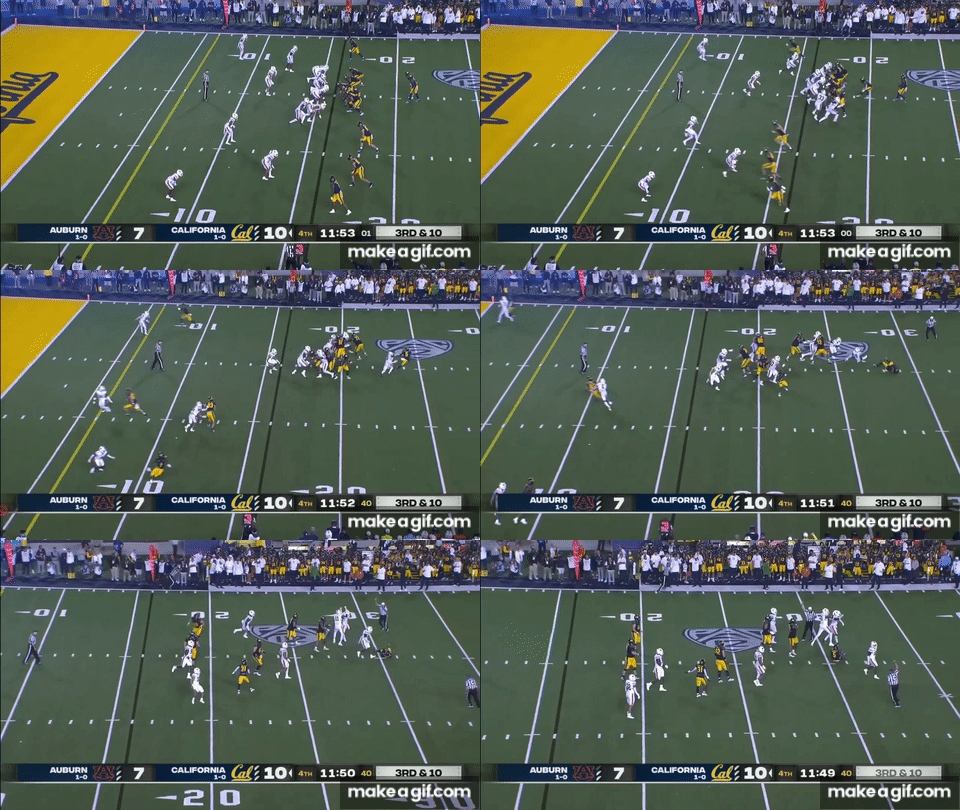
And now we get to see the other side of that sword. On the second of these two drives, Cal made its way down to the Auburn red zone, but found itself in a third and 10. I’m not entirely sure what Cal is running, maybe some type of smash concept with a jerk route in the middle? In any case, it doesn’t really matter. Auburn brings the house, with six rushers; although Cal has six pass blockers, the RB totally whiffs on Eugene Asante coming off the edge, and he takes Jackson down for a huge loss, setting up a field goal which Cal missed.
After Auburn finally managed to retake the lead with the touchdown pass to Rivaldo Fairweather, Cal faced a crucial third and 3 on their ensuing possession. They line up in a pistol set with an H-back and the Z receiver in tight to block. There’s little doubt it’s going to be a run play, and there’s little doubt it’s going to be an inside zone, since that’s all Cal ever ran from the pistol, to my knowledge. Auburn has no compunctions about putting seven guys down in the box and bringing in an eight after the snap, overwhelming the offensive line and blowing up the play. Cal decided to punt here for whatever reason, but it ultimately worked out, because, of course, Auburn fumbled again, giving the Golden Bears one last chance to snatch victory from the jaws of defeat.
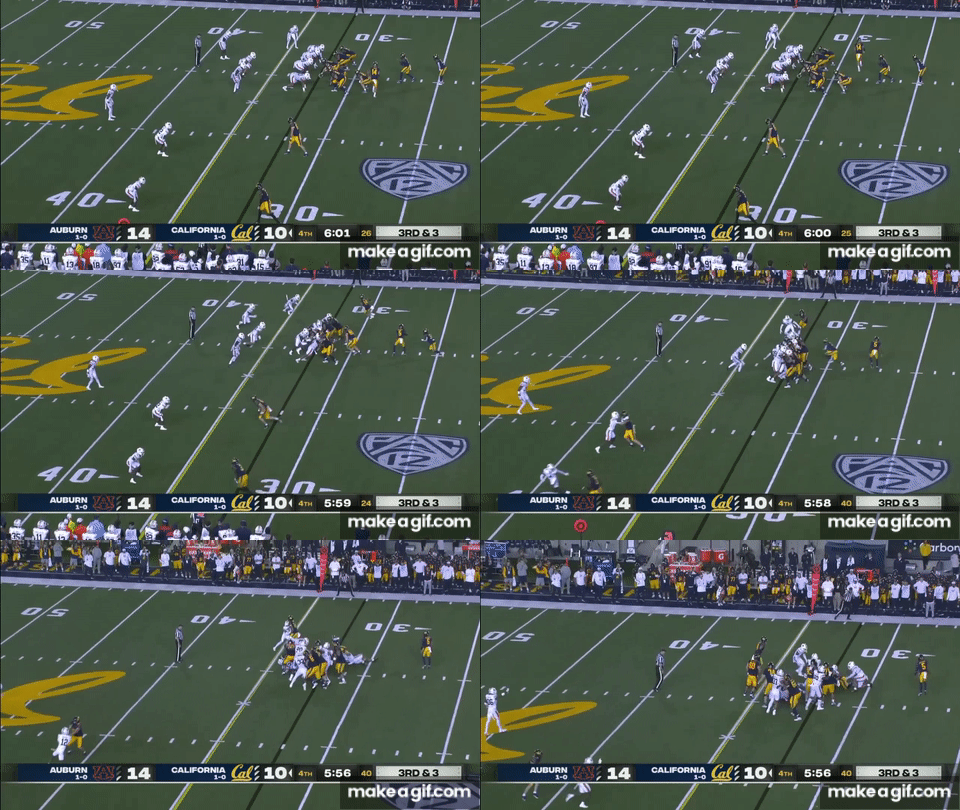
On the first play of that drive, Cal ran some type of flood concept and Jackson was able to get the ball to his receiver on a deep out. The Golden Bears got an extra boost from a dumb penalty by freshman corner Kayin Lee. Yeah, it’s a soft call, but you can’t do that over on the opponent’s sideline and give the ref a chance to be swayed by the opposing coaches’ whining.
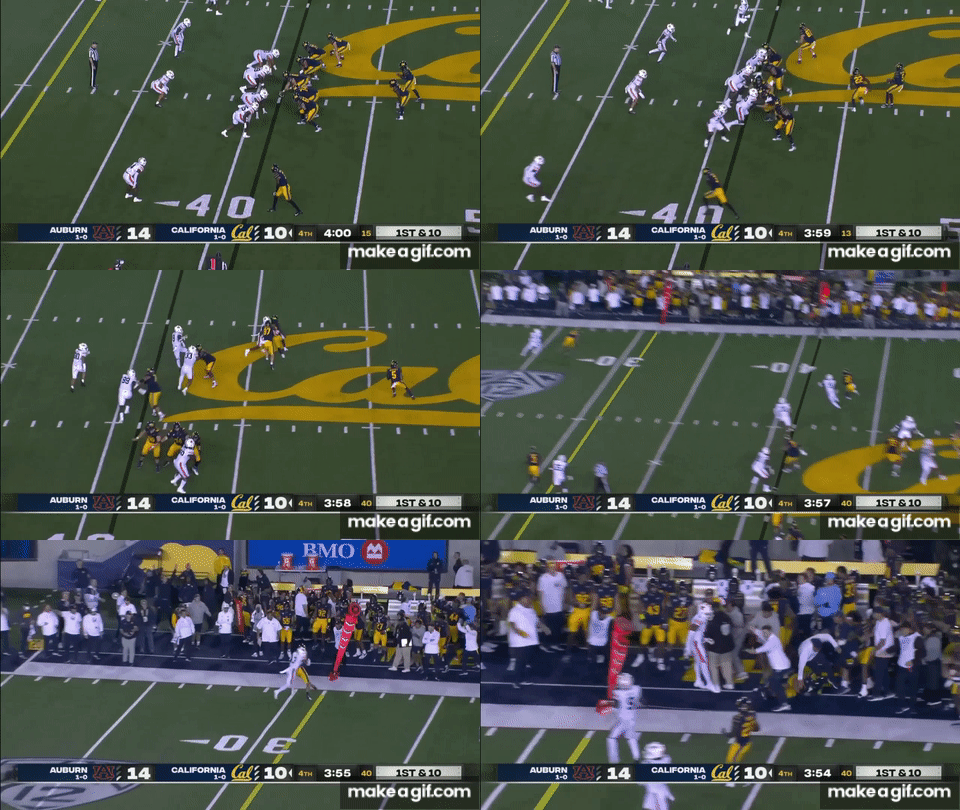
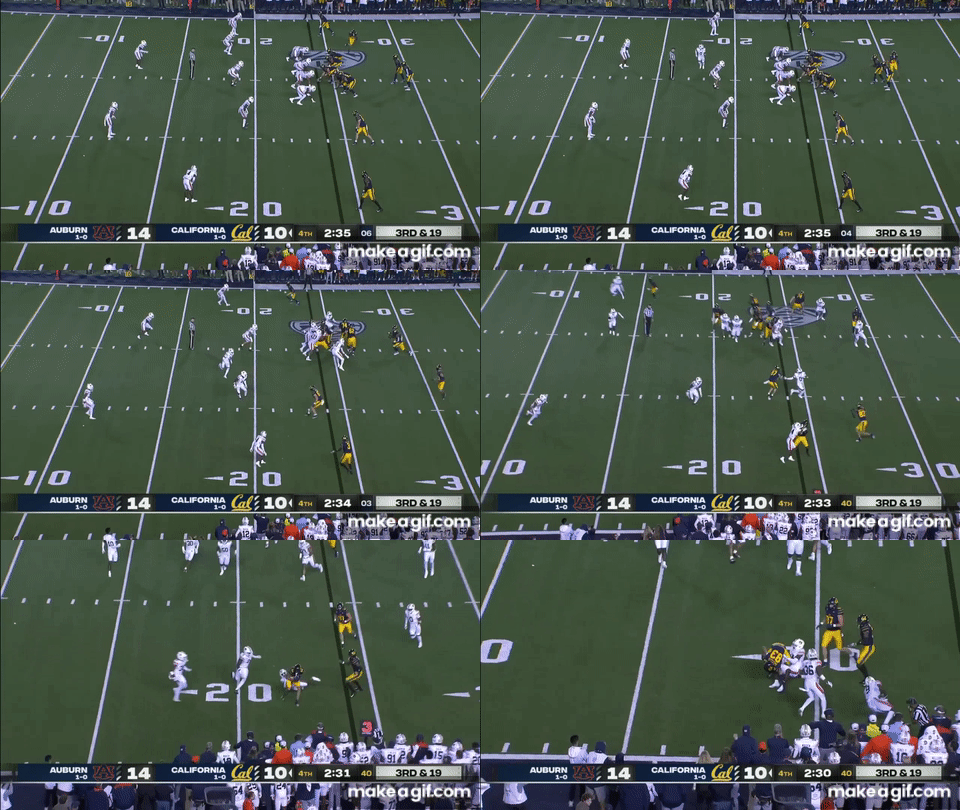
However, after that penalty, Auburn’s defense bowed its back, pushing Cal back into a third and 19 situation. Spavital, with an opportunity to redeem himself for a night of cowardly third down playcalls, instead gets one more for the road. The Golden Bears bring a receiver (or tight end?) in motion behind the QB and run an RPO with a GT counter paired with a swing pass to the motion man. The not-especially-athletic receiver is easily corralled by DJ James and Eugene Asante, setting up a fourth and long. Baffling playcall.
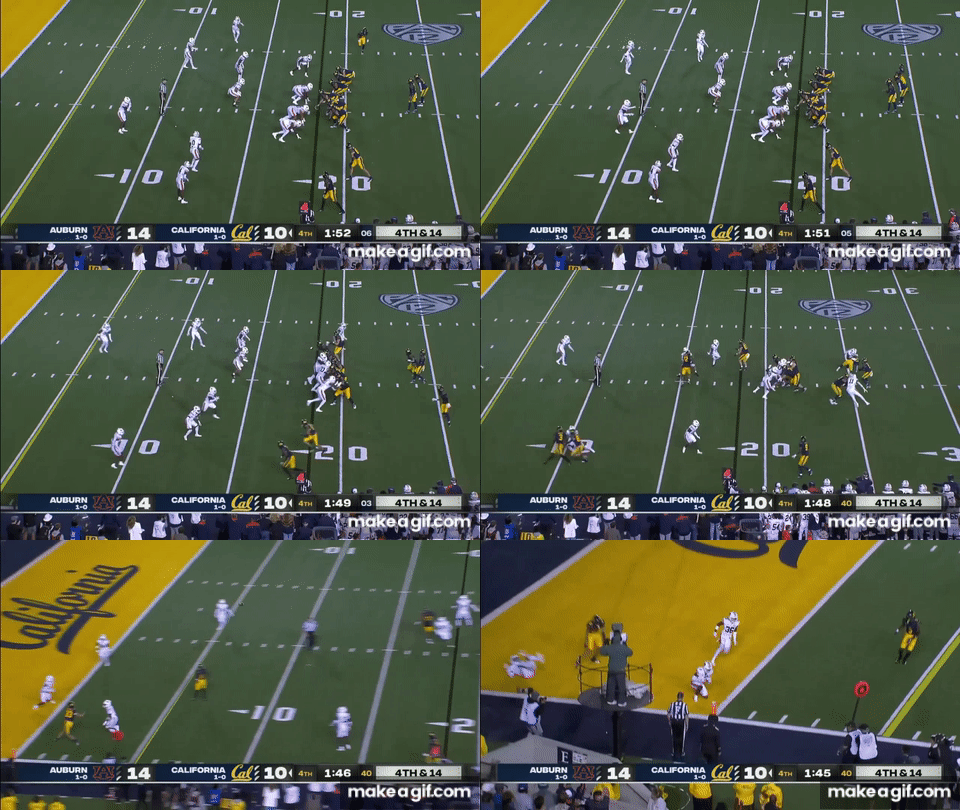
Facing fourth an game, Spavital is again oddly conservative. Cal only sends three receivers out into the pattern, and they run the play into the boundary, giving them limited space to work with and making the task of Auburn’s zone defenders much easier. Despite the max protection, however, Auburn is still able to rush Jackson’s throw a bit. I’m not entirely sure what this is supposed to be, but it looks like a variation of Mike Leach’s old H wheel play, where the #1 receiver runs a deep curl and the #2 receiver runs a wheel. Usually the idea is for the wheel to open up the curl, but here, Jackson throws the wheel into basically triple coverage, and DJ James makes the easiest pick of his life to ice the game.
CONCLUDING THOUGHTS
Last week, I came out of the UMass game feeling okay about the offense and concerned about the defense, but after this game, it’s the other way around. There’s no sugar-coating this one: it was an ugly performance for the Auburn offense, which struggled to execute its vertical concepts and RPOs against Cal’s man coverage, and I’m worried that they’ve given Auburn’s SEC opponents the blueprint for how to shut down the Tigers’ offense. Auburn will have to find some answers against man coverage if they’re going to be successful down the stretch. It would really be nice if they’d pick a QB as well, since the series with Robby at QB outside the red zone were a total failure. The turnovers and penalties have to get cleaned up as well, but you didn’t need me to tell you that.
The defense performed admirably given that they were put in several bad situations by the offense. Had Cal’s kicker been even decent, they would have won the game, but that’s more of a product of the great field position the offense repeatedly gifted them than the defense’s performance. They were occasionally burned due to their aggression, but they managed to rattle Cal’s QBs and, apparently, their OC, whose conservative playcalling hampered his team’s ceiling. I’m still not entirely convinced by Auburn’s run defense, but it was much better in this game largely thanks to a significant improvement in the LB corps, which was a big red flag last week.
The Tigers have a body bag game against Samford coming up this week, which won’t tell us much, and I might not even bother to write a review article for it unless the Bulldogs manage to make it more interesting than it should be. Barring disaster, I’ll see y’all in two weeks to recap the aTm game.
 Auburn Analysis
Leave a comment