Well, it’s a New Era™ on the Plains…again.
Auburn will start the 2023 season with its third head coach in four years and its sixth new offensive coordinator (excluding interims) in the past six years. It should come as no surprise that Auburn’s offense has spent most of that six-year span underperforming, lacking a clear identity and undermanned, particularly in the trenches. There seems to be more optimism among Auburn fans than the last few rounds of coaching turnover have produced, but with so many new faces on both the coaching staff and the roster, there’s a lot of uncertainty for Auburn on the offensive side of the ball going into 2023.
So what will Auburn’s new offense look like? That’s what we’re going to try to figure out today.
HUGH FREEZE AND THE RPO
When asked about the identity of his offense, Hugh Freeze has described his system as an up-tempo, 11 personnel, RPO offense. In other words, a hurry-up, no huddle offense that’s going to have three receivers, a tight end or H-back, and a running back on the field most of the time, and will feature a lot of runs with screens and quick passes attached, along with some deep play-action to keep the defense honest.
Sound familiar? It should! As you may or may not have heard about 500 times by now, Hugh Freeze and Gus Malzahn are friends, and Freeze has acknowledged Malzahn’s influence on his offensive thinking. However, even though their offenses are similar on the surface, they don’t really come from the same place. Freeze’s and Malzahn’s offenses are a case of what biologists would call convergent evolution, where two species that aren’t closely related become similar to one another because they face similar evolutionary pressures. While Gus Malzahn’s offensive roots went back to his time coaching the Delaware Wing-T system as a high school coach in Arkansas, Freeze, from what I can tell, has been a spread guy since the beginning. We’ll get into some of the implications of that difference later on, but I thought it was important to point out because of the parallels between the two.
When these two first entered the SEC (Malzahn in 2006 and Freeze in 2011), their brand of spread, up-tempo football was a novelty in a conference that had been dominated for decades by traditional three-yards-and-a-cloud of dust football (with a few notable exceptions, like Steve Spurrier’s Fun-and-Gun at Florida and Hal Mumme’s Air Raid at Kentucky). Now, as Freeze makes his return to the SEC 12 years later, that’s not the case. That’s not to say Freeze’s offense is outdated, it’s not, it’s just that the offensive meta in college football has converged toward what he and Gus have been doing for a couple of decades.
So what distinguishes Freeze’s offense from your run of the mill college spread offense? Honestly…not that much. You’ll see the standard three- and four-wide receiver shotgun and pistol sets, along with an occasional empty or heavy set. The run game is mainly built around inside zone, with some outside zone and gap schemes like power and counter mixed in. Unlike Gus, whose Wing-T background inculcated him with a love of gap schemes (power, counter, trap, and buck sweep) before working with RichRod protégé Herb Hand at Tulsa introduced him to the zone read, Freeze’s spread background is more zone oriented, with the gap schemes as a secondary part of the offense.
The passing game, although a bit more expansive than Gus Malzahn’s, is fairly standard for the college level as well: quick game concepts like stick, snag, and fade-out, dropback concepts like shallow, smash, and four verticals, and deep shots and bootlegs off play-action. This isn’t a criticism, by the way. These standard concepts are standard concepts because they work. (If you don’t know what these terms mean, I intend to create a “football glossary” post at some point that includes clips of different concepts so that I have something to refer back to when I mention them instead of having to explain them over and over again).
The thing that distinguishes Freeze’s offense from other spread systems is how it’s packaged. The key to this is the run-pass option (RPO). The term is ubiquitous in college football these days (although it’s often misapplied), but what does it mean in practice? Really, it comes down to one basic concept: putting a defender in conflict. This works by identifying defenders who have a dual responsibility, i.e. covering a gap in the run game and a zone in pass coverage, and forcing them to choose between the two by threatening to run the ball or throw it to a receiver in their zone. The defender can’t cover both the run gap and the pass zone (Brent Dearmon, a Gus disciple, makes the apt analogy of “trying to serve God and Mammon”), so he’s got to choose, and whatever he chooses, the offense is going to make him wrong.
So how do you identify the conflict player? The conflict player will vary from game to game based on the opponent’s defense, so part of it is just gameplanning, but as a general rule, it’s usually going to be an outside linebacker, nickelback, or inverted safety, who will often line up over the slot receiver in a three-receiver set (sometimes referred to as the “apex” player).
Perhaps the simplest way to think about it is as a numbers game: the offense is reading the guy who would cause them to be outnumbered in the box. if you have six blockers and six defenders in the box, you have the numbers to run the ball, but you need to keep the defense from getting a seventh guy into the box, so you tag a quick pass that attacks his zone to give him a dual responsibility. The QB will put this guy under pressure by meshing with the RB, giving the appearance of a run play, and either handing it off if he drops into coverage or ripping it out and throwing it if he comes down to fill his gap.
Often, this post-snap read is combined with a pre-snap read on the backside of the play. In a three-receiver set, the defense will often leave the defender over the single receiver on the backside in one-on-one coverage, and the QB is sometimes told that if he likes what he sees there, he can throw it out there; for example, if that corner is playing soft coverage, he can throw a quick hitch to the single receiver.
Here’s a clip of the man himself explaining it in an interview with Trevor Matich back in his Ole Miss days:
In terms of the actual concepts employed, there are almost infinite permutations of the RPO. The most common form of RPO a base run play like zone or power paired with a quick screen or some type of quick-hitting route like a stick or slant. Again, this can come down to gameplanning, and offensive coaches will often mix-and-match the run and pass components of their RPO game based on what type of defense their opponent is using and which defenders they want to attack.
Okay, enough wall of text, let’s get to some film and see how this works in practice. These clips are from Liberty’s 41-13 home win over Middle Tennessee State in 2021 and Liberty’s 36-34 home win over Florida International in 2020.
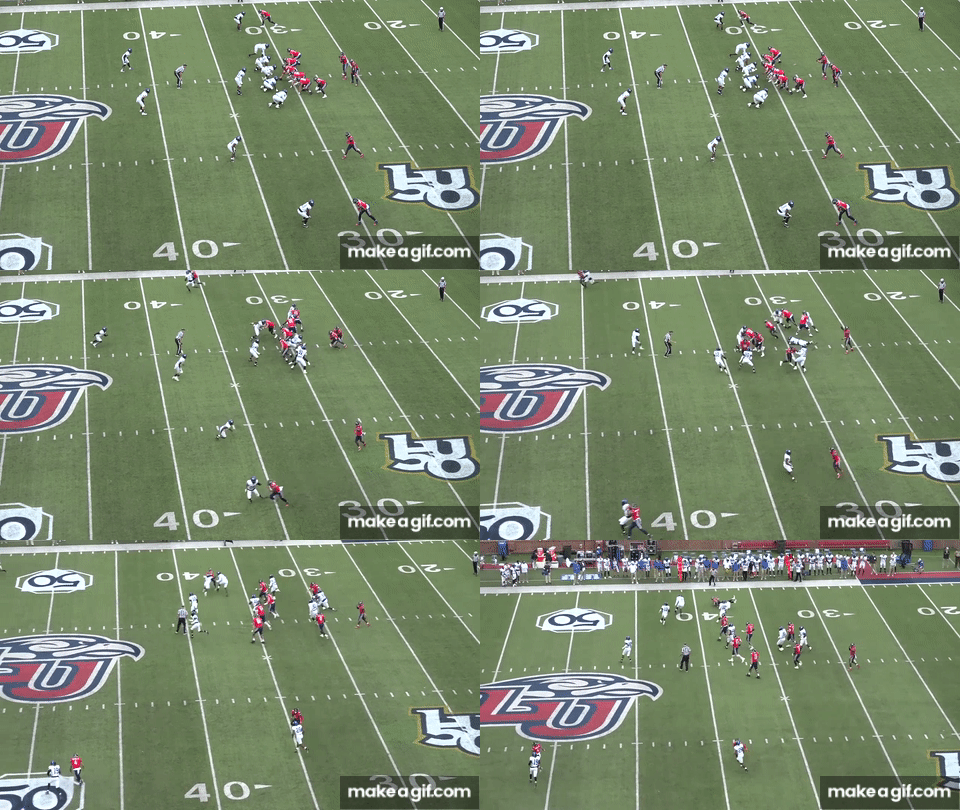
First, we’ll look at the simplest phase of the RPO, where the QB simply hands the ball off. This is a basic inside zone play with a bubble screen tagged to the backside. The pre-snap read (the single receiver running the fade) is dead because the corner is playing press, so the QB (former Auburn QB Malik Willis) goes directly to his post-snap read, the nickelback lined up over the slot receiver. He takes away the bubble screen so Willis hands the ball off and it’s a successful run on first down to set up a second and short.
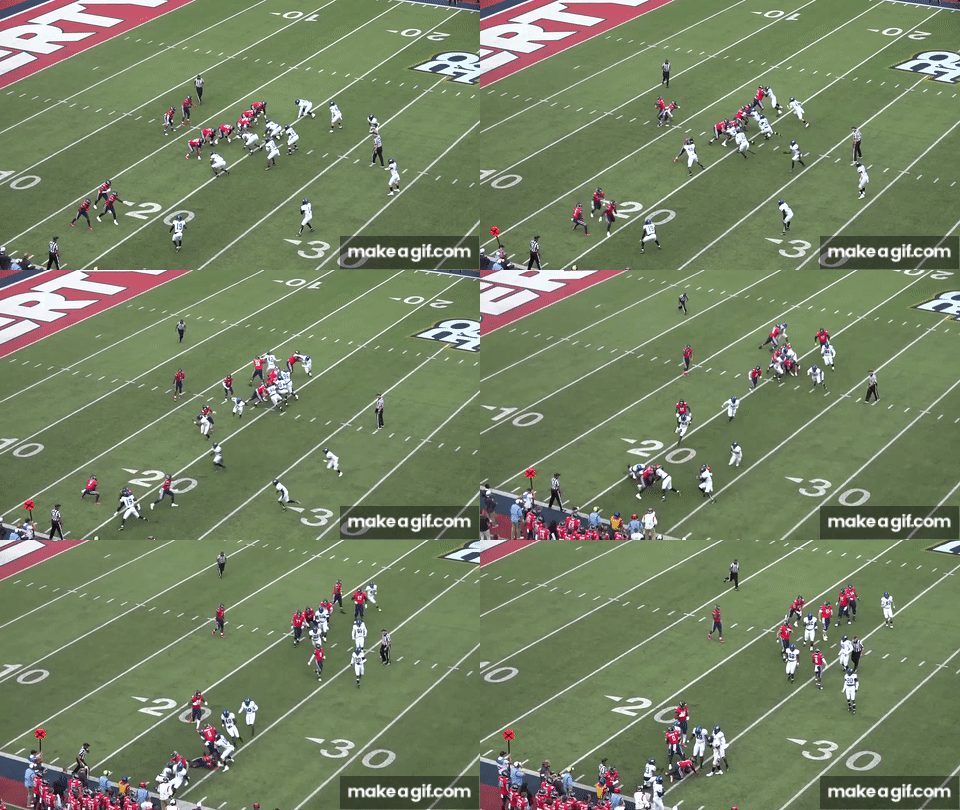
This next clip is another example of using the threat of a quick pass to open up the run, but in this case it’s tagged to the backside of a read option play rather than a simple give-or-throw read. Here Liberty is running some type of pin-and-pull or bucksweep scheme (it’s hard to tell the two apart sometimes) with Willis reading the backside defensive end for give or keep, with the option to throw a bubble screen to the slot receiver should the slot defender crash down on Willis if he keeps. That doesn’t happen here and he’s able to pull the ball and get a decent gain.

An interesting note is the playside tackle pass-setting rather than run blocking the DE to draw him upfield and open up the lane for the RB to bounce the ball into the B gap. It’s an interesting way to run the ball against a bear front, which would usually preclude running inside zone (a problem that Gus never solved in his time at Auburn).
Second, we’ll look at a few examples of the second phase of the RPO, where the QB pulls it and throws the quick pass.
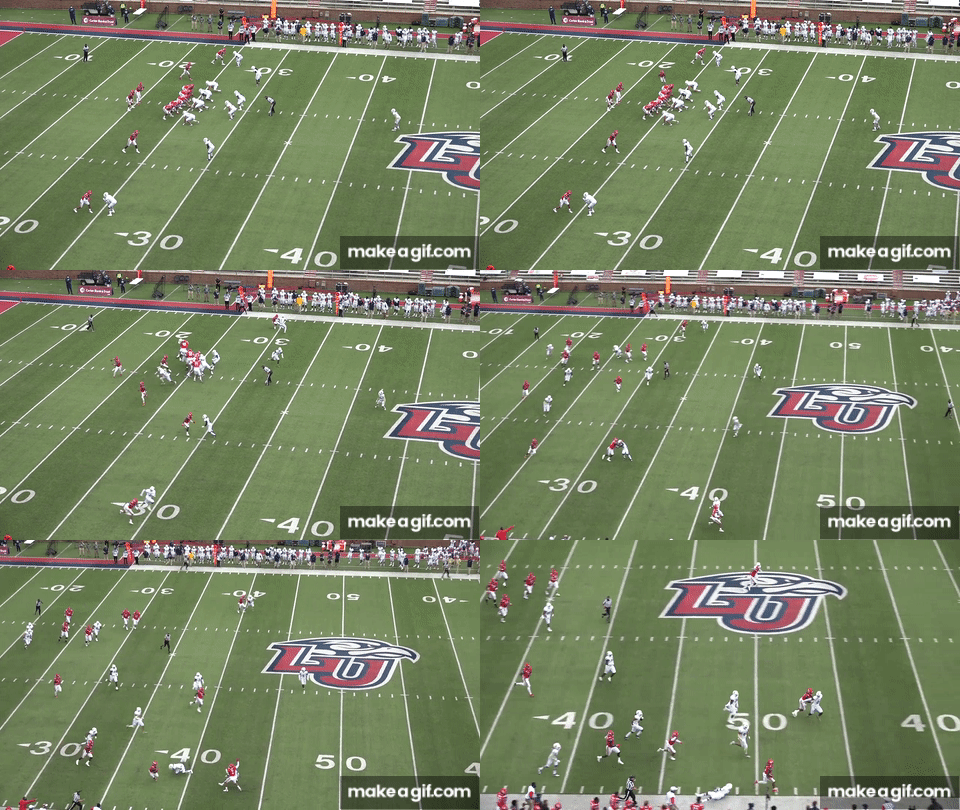
In this first example, Liberty lines up with three receivers bunched to the sideline, and they’ve paired their base inside zone run with a quick screen to the Z receiver. I’m honestly not sure how much of this was a post-snap read and how much of it was just Willis realizing he had 3 on 2 out there and throwing it (you can see the MTSU DB realizing he’s out of position and scrambling to get where he’s supposed to be), but it’s an incredibly “cheap” way for the offense to pick up yards, since they only had to block one defender. Football doesn’t have to be complicated: get there firstest with the mostest.
(I won’t post the clip but it’s worth noting that on the very next play, Liberty ran a pop pass off of this action, pump-faking the quick screen and looking to throw a wheel route to the #2 receiver which Willis badly underthrew right into the hands of a defender.)
In this example from the FIU game, Liberty incorporates motion into their RPO game, running a common RPO concept, pairing an inside zone run with an arrow route to the slot receiver motioning into the backfield (something Auburn frequently ran with the trio of Kerryon Johnson, Jarrett Stidham, and Ryan Davis in 2017). Motion pairs great with RPOs because motion puts additional pressure on the defense, forcing the conflict defender to commit more quickly or risk being outleveraged. In this case, the defensive end crashes down on the run, leaving the arrow open, and thanks to some good downfield blocking, they’re able to get a nice gain out of it.
I’ll also include the end zone angle here so that you can really see the read on the conflict defender in action.
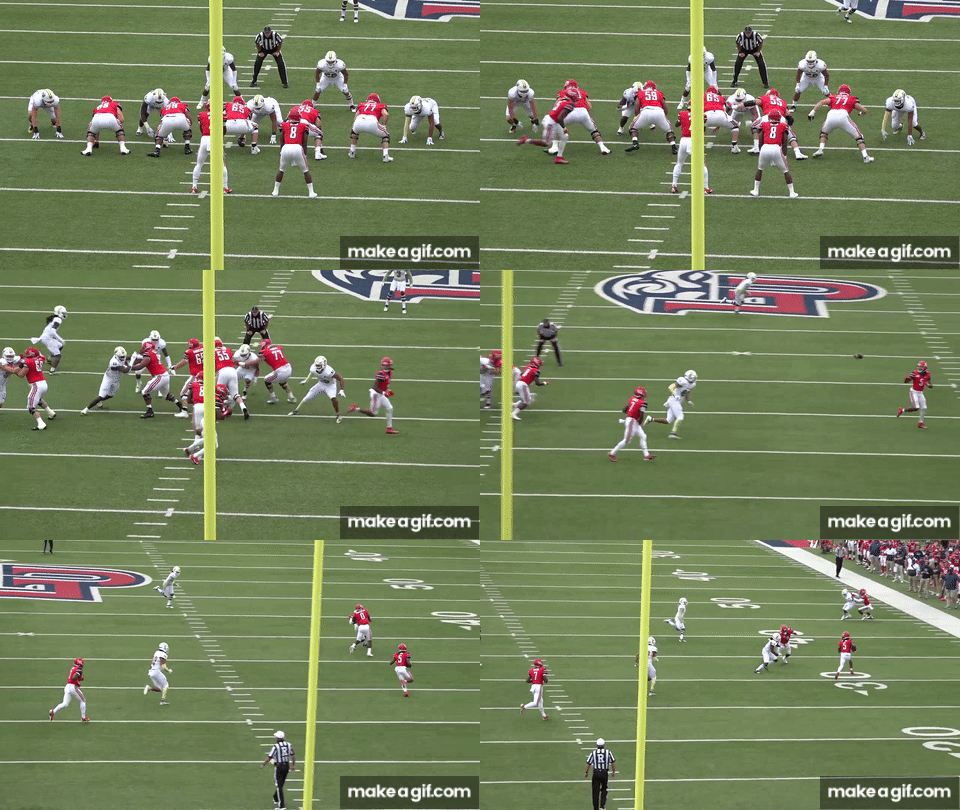
Finally, here’s a case of the QB throwing his pre-snap read. There weren’t many of these in the MTSU game because MTSU played a lot of press coverage, and generally pre-snap reads are going to take advantage of soft coverage with a route like a quick hitch.
This is an unbalanced set with both receivers on the left on the line of scrimmage. The Z receiver comes in motion across the formation pre-snap, probably to get the defense to show what coverage they’re in. The run call is CY counter, a variation on the standard GY counter concept with the center pulling and trapping the defensive end (instead of the guard) and the TE wrapping to the playside LB. The backside receivers run a quick screen, which is presumably the post-snap read. The motion man runs a speed out, taking advantage of the soft corner.
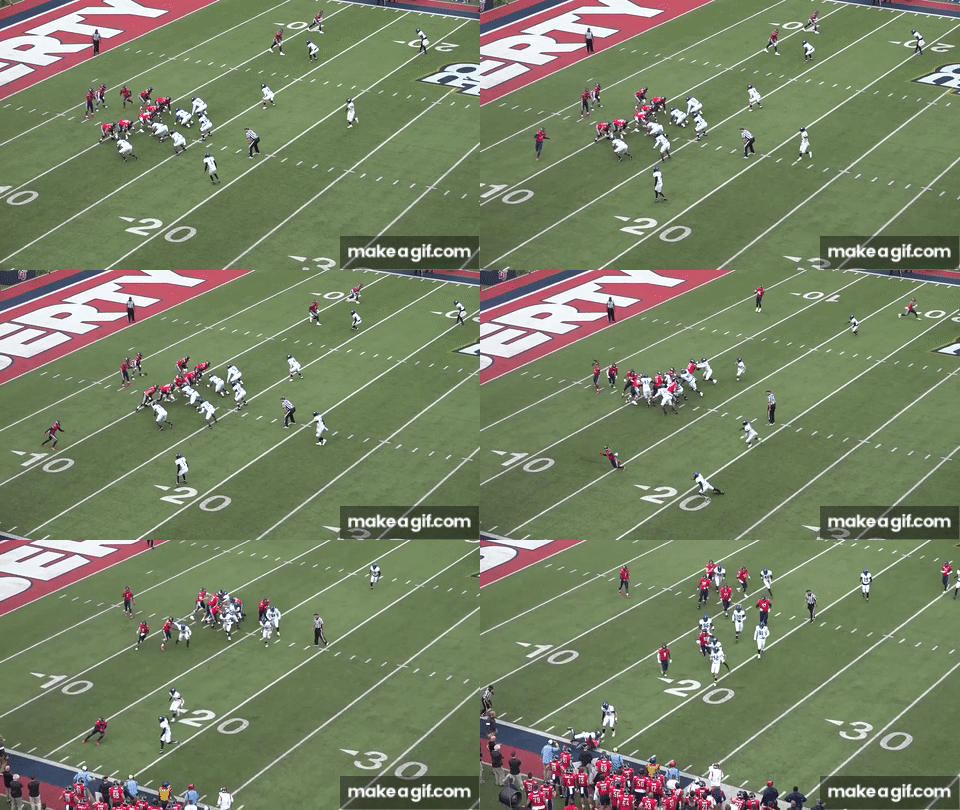
So what does the defense do to stop the RPO? There are two basic options: stay in zone coverage and use another defender to fill the conflict player’s zone, allowing him to play run full time, or just play man coverage so that the receivers are always accounted for. Any team that’s going to make the RPO a mainstay of its offense has to have answers for these two defensive tactics.
The simplest way to address the defense rotating its zone defenders is to run play-action and throw the ball wherever the support player came from. The defense is robbing Peter to pay Paul, so you’re going to go hit Peter up for money. For example, if the defense is going to keep the outside linebacker in the box and rotate the safety down, a deep vertical route that attacks that safety’s deep zone should be open.
Man coverage can also be attacked through play-action, but there are other options. For example, you can use man-beating pass concepts like the late Dread Pirate’s beloved mesh, or run a read option play like zone read or power read, which generally work well against man coverage. Man is a much tougher problem for RPO teams, especially if the other team has better Jimmies than you have Joes and can handle your top receivers one-on-one. This requires the offense to get creative to find solutions to these problems (finding what Brent Dearmon calls “manswers” in the video linked above).
BEGGARS CAN’T BE (DEEP) CHOOSERS?
Of course, Hugh Freeze isn’t the only new face on the offensive side of the ball for Auburn this year. The Tigers also have a new offensive coordinator, Philip Montgomery, who was fired after eight years at the helm of the Tulsa Golden Hurricane. Wait, Auburn hiring an OC from Tulsa? Why does that sound familiar?

Oh, right.
Before his time at Tulsa, Montgomery was the offensive coordinator at Baylor under Art Briles for four years, where he coached a guy you may have heard of named Robert Griffin III. From 2011 to 2014, Briles and Montgomery helmed an offense that put up video game numbers at a school that had been the doormat of the Big XII for two decades. So how did they turn a program that was an afterthought into one of the country’s most feared offenses, and how much of that might Montgomery be bringing to Auburn?
Briles’ offense (sometimes known as the veer and shoot, even though it has nothing to do with the split-back veer or the run and shoot) has a few unique characteristics that set it apart from its contemporaries. The first was its tempo, which was among the fastest in the country, giving Chip Kelly’s Oregon and Gus’ Auburn offenses a run for their money in that respect. However, the real secret sauce is in the receiver splits. Unlike a standard offense where the slot receivers are aligned near the hashes and the outside receivers are aligned near the numbers, the receivers in the veer and shoot take the widest splits possible, with the slot receivers on the numbers and the outside receivers almost touching the sideline. The reason for this is actually quite simple: stretch the defense as wide as possible and isolate defenders, turning zone into man.
This horizontal stretch of the defense was often used to run the ball, since it makes it nearly impossible to get players from outside the box into the box to support the run defense. Baylor’s run game was really simple, consisting almost entirely of inside zone and power, but the wide splits ensured they had equal numbers in the box to run against. However, the real reason for the wide splits was to get their track star receivers one on one with defenders so that Baylor could run their deep choice concepts.
The basic premise of the deep choice is that the offense will tag a single receiver to run a deep route, giving him the option to adjust that route based on what the defense is doing. If the defender is trying to play press and get in his face, he’ll run a go route to get behind him; if the defender is backing off and playing soft, he’ll run a stop route; if the defender is outside of him (or if the safety vacates the middle of the field), he’ll run a post. The basic idea, as Briles summarized it, was “find grass and run fast”.
As for the rest of the play, the offensive line and backs were in max protection with seven pass blockers to allow the deep choice receiver time to get open. The QB will give a play-action fake and then he’s locked on that deep choice guy, looking to throw him open. The QB and receiver have to be on the same page and make the same read of the defense, otherwise the throw won’t go to the right place. Perhaps the most radical part of the play is the other receivers. Their responsibilities differ based on their location: if they’re inside the deep choice runner, they run a post to pull the safety away; if they’re outside the deep choice runner, they’ll run a curl to hold the corner on the outside; and if they’re on the opposite side of the field, they do nothing to conserve their legs. Because the other receivers aren’t doing anything, the deep choice is very much bang-or-bust. Either the deep choice runner gets open and it’s a big play or he doesn’t and the offense has nothing, which a lot of offensive coaches aren’t comfortable with.
Let’s take a look at each component of the deep choice series individually. These clips are from Baylor’s 60-14 home win over Kansas in 2014, Montgomery’s last season as the Bears’ OC. Obviously I would have preferred to use film from his more recent offenses at Tulsa but all 22 film of Tulsa’s offense is much harder to come by. On an unrelated note, I realized that this film was actually posted by one of Kansas’ DBs in this game, which is like willfully uploading a video of your high school bully stuffing you into a locker.
First, the single choice, where the single receiver runs the choice. This is the ideal situation for single choice, because the corner is in press coverage and the safety isn’t really in position to help. The X receiver gets over the top of the corner, and then it’s just “find grass, run fast”:
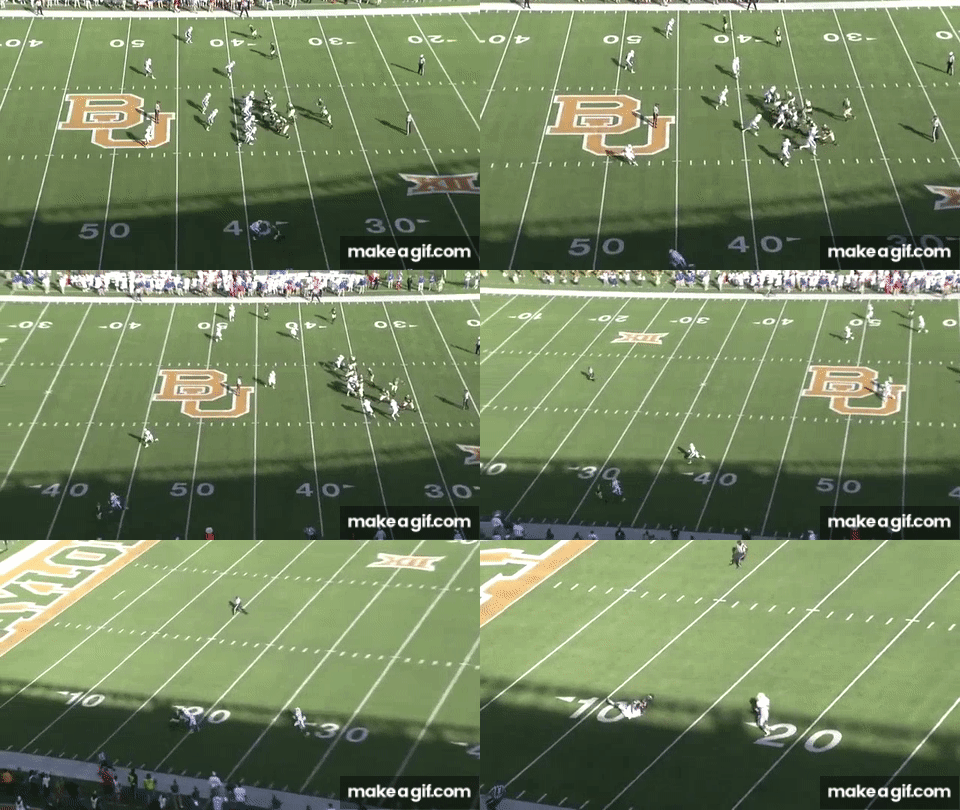
Second, the slot choice, where the inside receiver on the two-receiver side runs the choice. The outside receiver’s stop route holds the corner, leaving the slot receiver plenty of room to the outside that he can use to get separation from the safety. Even with some shenanigans by the safety, he’s able to bring the pass down and score. The only thing more embarrassing than committing DPI is committing DPI and still getting scored on.

I should point out that unlike single choice and outside choice, the QB actually does have a progression to read on slot choice. If the corner bails hard and drifts into the deep space the slot is trying to attack, he can throw the stop route to the outside receiver. That’s what happens here, and it’s open even though the throw is behind him and it’s incomplete. Note that the safety manages to stay over the top of the choice runner here, so he also runs a stop route. Baylor would often use these stop routes to set up double-moves, pump faking the stop and then throwing the go route, one of their most reliable sources of big plays.
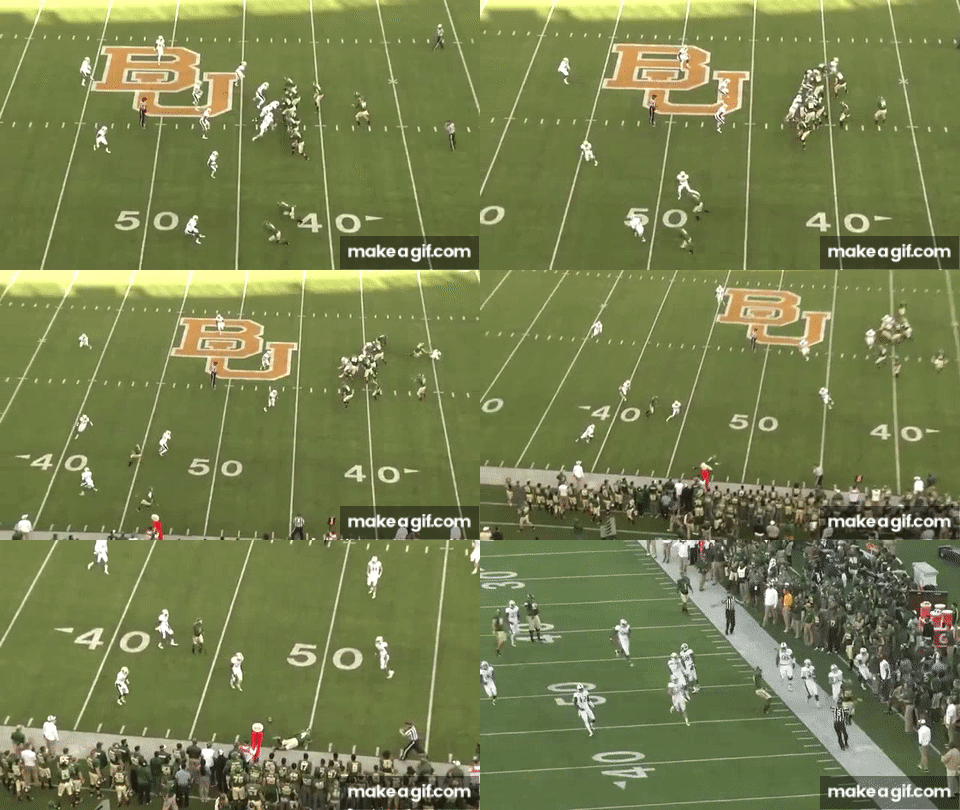
Finally, the outside choice, where the outside receiver on the two-receiver side runs the choice. In this case, Baylor used one of their favorite tactics when running outside choice, combining their extremely wide splits with a stacked formation to further confuse the defenders about their responsibilities. The WR beats the corner deep, but even though the throw is behind him, he succeeds in drawing a pass interference penalty. Monty was a trailblazer in the #AllPIOffense too, I guess.

I’m realizing now that all of these clips (aside from the one where the QB didn’t throw the choice) ended with the choice receiver running a go route rather than a stop/post/bend, but I think these clips capture the nuts and bolts of the play well enough. Hopefully Auburn’s offense will give us a look at the diverse potential of these concepts this season.
PUTTING THE PIECES TOGETHER
So now that we’ve taken a look at what Freeze and Montgomery have done on their own, we come to the big question: how will these two offenses fit together? Discord between offensive coordinators and offensive-minded head coaches has been a frequent issue for Auburn in its tumultuous recent years, and some Auburn fans are surely gun-shy about another unhappy marriage. However, I think there’s some reason to believe this will be different, mainly because of why Freeze hired Montgomery in the first place.
So why did Freeze turn to Philip Montgomery, a guy he’s never worked with who’s never coached in the SEC? I think that this video clip offers some good insight, as Freeze speaks highly of another team that’s applied the veer and shoot principles to spark an offensive turnaround.
It makes sense that he’d go get a guy who has experience running that offense, given his obvious admiration for the schematics of what Josh Heupel and Hendon Hooker (now, now) have done in Knoxville.
I think the Tennessee analogy is apt, since that offense is exactly what you’d expect from the Freeze/Montgomery pairing: a system that combines a bread-and-butter 11 personnel RPO game with the wide splits, breakneck tempo, and deep choice routes of the veer and shoot. It’s a sensible combination, given that the veer and shoot always incorporated the tempo, personnel, and schemes that Freeze made his mainstay, with the addition of the explosive deep choice game. Unfortunately, Auburn’s spring game was played in some truly atrocious weather, which limited the offense to a lot of running and only one deep choice play that I noticed in the abbreviated scrimmage.
In terms of personnel, obviously the Auburn roster has been in a lot of flux this offseason and it’s hard to predict what the first 11 guys on the field are gonna look like in week 1. Freeze and new offensive line coach Jake Thornton gave the trenches a much-needed renovation in the portal, while the receiving corps has also seen a lot of movement in and out. The RB room should be solid as usual, but that’s the least of Auburn’s concerns.
The biggest question mark, of course, is in the QB room. I would be shocked if Michigan State transfer Payton Thorne isn’t the week 1 starter. Robby Ashford did his best to salvage a lost season last year, and his dynamic running ability is obviously a weapon, but he’s too limited as a passer to fill the role Auburn would need him to in the new-look offense, where the QB run game will have a role, but probably won’t be a primary focus. Thorne has the best tools in terms of arm strength and accuracy and I don’t think the QB competition will be all that close. I must note with some chagrin that a perfect QB for this system would’ve been Bo Nix, and I invite all of you to join me in directing the expletives of your choice at Bryan Harsin. His incompetence in both recruiting and interpersonal relationships hamstrung this program and has made an already difficult rebuild that much worse for the new staff.
Which brings us to the final question: will this new arrangement actually work? Unfortunately, I have no idea, and unless someone has access to a crystal ball or time machine, it’s going to be hard to predict. Auburn football is a random number generator under the best of circumstances, and massive coaching and player turnover hardly constitute the best of circumstances. I certainly wouldn’t expect a Tennessee-style renaissance, or at least not overnight; of course, we don’t even know if Tennessee will be able to sustain what they’re doing over the long term, since they’re not gonna pull a Hendon Hooker out of the portal every year.
Realistically, I think it’s going to be less about Xs and Os and more about how quickly the offensive staff can get everyone on the same page, since they’re basically MacGuyvering an offensive roster at this point. I think Auburn will take a significant step forward over the last few years and be a lot more fun to watch (a low bar to clear), but it’s going to take a couple of recruiting classes and a couple of seasons of cooperation among the new offensive brain trust before we see the potential of this offensive scheme.
(For anyone who’s wondering, I don’t really intend on writing an equivalent article about Ron Roberts’ defense. My knowledge of defense is much weaker than my knowledge of offense, and I don’t think I have much value to add. If you’re interested in learning more about the new Auburn defensive scheme, I recommend this breakdown of Roberts’ defense at Baylor, where he was the DC for his protégé, Dave Aranda.)
 Auburn Analysis
Leave a comment